Reform UK surges in polls, but power remains out of reach
Reform UK won 14.3% of the vote and only five seats in 2024, exposing how Britain’s system turns national momentum into a narrow Commons foothold.
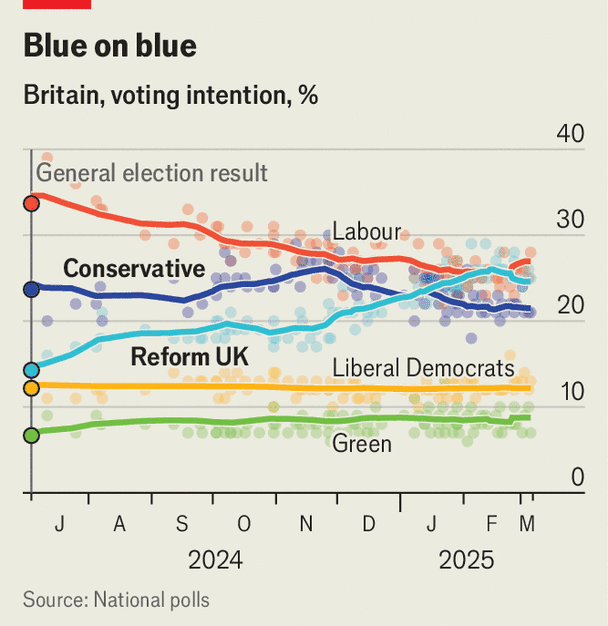
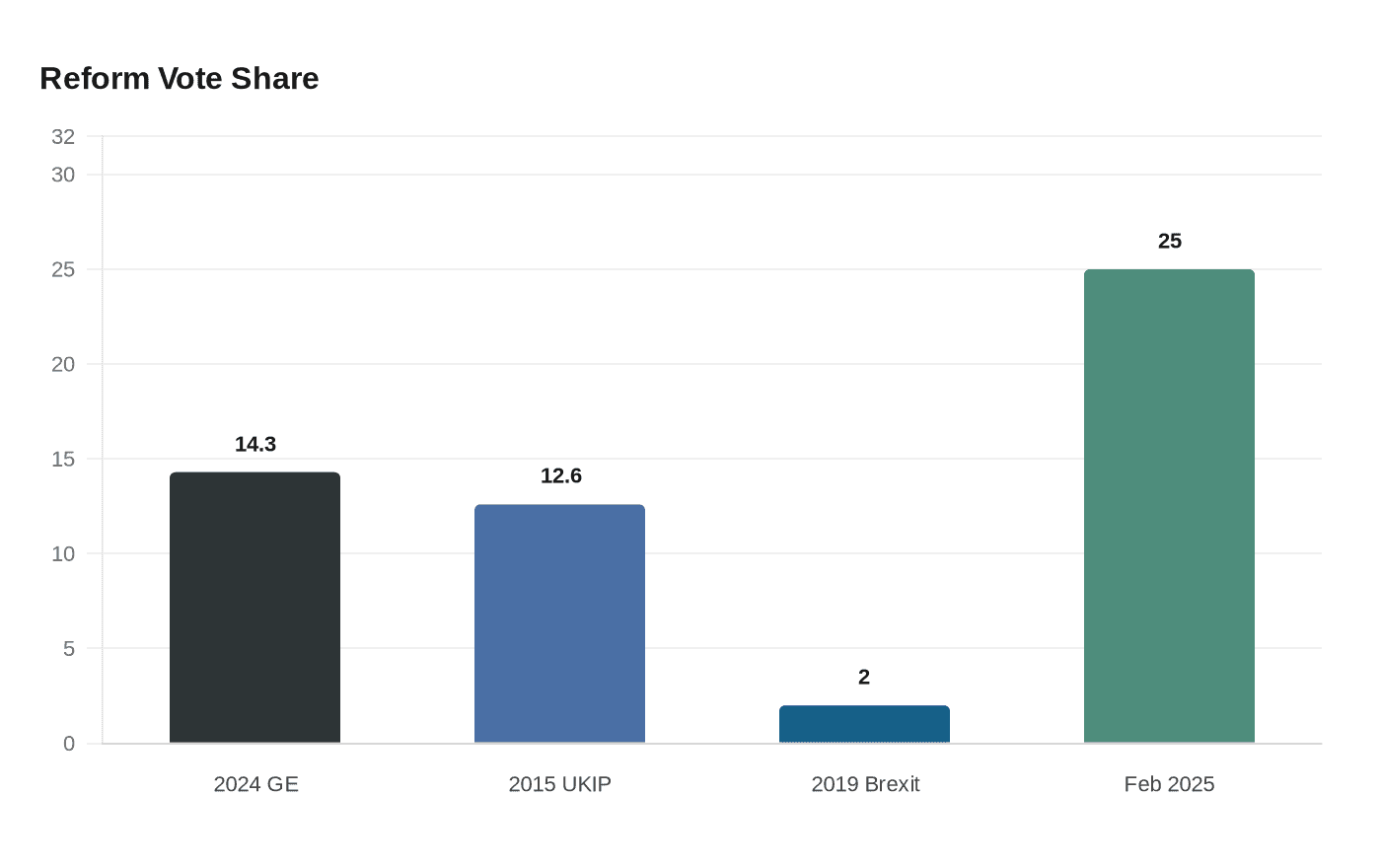
Nigel Farage has turned immigration anger into a durable political force, but Britain’s voting system still keeps Reform UK far from real power. In the 2024 general election, the party fielded 609 candidates, won 14.3% of the vote and took only five seats, the widest gap on record between national support and Commons representation for a party of its kind.
Those five victories came in Clacton, Great Yarmouth, South Basildon and East Thurrock, Ashfield and Boston and Skegness. The scale of the mismatch is the problem Reform cannot escape: first-past-the-post rewards concentrated local strength, not broad national appeal, and Reform’s support remains spread too thinly across England to convert polling surges into governing muscle.
Farage has seen this pattern before. UKIP won 12.6% of the vote in 2015 and returned just one MP. The Brexit Party did even worse in 2019, taking 2% of the vote and no seats at all. The lesson has been brutal and consistent: a party can dominate headlines, unsettle the main parties and still be locked out of power.
Yet Reform’s rise has not been confined to Westminster elections. On 1 May 2025, it won 677 seats across 23 councils in England, the largest haul of any party in those local contests and about 41% of all seats up for election. Later that spring, it was reported to have won 10 county councils, two mayoralties and the Runcorn and Helsby by-election, gains that sharpened pressure on Labour to toughen its immigration stance.
Polls briefly suggested the party could force its way into the center of British politics. A February 2025 YouGov survey put Reform on 25%, ahead of Labour on 24% and the Conservatives on 21%. But analysts have warned that polling strength alone does not solve the arithmetic of a parliamentary system built around constituencies, not national vote totals. Reform’s challenge is not only to keep growing, but to turn that support into winnable seats in the right places.
The party has also tried to widen its coalition while avoiding the stigma that helped define earlier Farage projects. POLITICO reported that Reform was trying to distance itself from overt racism and tighten candidate vetting, as anti-migrant protests and far-right activists swirled around hotel demonstrations. Starmer attacked Reform’s 2025 immigration plan as “racist” and “immoral,” while Labour MPs in Reform-facing seats welcomed the government’s tougher line as a response to voter frustration.
Reform’s 2025 immigration policy proposed removing the right to apply for indefinite leave to remain, banning non-citizens from claiming benefits and requiring citizenship applicants to renounce other citizenships. That hard edge still powers Farage’s brand, but the structural barrier remains the same. Britain left the European Union on 31 January 2020 and finished the transition on 31 December 2020, and the political aftershocks that helped build Reform have not yet rewritten the rules of power.
This article was produced by Prism’s automated news system from verified source data, official records, and press releases, then run through automated quality and moderation checks before publishing. The system is built and supervised by the people who set the standards it runs under. Read our full AI policy.
Know something we missed? Have a correction or additional information?
Submit a Tip