Reform U.K. surges past 400 council wins as Labour, Conservatives slump
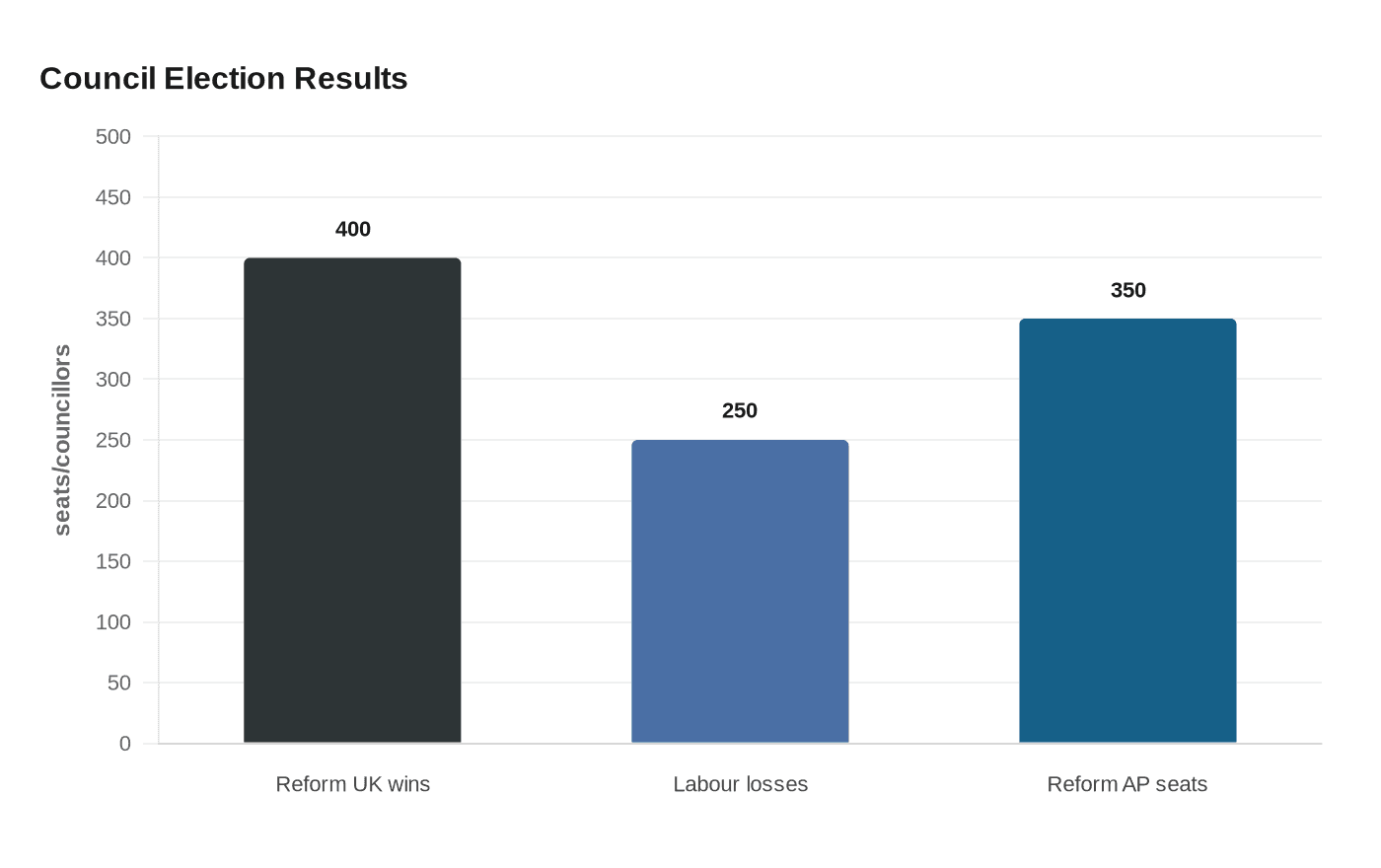
Reform U.K. crossed 400 council wins as Labour lost 250-plus councillors and the Conservatives were hit hard, with Essex falling after 25 years of Tory control.
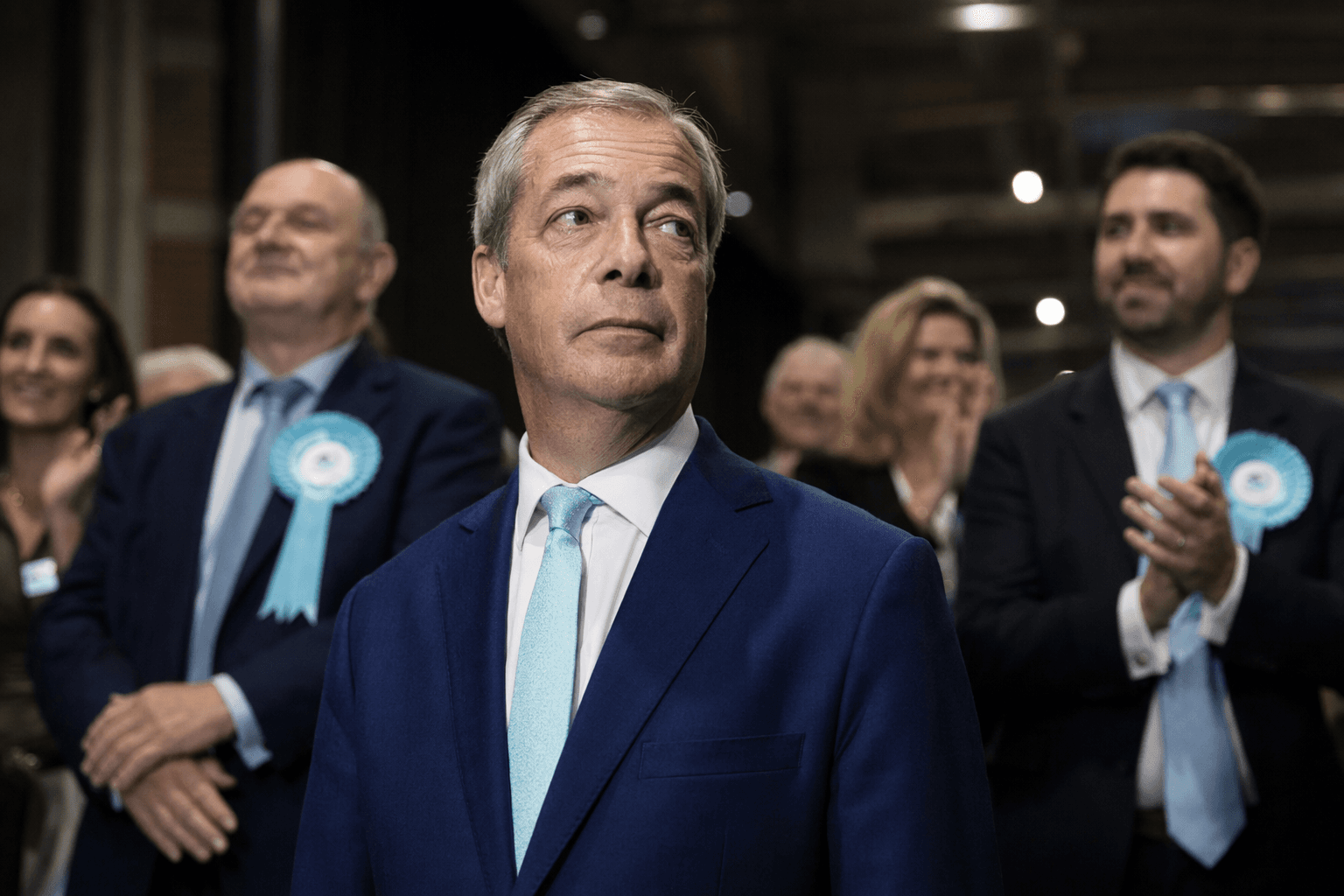
Nigel Farage’s Reform UK crossed the 400-council-win mark across England, turning early local-election tallies into a blunt warning about the fragility of Britain’s political establishment. With counting still under way, Labour had lost more than 250 councillors and the Conservatives were also down sharply, a result that has quickly become a national verdict on Keir Starmer’s premiership.
The scale of the vote made the message hard to ignore. About 4,992 councillors were up for election across 136 English councils, along with six local authority mayors, in the first major electoral showdown since Labour’s landslide general election victory in July 2024. Reform’s gains, which included more than 350 council seats in partial Associated Press counts, showed that anger at the main parties was not limited to one region or one grievance. It was spreading across England.
Essex delivered one of the clearest shocks. Reform won control of Essex County Council, ending 25 years of Conservative rule and taking enough seats for a majority in the 78-member authority, where 39 seats were needed. The party also took its first council control in Newcastle-under-Lyme Borough Council, adding a practical governing foothold to Nigel Farage’s campaign message that Reform is no longer just a protest vehicle.
The losses cut across both sides of the old two-party system. Labour’s setback was large enough to dent the authority of Starmer’s government, while the Conservatives, led by Kemi Badenoch, were also pushed back. That matters because Reform’s rise is not simply eating into one opponent’s base. It is exploiting a broader collapse in trust in Labour and the Conservatives alike, and turning local elections into a test of anti-establishment strength.
Starmer said he would not resign and would “fight on,” but the results were already being read as an unofficial referendum on his leadership. Votes were also taking place in Scotland and Wales, yet the English results have dominated the national picture, because they suggest Reform’s momentum may be translating from polling numbers into durable local power. If that trend holds, the most important political story is not just how many councils Reform has won, but how weak the old parties now look in response.
Know something we missed? Have a correction or additional information?
Submit a Tip
.png&w=1920&q=75)