Remains of youngest known Maryland Revolutionary War soldier identified
DNA has named a 13-year-old Maryland teenager killed at Camden in 1780, turning a battlefield burial into a family history as the nation nears its 250th birthday.
A tiny piece of skull bone helped restore a name to a Revolutionary War soldier long buried as Camden 9B, identifying him as Private John Pumphrey of Anne Arundel County, Maryland.
Pumphrey was estimated to be 13 to 15 years old when he enlisted in Maryland’s 7th Regiment in Baltimore in 1777, making him one of the youngest known members of George Washington’s Maryland Line. He died at the Battle of Camden on Aug. 16, 1780, a fight in South Carolina that left more than 1,000 American troops dead and has long stood as one of the deadliest battles of the American Revolution.
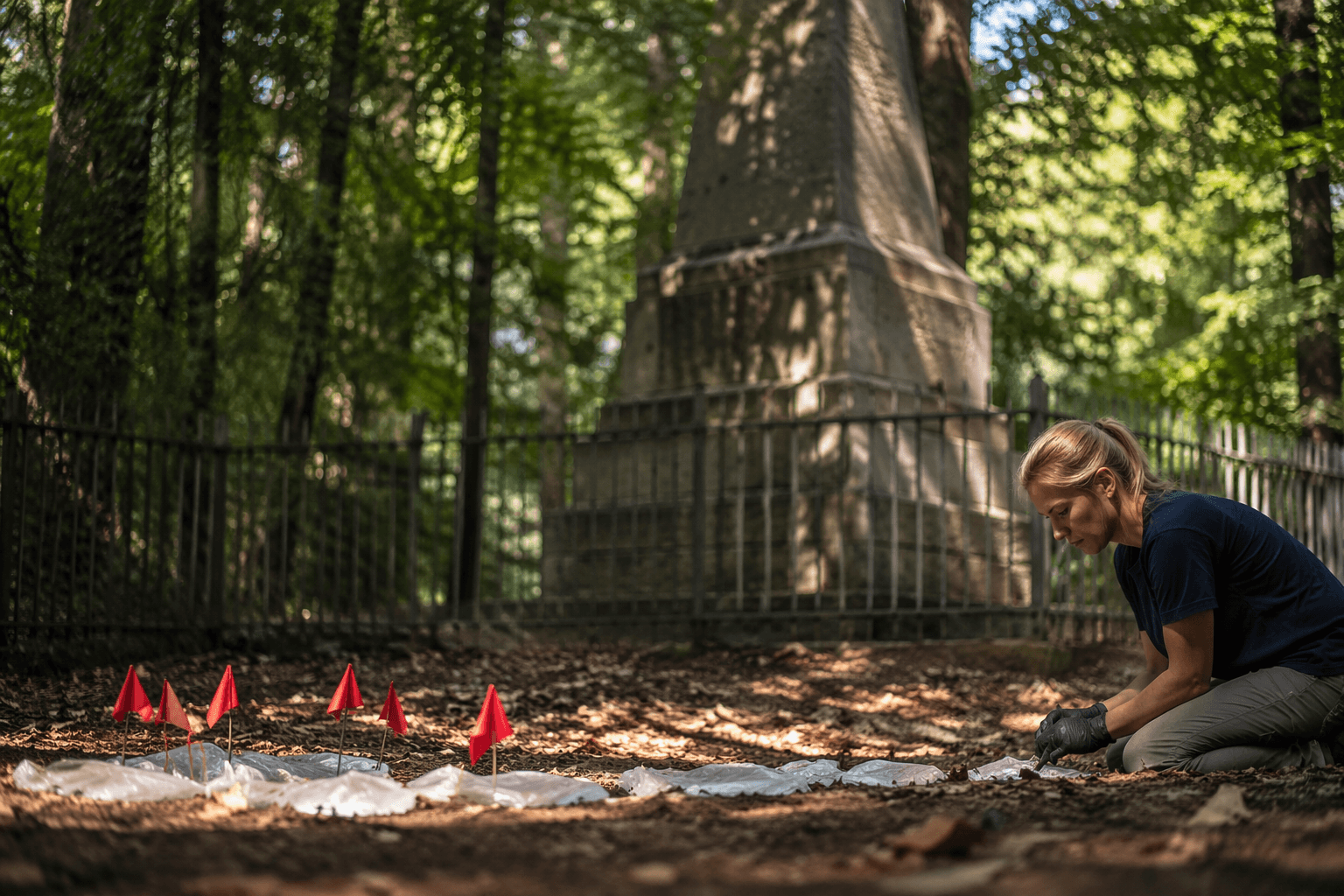
The remains were first discovered in 2020, then excavated in 2022 along with 13 other soldiers from shallow, unmarked battlefield graves. The 14 men were reburied in Camden in 2024. Researchers later recovered Pumphrey’s DNA from a tiny piece of petrous bone, the dense part of the skull that preserves genetic material long after other tissue is gone.
FHD Forensics worked with University of South Carolina archaeologists and researchers from the South Carolina Institute of Archaeology and Anthropology to make the identification. The team used forensic genetic genealogy and three different types of DNA matching to confirm that Camden 9B was Pumphrey. He is the first of the Camden battlefield remains to be identified through genetic analysis.
Pumphrey left no direct descendants. Investigators traced collateral relatives instead, building family trees that reached back seven, eight or nine generations. Three women provided DNA that helped identify his remains, and the comparison matched a broader family line tied to Anne Arundel County.
Pumphrey’s family had deep roots in the county, with ancestors from prominent founding families. One explanation is that he had been orphaned at age 10 and may have seen army pay, clothing and food as a path to a new life. The identification was unveiled in June 2026 at a small gathering in Baltimore with relatives, and another event in Anne Arundel County brought together descendants.
This article was produced by Prism’s automated news system from verified source data, official records, and press releases, then run through automated quality and moderation checks before publishing. The system is built and supervised by the people who set the standards it runs under. Read our full AI policy.
Did this article answer your question?