Renoir, Cézanne and Matisse Works Stolen From Italian Museum Near Parma
Masked thieves stripped three irreplaceable French masterpieces from the Magnani-Rocca Foundation near Parma in under three minutes, in what investigators call one of Italy's most significant art thefts in years.
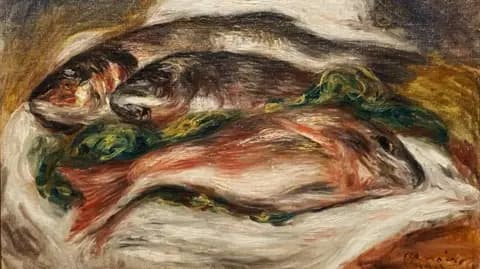
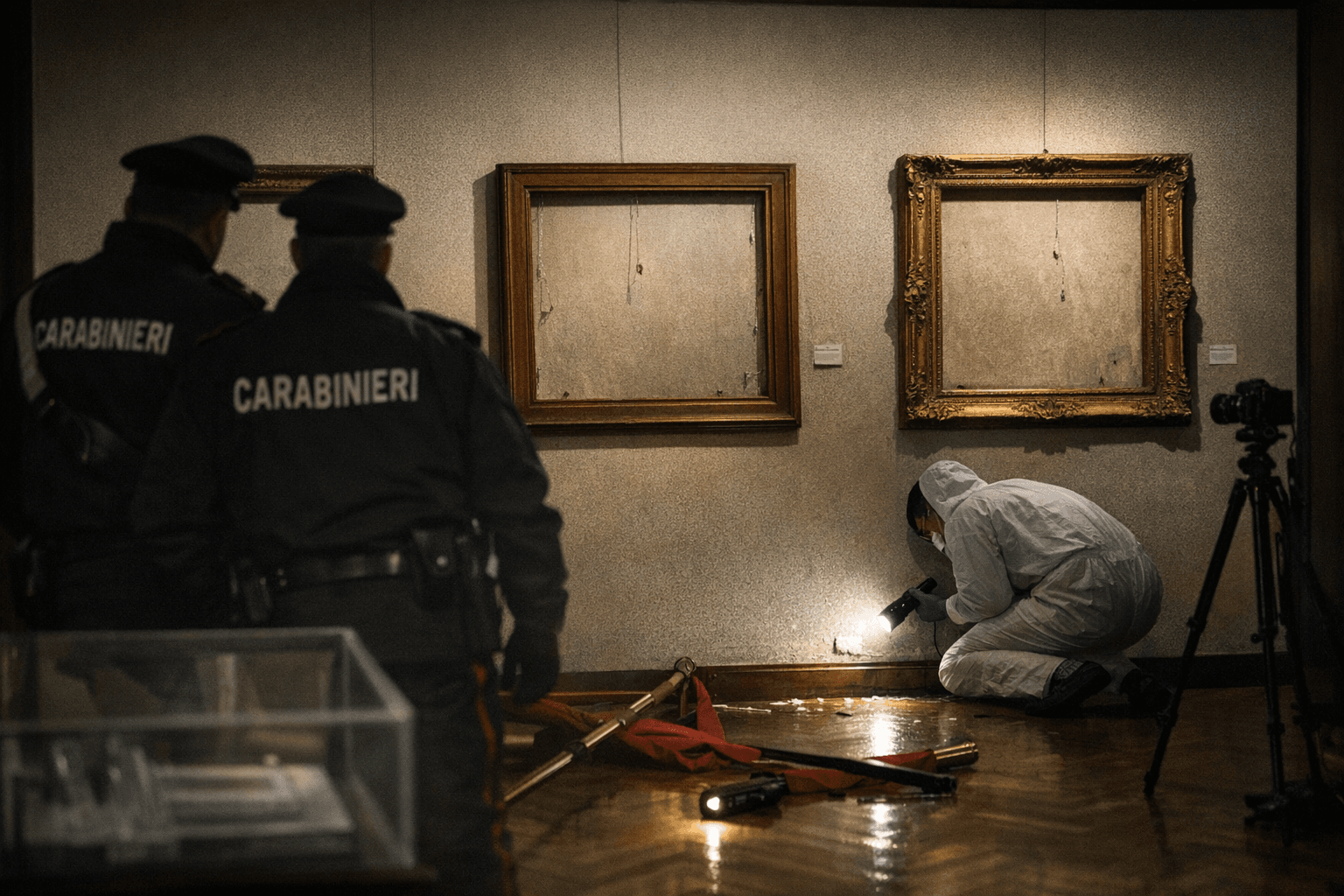
Sometime in the small hours of March 22, a gang of masked thieves moved through the Parma countryside to a neoclassical villa, forced their way through a gate and walked directly to the French Room on the upper floor. They were gone in under three minutes. What they left behind was an empty gallery and one of the gravest cultural losses Italy has suffered in recent memory.
The target was the Magnani-Rocca Foundation in Mamiano di Traversetolo, a villa museum that houses the collection assembled by the late critic and musicologist Luigi Magnani and is home to works by Titian, Dürer, Rubens, Goya, Canova and what specialists consider the most significant permanent body of Giorgio Morandi's painting anywhere in Italy. Three works from its French gallery are now gone: Pierre-Auguste Renoir's Les Poissons, an oil on canvas measuring 40 by 51.5 centimeters painted in 1917; Paul Cézanne's Still Life with Cherries, a pencil-and-watercolor work on paper from between 1900 and 1904; and Henri Matisse's Odalisque sur la terrasse, an aquatint from 1922. All three were part of the permanent collection. All three are valued in the millions of euros.
The foundation confirmed the operation was meticulously planned. In a brief statement limited by what it called "the peremptory requirements imposed by investigators," the institution said the thieves acted "within less than three minutes, not spontaneously, but rather within a structured and organized context," describing "an evident, planned functional division" among the perpetrators. Surveillance footage showed the suspects with their faces covered throughout. The foundation credited the activation of its protection systems and the swift response of internal security and the Carabinieri with disrupting what may have been a larger intended haul, though it did not specify whether additional works were targeted.
The investigation is being led by the Carabinieri's Nucleo Tutela Patrimonio Culturale, the TPC, a force of 280 specialized officers that has operated since 1969 as the world's first and largest dedicated art crime unit. Investigators are currently reconstructing the exact sequence of events, examining the villa's security systems for vulnerabilities and tracing the suspects. Italian authorities called the case one of the most significant art thefts in the country in recent years. The news was held from the public for nearly a week after the theft while investigators worked, becoming known on March 29.
The stolen works carry a rarity that compounds their loss. Renoir and Cézanne are poorly represented in Italian public collections, making the Magnani-Rocca Foundation one of the few places in the country where visitors could encounter either painter's work as a permanent fixture rather than a traveling loan. The cultural outlet Finestresullarte, which first reported the theft in detail, described it as affecting not just the foundation but "the entire national cultural heritage."
What happens next to works this recognizable is where professional art crime diverges sharply from ordinary theft. The Renoir, the Cézanne and the Matisse are indexed in international auction and exhibition records; any attempt to sell them on the open market would trigger an immediate flag at the Art Loss Register, which maintains a database of more than 700,000 stolen and looted works and conducts due-diligence searches for major auction houses and dealers worldwide. The Carabinieri TPC publishes a standing bulletin of trafficked art and monitors both border crossings and online resale platforms. Despite that infrastructure, global recovery rates for stolen art sit at roughly 10 percent. The more likely scenario for works of this profile is absorption into a private collection, or clandestine export to a jurisdiction where provenance scrutiny is less rigorous, where they may surface only decades later, if at all.
This article was produced by Prism’s automated news system from verified source data, official records, and press releases, then run through automated quality and moderation checks before publishing. The system is built and supervised by the people who set the standards it runs under. Read our full AI policy.
Did this article answer your question?


