Rep. Backer outlines 2026 agenda for Fergus Falls district: healthcare, EMS, anti‑fraud
Rep. Jeff Backer announced his 2026 priorities in St. Paul and helped shepherd a $30 million rural EMS package that includes a $6 million sprint medic pilot for Otter Tail County.

Rep. Jeff Backer, R‑Browns Valley, used remarks in St. Paul on Feb. 18, 2026, to frame his 2026 legislative work for House District 9A, which includes Fergus Falls and parts of Otter Tail County, while celebrating passage of a $30 million rural emergency medical services aid package that now heads to Governor Tim Walz for signature.
The Legislature’s package is described as $24 million in emergency aid for EMS providers focused on services in Greater Minnesota and $6 million dedicated to a sprint medic pilot program for Otter Tail, Grant and St. Louis counties, with the release noting the bill “includes more than $4 million for West Central Minnesota.” Rep. Backer is credited in legislative materials as having “played a key role in negotiations on the bill and was a leading advocate on the issue throughout the legislative session.”
Backer, who also serves as a volunteer EMT and on the EMS Task Force, framed the funding as an immediate response to local gaps in ambulance and first‑responder capacity. “As a volunteer EMT and member of the EMS Task Force, I have had a front row seat to the problems facing EMS and ambulance services in our communities,” said Rep. Jeff Backer, R‑Browns Valley. “I am so grateful that all of us were able to come together in a bipartisan manner to provide the emergency funding that these lifesaving services need to stay afloat. There is still much work to be done to address the structural problems facing these services, but in the meantime, this will go a long ways in helping to fill in the gaps.”
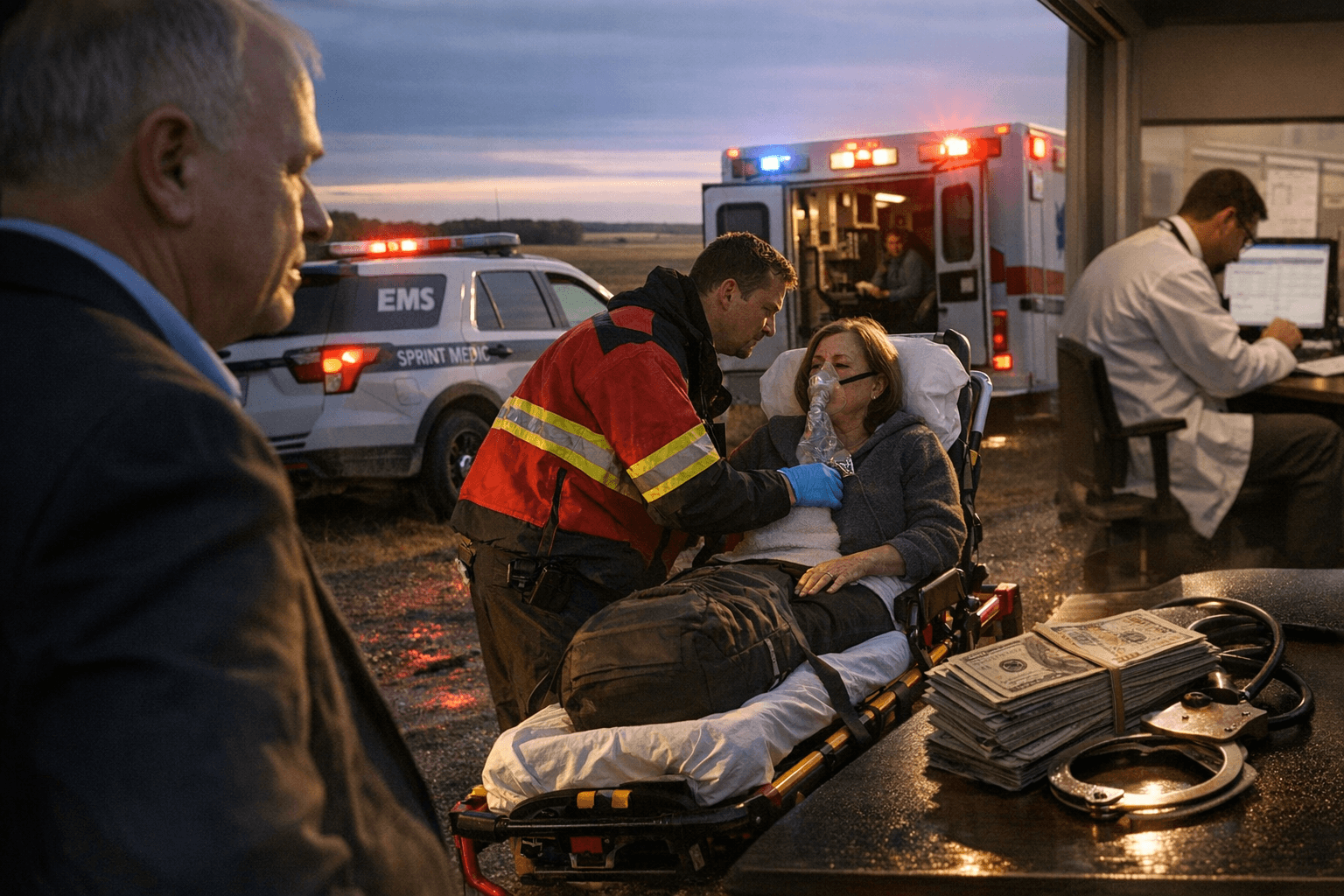
The sprint medic concept included in the appropriation would change the first‑response model in Otter Tail and neighboring counties by allowing an on‑scene clinical decision before dispatching an ambulance. “The sprint medic pilot program … authorizing trained medical staff to be the first response and determine if an ambulance is necessary.” If implemented in the Fergus Falls area, local EMS leaders say decisions about when an ambulance is required could shift from automatic transport to triage by clinically trained staff in the field.
Legislative language also ties the funding to workforce reforms aimed at blunt rural staffing shortfalls. “The changes make it easier to be qualified or certified as an Emergency Medical Technician (EMT), Emergency Medical Responder, or Ambulatory EMT,” the release states, and materials note additional reforms in the bill “help address EMS staffing concerns in rural areas.”
With the measure transmitted to Gov. Walz, the next steps for Otter Tail County and Fergus Falls will hinge on enactment details and pilot design, including who will employ sprint medics and how the more than $4 million earmarked for West Central Minnesota will be allocated within the $30 million total. Backer’s Feb. 18 St. Paul remarks announced his priorities for the 2026 session while tying his volunteer EMS experience to the legislative push for immediate rural EMS relief.
Sources:
Know something we missed? Have a correction or additional information?
Submit a Tip