Republicans Confront Strategic Reckoning After Democratic Election Sweep
A sweep by Democrats has forced Republicans into a fraught debate over direction, tactics and the boundaries of governance. Internal disputes, from whether to back Donald Trump’s push to end the filibuster to concerns about high-profile prosecutions, are shaping how the party positions itself for 2026 and how U.S. institutions are perceived abroad.
The shock of a decisive Democratic performance has left Republicans confronting an acute strategic dilemma: lean further into a combative, Trump-driven agenda or recalibrate toward a message that can win back centrist and independent voters. The debate is playing out in think-tank memos, closed-door breakfasts with senators and in federal courtrooms, a mix that underscores the stakes for the party’s future and for American governance.
In a memo released this week, New Politics argued that Democrats should build on the appeal of candidates with public-service resumes, singling out Mikie Sherrill and Abigail Spanberger as exemplars for future campaigns. The memo said voters “are ready for authentic leaders who have already demonstrated, through service – in the military, AmeriCorps, the Peace Corps, and other forms of public service – that they will always put mission before self and work with others to get things [...]” The message signals how Democrats intend to frame the next cycle: pragmatic leadership grounded in service, contrasted with Republican turbulence.
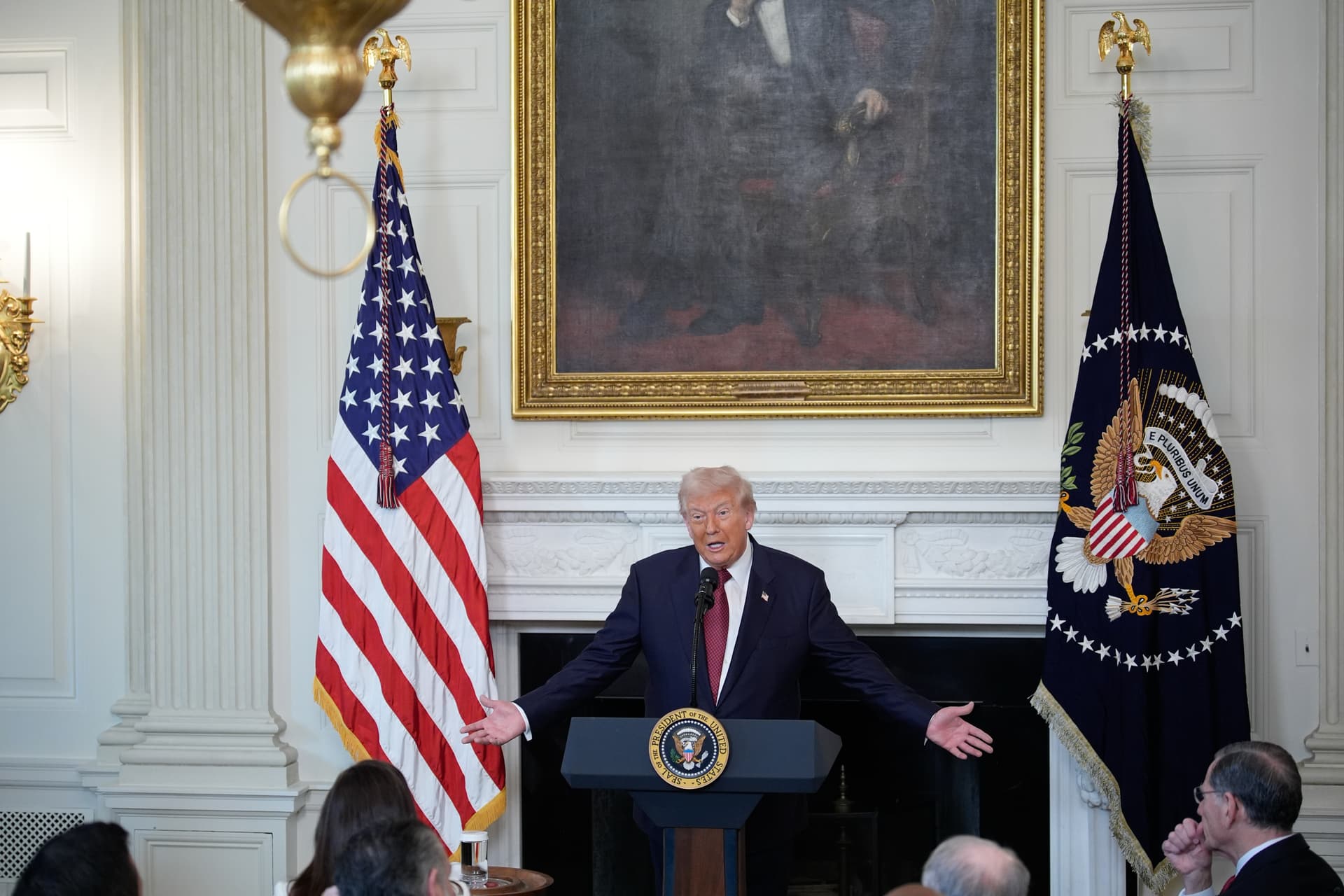
That turbulence was on display during a breakfast meeting between former President Donald Trump and Republican senators convened to chart a path forward amid what Republican officials privately acknowledge is the longest government shutdown in U.S. history. Trump used the meeting to press a familiar transformational aim, reiterating his call to “terminate the filibuster,” while also conceding the party might not coalesce behind the proposal. “It’s possible you’re not going to do that and I’m going to go by your wishes,” he told lawmakers, adding, “I think it’s a tremendous mistake. It would be a tragic [...]” The force of that pitch highlights an enduring tension: whether to prioritize procedural overhaul and maximalist agenda-setting or to pursue narrower, more deliverable legislative goals that could broaden electoral appeal.
Complicating the conversation are legal developments tied to the Trump presidency that have governance implications. A Politico report by Kyle Cheney detailed a federal magistrate judge’s harsh rebuke of Justice Department prosecutors in the criminal case against former FBI Director James Comey, warning against an “‘indict first, investigate second’ posture.” The critique raises fresh questions about prosecutions that critics view as politically motivated and about the Justice Department’s capacity to conduct high-profile investigations that will withstand judicial scrutiny and public confidence.
For Republicans, the convergence of these threads, electoral messaging, procedural change and the politicization of justice, creates difficult trade-offs. A hardline posture may energize the base but risks alienating swing voters and feeding narratives of lawfare and institutional strain. Conversely, a pivot to veterans, public servants and bipartisan cooperation may blunt immediate enthusiasm among the party’s most fervent supporters.
The implications extend beyond domestic politics. Continued institutional uncertainty and visible intra-party conflict will be watched by allies and rivals alike, affecting perceptions of U.S. stability and policymaking reliability. As Republicans wrestle with who and what will define them heading into 2026, the choices made now will shape not only electoral fortunes but also the resilience of American political norms and the country’s posture on the world stage.
This article was produced by Prism’s automated news system from verified source data, official records, and press releases, then run through automated quality and moderation checks before publishing. The system is built and supervised by the people who set the standards it runs under. Read our full AI policy.
Did this article answer your question?

