Republicans Gain Edge in House Control as Redistricting Battle Escalates
Virginia’s voided map could have shifted four House seats, and that is only one piece of a redistricting fight that is widening Republicans’ path to control.
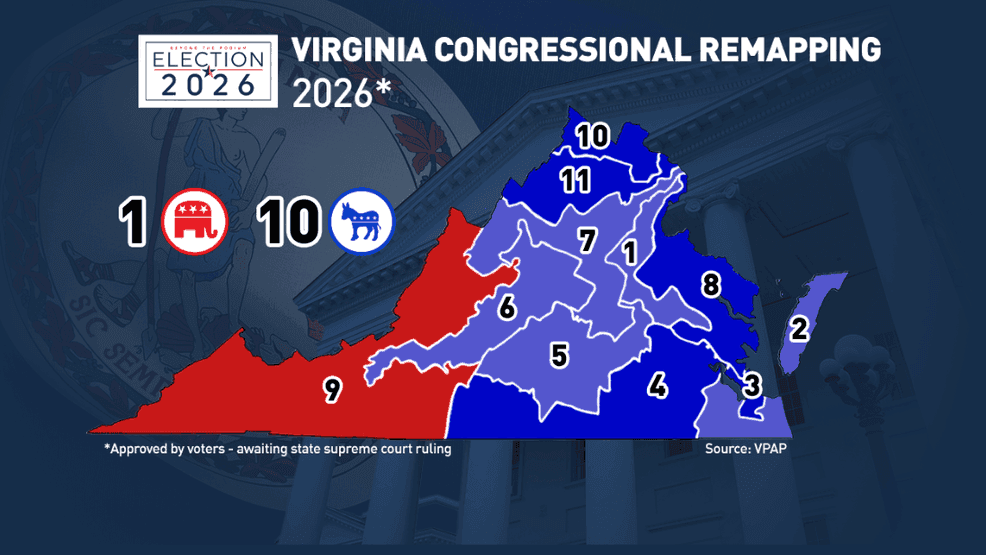
Republicans have opened an edge in the fight for House control as court rulings and special sessions put at least four Virginia seats and several Southern districts back in play. The most immediate swing came in Virginia, where voters approved a redistricting measure on April 21 that could have given Democrats as many as four additional House seats, only for the Virginia Supreme Court to strike down the plan on May 8 and erase that gain.
That setback landed after the U.S. Supreme Court’s Voting Rights Act ruling weakened protections that had constrained how states drew districts with large minority populations. The Congressional Research Service says mid-decade redistricting is not barred by the Constitution or federal law, and that opening has fueled a rare, state-by-state rush to redraw congressional lines before the 2030 Census. The legal shift matters because it gives Republican officials new room to press for maps that can dilute Democratic-leaning or minority-heavy districts, turning courtroom decisions into concrete seat opportunities.

The map fight is already touching California, Missouri, North Carolina, Ohio, Texas and Utah, where lawmakers or courts have moved districts ahead of schedule. Donald Trump pushed Texas Republicans last year to redraw their maps in an effort to preserve the party’s narrow House majority, and California answered with voter-approved districts drawn to Democrats’ advantage. Utah’s top court imposed a new congressional map that also helps Democrats, while Republicans are standing to gain from new House districts in Florida, Missouri, North Carolina, Ohio and Tennessee.
The pressure is now spreading farther south. Louisiana suspended its May 16 congressional primary to give lawmakers time to approve new House districts, though the move is being challenged in court. In Alabama, Gov. Kay Ivey called a special legislative session starting May 5, and in Tennessee, Gov. Bill Lee called lawmakers back to session to try to break up the state’s one Democratic-held House district centered on Memphis. PBS News and the Associated Press said lawmakers, commissions or courts had already adopted new House districts in eight states.
The stakes are sharpened by turnover. As of May 6, the Associated Press reported, 57 current House members, 20 Democrats and 37 Republicans, were not expected to return next term. With so many seats unsettled and more maps still vulnerable in court, commissions and ballot fights, the redistricting scramble could decide far more than district lines. It could decide who controls the House.
This article was produced by Prism’s automated news system from verified source data, official records, and press releases, then run through automated quality and moderation checks before publishing. The system is built and supervised by the people who set the standards it runs under. Read our full AI policy.
Did this article answer your question?

