rescued humpback whale found dead off Denmark, officials confirm
Did the rescue of Timmy make things worse? The humpback was released into the North Sea on May 2 and found dead near Anholt two weeks later.
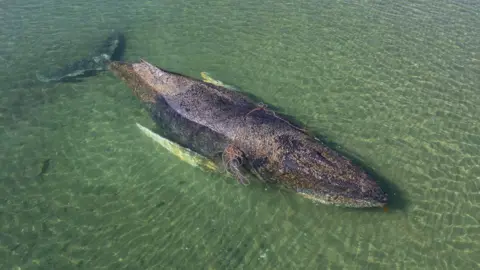
Did the rescue effort save Timmy, or did it subject a weakened humpback whale to the very stress that killed it? That question now shadows a controversial operation that carried the young whale from Germany’s Baltic coast into the North Sea, only for Danish authorities to confirm on May 16 that the carcass found off Anholt was the same animal.
Timmy, the nickname given by German media, was first spotted on March 3, 2026 near Timmendorfer Strand, far from the Atlantic migration route where humpback whales are normally seen. German authorities initially gave up on saving the animal in early April, after it had been stranded for days, but public pressure helped push through a privately financed rescue plan. The whale was estimated to be about 4 to 6 years old and roughly 12 meters, or 40 feet, long.
The intervention was elaborate and expensive. Rescuers cut a freshly dredged channel, guided the whale onto a water-filled barge, and towed it toward the North Sea. The operation was funded by the wealthy entrepreneurs Karin Walter-Mommert and Walter Gunz and was estimated to cost about 1.5 million euros, or $1.7 million. Timmy was released into the North Sea on May 2.
From the start, wildlife experts warned that the rescue could do more harm than good. Thilo Maack of Greenpeace was among those who said the transport would impose severe stress on an animal already in poor condition and could be too much for it. The later discovery of the dead humpback near the small island of Anholt, about 200 kilometers, or 124 miles, from the release point, sharpened the criticism and raised new questions about who gets to override scientific warnings when public emotion builds around a single animal.
Danish authorities said the dead whale had likely been dead for some time when it was found in the Kattegat strait and that a tracking device still attached to its back confirmed it was Timmy. Officials said there were no concrete plans to move the carcass or conduct a necropsy. The Danish Environmental Protection Agency also warned people to stay away from the body because decomposing whales can pose disease and explosion risks, a reminder that even the aftermath of a rescue can become a public-safety problem when animal welfare decisions are made under pressure.
This article was produced by Prism’s automated news system from verified source data, official records, and press releases, then run through automated quality and moderation checks before publishing. The system is built and supervised by the people who set the standards it runs under. Read our full AI policy.
Did this article answer your question?