Researchers virtually unwrap first complete Herculaneum scroll in 2,000 years
A charred Herculaneum scroll has been read end to end without unrolling, opening a new way to recover damaged texts once thought lost.

Researchers completely virtually unwrapped and read Herculaneum papyrus PHerc. 1667, the first scroll from the burned Roman cache to be deciphered from beginning to end without being physically opened. The reading covered about 1.4 metres of papyrus and roughly twenty-two columns of Greek, turning a sealed relic from antiquity into a legible philosophical text.
The breakthrough marked a major advance for a library that has sat in fragments since more than 1,800 carbonized scrolls were discovered in 1752 in Herculaneum, the Roman town buried by Mount Vesuvius in 79 CE. Long described as the only large-scale library from the classical world to survive in its entirety, the Herculaneum papyri stayed unreadable for more than 270 years because physical unrolling destroys them. The new work showed that high-resolution scans, machine learning and computer vision can recover text without tearing the brittle carbonized layers apart.
The Vesuvius Challenge, which has awarded more than $1.8 million in prizes, helped push the field from theory into practice. In February 2024, student researchers identified the first complete passages from the scrolls, revealing a previously unknown philosophical work on senses and pleasure. That result gave scholars their first sustained view into a set of texts that had spent centuries locked inside a luxury villa, believed to have belonged to Julius Caesar’s father-in-law.
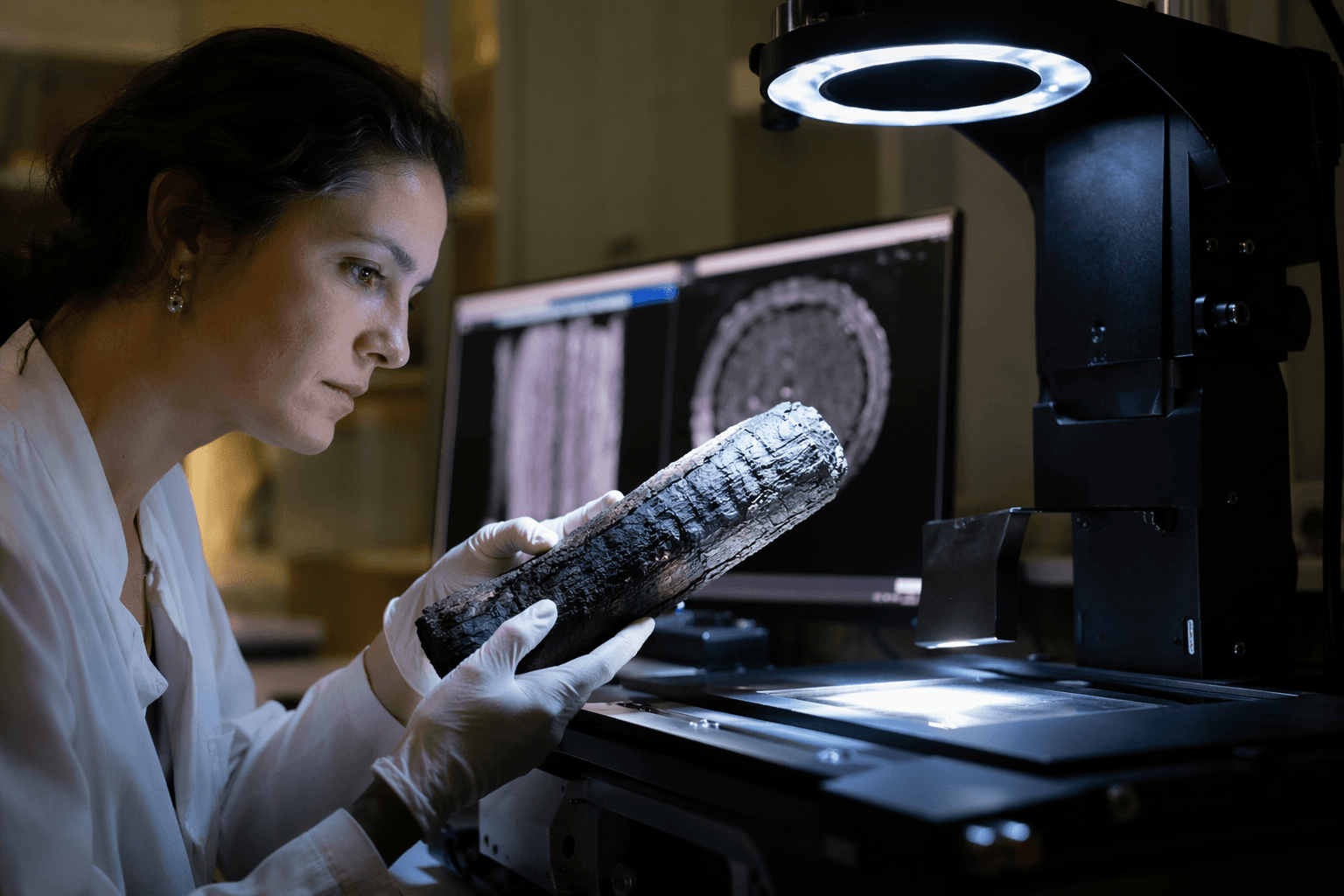
The latest reading of PHerc. 1667 points to a philosophical treatise on ethics in a Stoic context, widening expectations about what may still be hidden in the collection. The project builds on the work of Brent Seales at the University of Kentucky and scholars including Llewelyn Morgan, who have argued that the damaged papyri can yield readable text if the internal layers can be mapped digitally rather than peeled by hand.
The effort has also spread beyond a single scroll. On February 7, 2025, the University of Oxford and the Vesuvius Challenge announced the first image of the inside of PHerc. 172, one of three Herculaneum scrolls housed at the Bodleian Libraries. One of the first translated words from that scroll was the Ancient Greek word , meaning disgust. With the 2026 reading of PHerc. 1667, the project moved from isolated glimpses to a full continuous text, showing that a library once considered inaccessible may still be opened scroll by scroll, column by column, through a method that could be applied to other sealed records damaged by fire, time and burial.
This article was produced by Prism’s automated news system from verified source data, official records, and press releases, then run through automated quality and moderation checks before publishing. The system is built and supervised by the people who set the standards it runs under. Read our full AI policy.
Know something we missed? Have a correction or additional information?
Submit a Tip