Restaurants try to absorb rising food costs as inflation squeezes margins
Wholesalers and restaurant owners are swallowing higher beef, seafood and vegetable costs to protect diners, but 3% to 5% margins are getting too thin to hold.
Wholesalers are taking the first hit in the food chain, and restaurant owners are trying to buffer customers from the next one. But with beef, seafood and fresh vegetables driving another round of wholesale increases, the middle of the market is starting to run out of room.
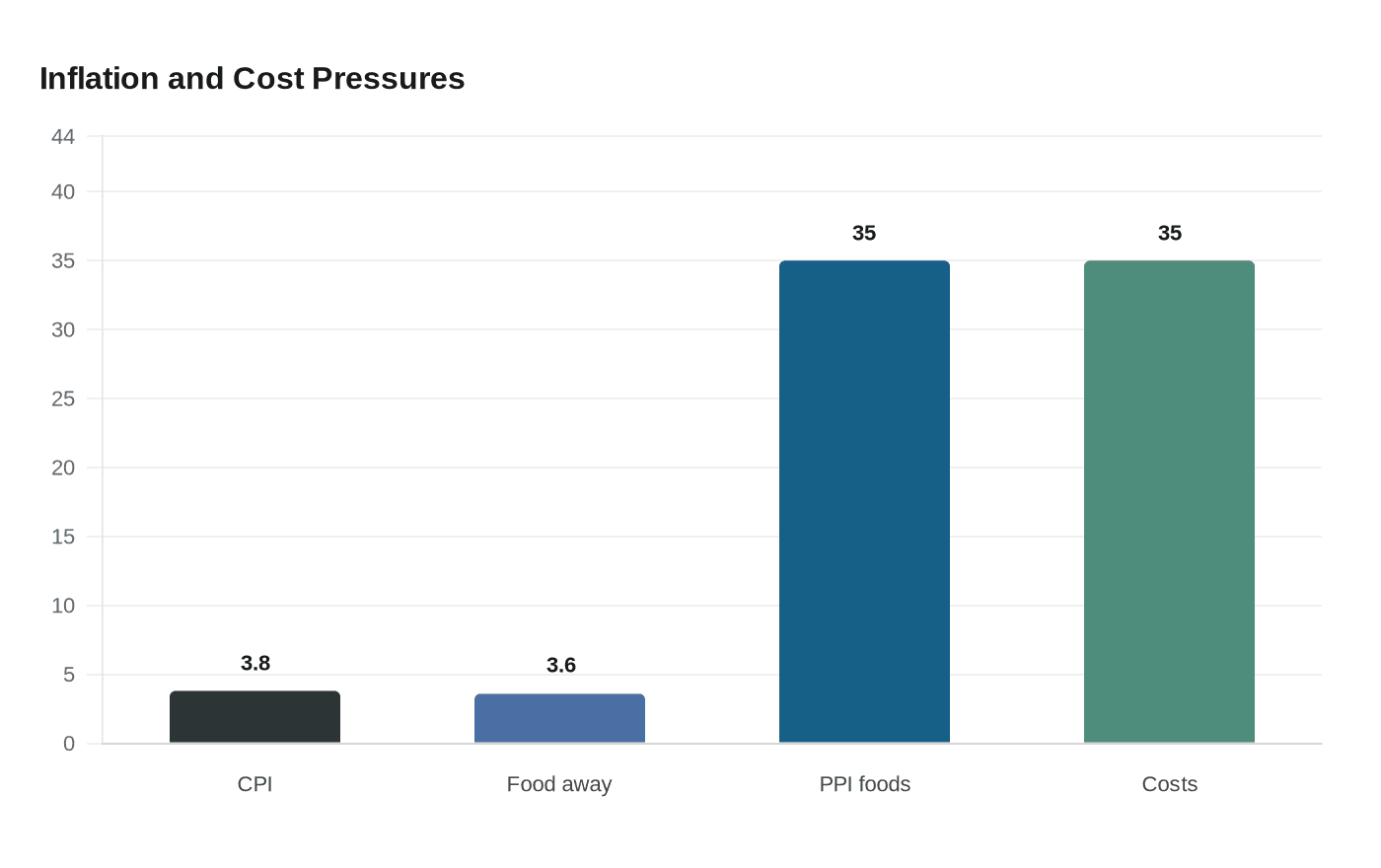
The U.S. Bureau of Labor Statistics said the Consumer Price Index for All Urban Consumers rose 3.8% over the 12 months ending April 2026. Food away from home, which covers restaurant and other foodservice purchases, rose 0.2% from March to April 2026 and was 3.6% higher than a year earlier. Those numbers show menu inflation has cooled from its 8.8% peak in March 2023, but it is still forcing operators to decide how long they can keep prices steady.
The National Restaurant Association says the pressure on restaurants is coming from both sides of the ledger. Food and labor costs for the average restaurant have each risen 35% over the last five years, while the typical pre-tax margin is only 3% to 5%. That leaves little cushion when a distributor raises the price of beef for burgers and steaks, or when seafood and fresh vegetables get more expensive before they reach the kitchen.
Wholesale food costs are still climbing faster than many restaurant owners can absorb. As of April 2026, the Producer Price Index for All Foods stood 35% above its February 2020 level, even though the broader food price index was relatively flat year over year. The National Restaurant Association said the latest wholesale gains were driven by beef, seafood and fresh vegetables, the kinds of inputs that move quickly from supplier invoices to menu engineering, special sheets and, eventually, higher checks.
The U.S. Department of Agriculture’s Economic Research Service said all food prices were 3.2% higher in April 2026 than in April 2025, and the all food CPI rose 0.5% from March to April. That leaves restaurants in a narrow lane: the National Restaurant Association’s 2026 State of the Restaurant Industry report projected 1.3% real sales growth, but not enough to erase the cost squeeze. In 2025, operators responded by cutting costs, switching suppliers or lifting menu prices, as consumers became more selective about when they ate out.
For now, many wholesalers and restaurant owners are still trying to absorb the hit. But with margins measured in single digits and input costs still rising, the strategy is getting harder to defend with every new delivery.
This article was produced by Prism’s automated news system from verified source data, official records, and press releases, then run through automated quality and moderation checks before publishing. The system is built and supervised by the people who set the standards it runs under. Read our full AI policy.
Know something we missed? Have a correction or additional information?
Submit a Tip