Ret. Gen. McKenzie Says Strait of Hormuz Is Becoming More Passable
McKenzie in early 2024 laid out a three-phase plan to reopen the Strait of Hormuz: suppress Iranian missiles and drones 24/7, then sweep mines. About 20% of world oil flows through it daily.
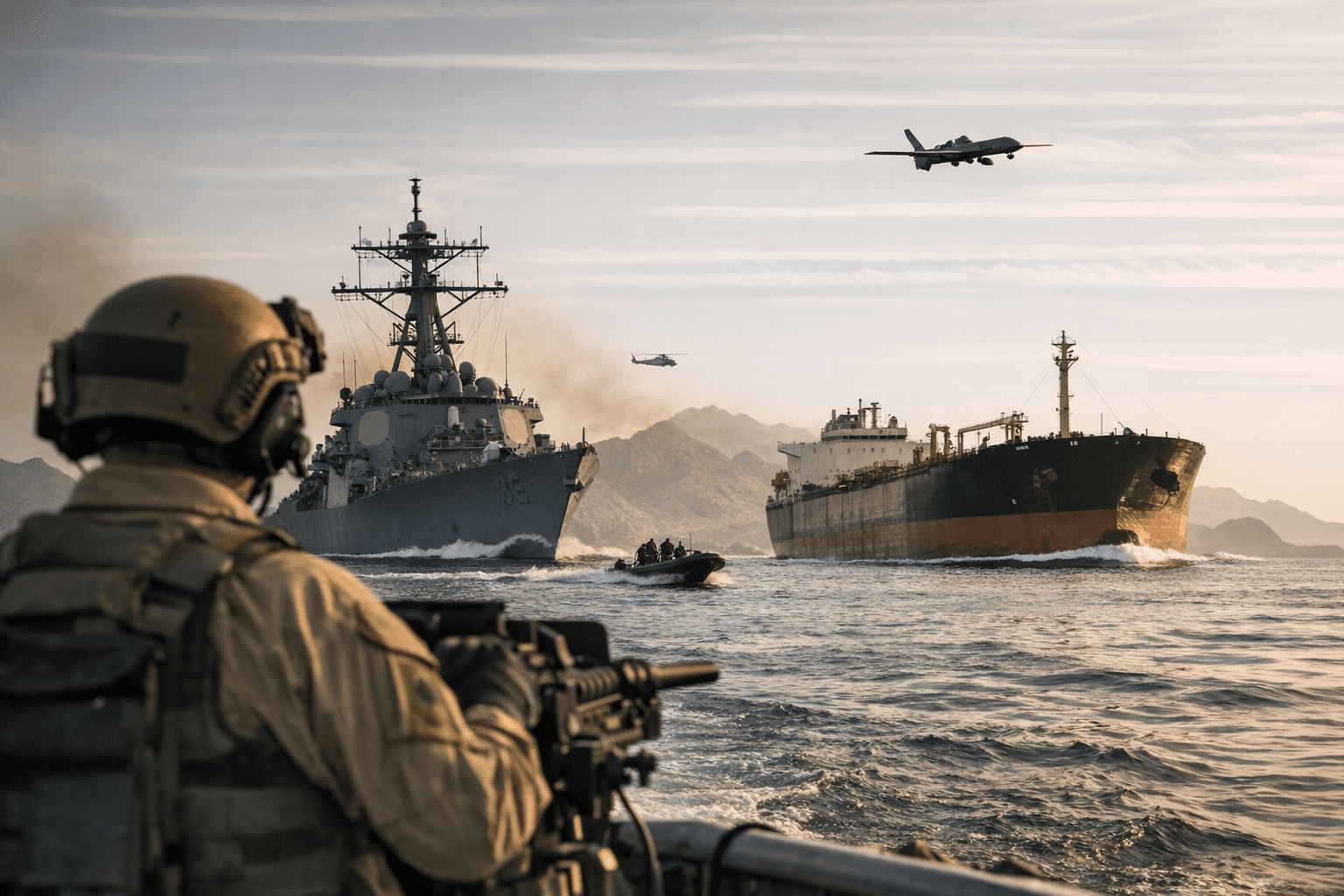
Every day, roughly 20 million barrels of crude oil and petroleum products pass through a corridor connecting the Persian Gulf to global markets. That corridor, the Strait of Hormuz, accounts for approximately 20 percent of the world's petroleum liquids consumption and more than a quarter of all seaborne oil trade, according to the U.S. Energy Information Administration. When Ret. Gen. Frank McKenzie told CBS News' "Face the Nation" in February 2024 that the U.S. was "on our way" to keeping it passable, he was describing a military operation with a direct line to every American's gas bill.
"We're on our way to doing that now, Margaret. This is part of a plan that's been in existence for many years," McKenzie told host Margaret Brennan on Feb. 4, 2024. McKenzie served as head of U.S. Central Command for three years under both the Trump and Biden administrations. He described the plan in sequenced phases: first, suppress Iran's ability to target commercial ships through its "short range missiles, their drones and other activities" by "maintaining air superiority over southern Iran on a 24/7 basis, looking for where these missiles are and striking them relentlessly." Once that threat falls to a sufficiently low level, mine-clearing operations become possible.
In McKenzie's operational vocabulary, "passable" requires all three layers addressed: missile and drone threats dismantled, Iranian mining capacity either preempted or cleared, and continuous air cover over southern Iran sustained. His own certainty about timing contained a deliberate caveat: "I'm not certain they put mines in the water yet. I predict eventually they will. It's their nature, but we have the ability to do this. We're on, we're on plan."
The economic exposure behind that uncertain timeline is measurable. Goldman Sachs Research has estimated that a full four-week closure of the Strait could add approximately $14 to the price of a barrel of oil, even with partial use of pipeline bypass alternatives. That swing translates directly into retail gasoline prices and diesel costs across supply chains, and it compounds through the shipping market: war risk insurance premiums on tankers transiting conflict zones in the region have historically spiked well above their baseline during periods of heightened military tension, adding cost layers that carriers pass straight to importers and ultimately to consumers.
McKenzie defined victory in terms that reached beyond the waterway itself. "I think a success looks like the Strait of Hormuz is open. We get some kind of deal on the ballistic missile program, some kind of deal on the nuclear program," he said, calling those three outcomes "very discreet things" that would nonetheless represent what winning looks like from an operational military perspective. "I believe all of those things are actually within our grasp. We just need to continue."
His optimism rested on a specific theory of Iranian behavior. "The primary goal of Iranian statecraft, Margaret, is survival of the regime," he said, and that survival instinct, he argued, ultimately overrides Tehran's other strategic priorities, which he enumerated as the destruction of Israel and the expulsion of the United States from the region. He cited Tehran's late-1980s decision to accept a truce with Iraq at the war's worst moments, an episode known in Iranian history as "drinking from the poison chalice," as evidence that the regime will accept imperfect agreements when the pressure becomes existential.
"Iran will ultimately respond to the use of force," McKenzie said. "Other administrations have been thoroughly deterred by Iran. President Trump is not deterred by Iran."
Iran policy analyst Karim Sadjadpour also joined the Face the Nation discussion that day, though the available transcript portions did not include his remarks.
The sequenced plan McKenzie described in early 2024 offered a precise operational definition of what "passable" means for the world's most consequential oil chokepoint. Whether Iran mines the strait before or after that suppression campaign is complete remains the single variable that will determine how much of that projected $14-per-barrel premium the global economy ends up absorbing.
This article was produced by Prism’s automated news system from verified source data, official records, and press releases, then run through automated quality and moderation checks before publishing. The system is built and supervised by the people who set the standards it runs under. Read our full AI policy.
Did this article answer your question?


