Rethinking Pasta Cooking - Less Water, Lower Heat, Better Sauce Results
Kenji López‑Alt’s experiments show pasta can cook well in less water and at lower temps, saving energy and producing starchier finishing water for better sauce adhesion.
Kenji López‑Alt’s Food Lab experiments challenge a central kitchen tenet: you do not always need a giant pot of rolling boil to cook great pasta. His tests show that pasta will cook evenly in far less water or at lower temperatures around 180°F if you stir regularly, and that the concentrated, starchy cooking liquid that results is a powerful tool for finishing sauces.
The practical payoff is immediate. Smaller volumes of water heat faster, so total cook time and energy use drop. That matters in cramped kitchens, for cooks using small burners or induction plates, and for anyone who wants a saucier, better-textured final dish without waiting for a kettle-sized boil. The starchy water left behind when you use less liquid has more concentrated suspended starch, which helps sauce cling to pasta instead of pooling on the plate.
Technique is straightforward and forgiving. Preheat a portion of your water in a kettle to speed the process and add it to the pot so pasta reaches cooking temperature sooner. Stir frequently; in lower-temperature or low-water methods, agitation keeps strands or shapes separated and exposed to hot water, promoting even gelatinization of the starch. Resist the impulse to drain immediately: finishing pasta in the sauce while tossing with reserved pasta water creates silkier emulsions and lets you dial texture and thickness on the fly.
These findings shift some commonly repeated rules. A roaring boil used to be considered essential mainly to prevent sticking and ensure even heat transfer, but regular stirring and concentrated water allow similar outcomes with less volume and at milder temperatures. The method also produces a more usable finishing liquid: because starches are less diluted, a little reserved water goes a long way when you toss pasta with sauce to loosen, thicken, or season.
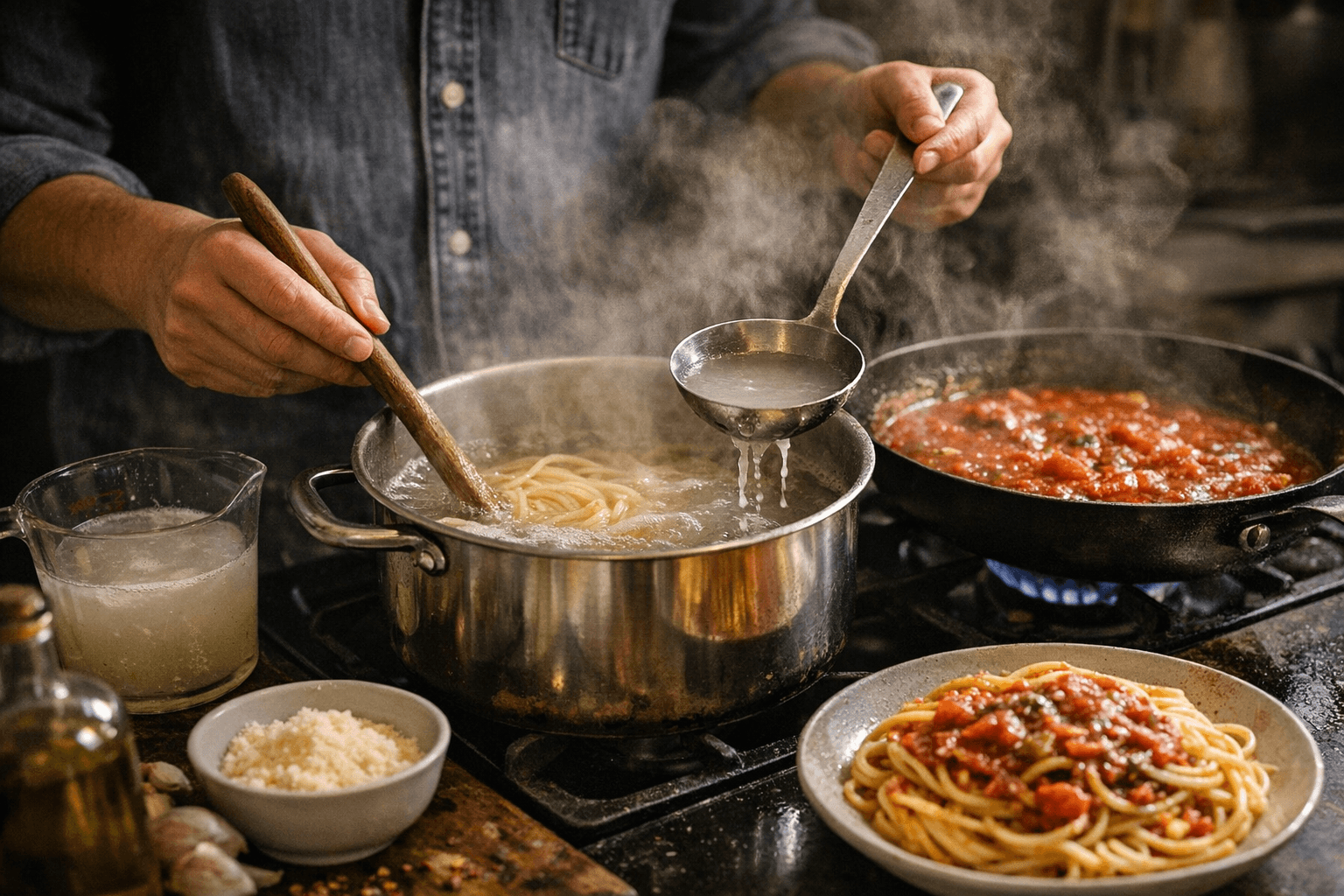
For home cooks, the most useful takeaways are hands-on: preheat some water, stir regularly, keep a small ladle of pasta water before draining, and don’t be shy about finishing the pasta in the pan with the sauce. These tweaks are low-risk experiments to run on weekday dinners and scaled-up Sunday batches alike.
What this means for your next pot is simple: you can trim heat and time without sacrificing texture, and you’ll gain a natural, flavor-friendly thickener that makes sauces cling like pros’ versions. Expect more home kitchens to adopt these shortcuts and to iterate on shapes and timing as the community tests what works best for their burners and their favorite sauces.
Know something we missed? Have a correction or additional information?
Submit a Tip