Retiring GOP Senator Warns Iran War Lacks Any Post-Conflict Strategy
Sen. Thom Tillis says he fears a "precipitous exit" from the Iran war as lawmakers from both parties report receiving no exit plan from the White House.
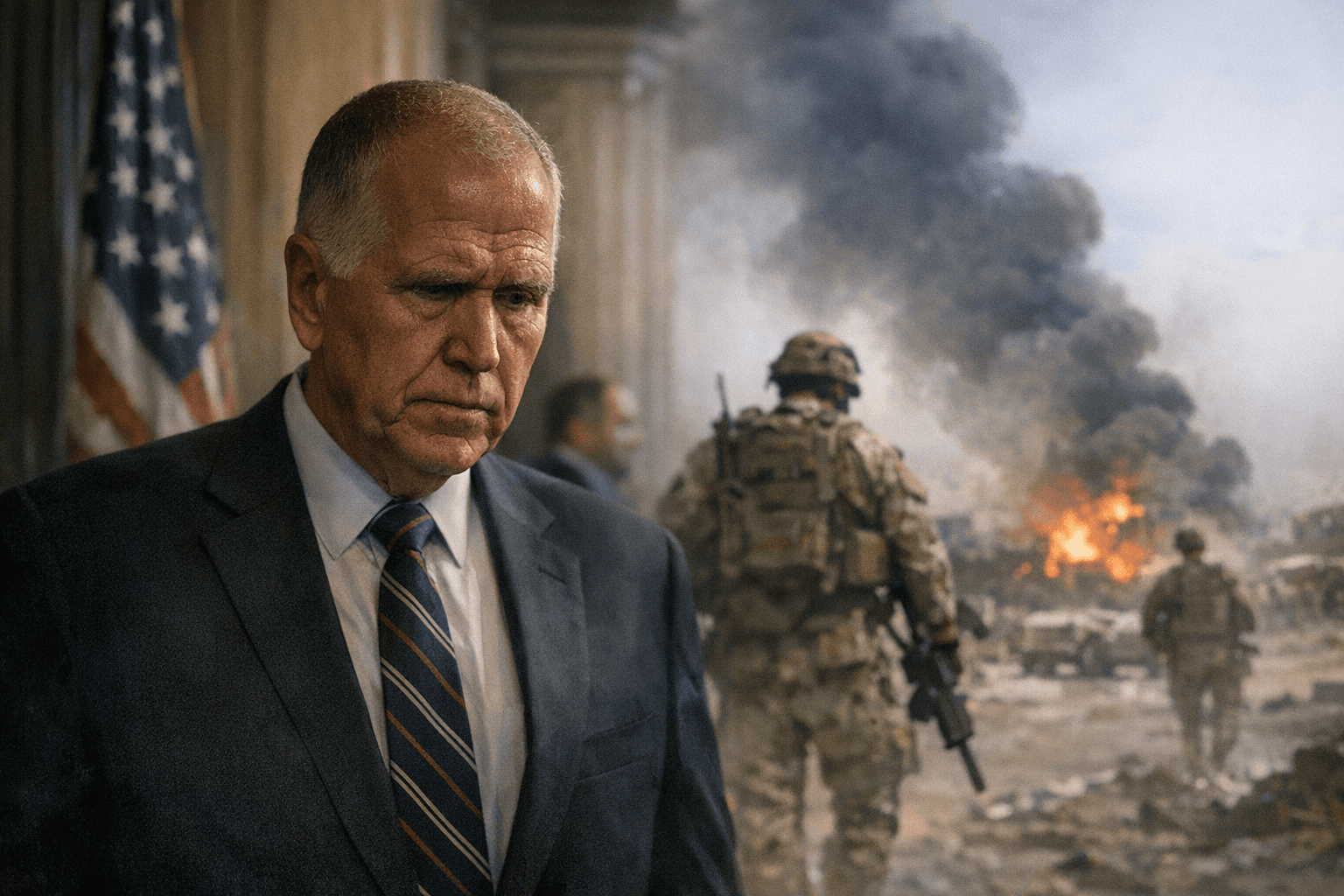
Retiring Sen. Thom Tillis broke with the White House's triumphant tone on the Iran conflict, warning in an interview with journalist Jonathan Karl that the United States lacks any coherent plan for what comes after the fighting stops and that a rushed withdrawal could leave Iran free to regroup and punish its own people.
"What I'm worried about is a precipitous exit before we have any on-ramp for reform," Tillis said. "I think there are a lot of things that could happen to the Iranian people and the retribution that would come from this regime."
The North Carolina Republican's comments arrived as the war entered its third week with the Iranian government still in power and the Strait of Hormuz, a critical artery for global oil shipments, remaining mostly closed. Despite those conditions, President Trump on Sunday night again contended that the U.S. and Israel have "essentially defeated Iran."
Tillis directly challenged that framing, calling for what he described as "an after strategy, after hostilities, to make sure that we're just not leaving them out there and not able to regroup." He pointed to the leadership transition inside Iran as a specific cause for concern: the late supreme leader was killed on the war's first day, and his son Mojtaba Khamenei has since been sworn in as successor. "I think in some respects he could even be worse than his father," Tillis said.
The senator's alarm reflects a widening unease on Capitol Hill. Lawmakers from both parties say they have not heard administration officials describe any exit strategy, a striking gap as the conflict grinds into its fourth week.
Sen. John Boozman of Arkansas, a member of the Senate Defense Appropriations Subcommittee, offered the clearest account of what administration officials have actually communicated in briefings. Those conversations, he said, focused on preventing Iran from acquiring nuclear weapons and halting its production of long-range ballistic missiles. "The ability to prevent Iran from possessing nuclear weapons, and then also their ability to continue making and stockpiling these large ballistic missiles that have tremendous range. So those are the main things," Boozman said. He added that officials had mentioned regime change as an additional aim, though he framed it as secondary. "They've also talked about regime change, to some degree. But those are the primary things that they're trying to do, prevent their ability to wage war."
Notably absent from Boozman's account was any mention of an endgame or withdrawal timeline, the very absence that Tillis called a structural failure.
The disconnect between Trump's claim of near-victory and the ground-level reality, a functioning Iranian government and a choked critical waterway, puts congressional Republicans in a difficult position. Tillis, unencumbered by re-election pressures as a retiring senator, spoke with unusual directness about what he sees as the administration's blind spot: winning a military campaign without a framework for what winning actually requires.
The Strait of Hormuz closure alone carries global consequences. Roughly 20 percent of the world's oil supply passes through that chokepoint, and a prolonged shutdown threatens energy markets far beyond the Persian Gulf. With no exit strategy on the table and a new and potentially more hardline leadership installed in Tehran, the path from conflict to stability remains, by congressional Republicans' own account, undefined.
This article was produced by Prism’s automated news system from verified source data, official records, and press releases, then run through automated quality and moderation checks before publishing. The system is built and supervised by the people who set the standards it runs under. Read our full AI policy.
Did this article answer your question?