Reusable Rocket Technology Advances, Bringing Mars Missions Closer to Reality
Reusable boosters have already slashed launch costs by more than 80%; now Starship's catch-and-relaunch design aims to make Mars missions economically viable within this decade.
The Economics of Getting to Space
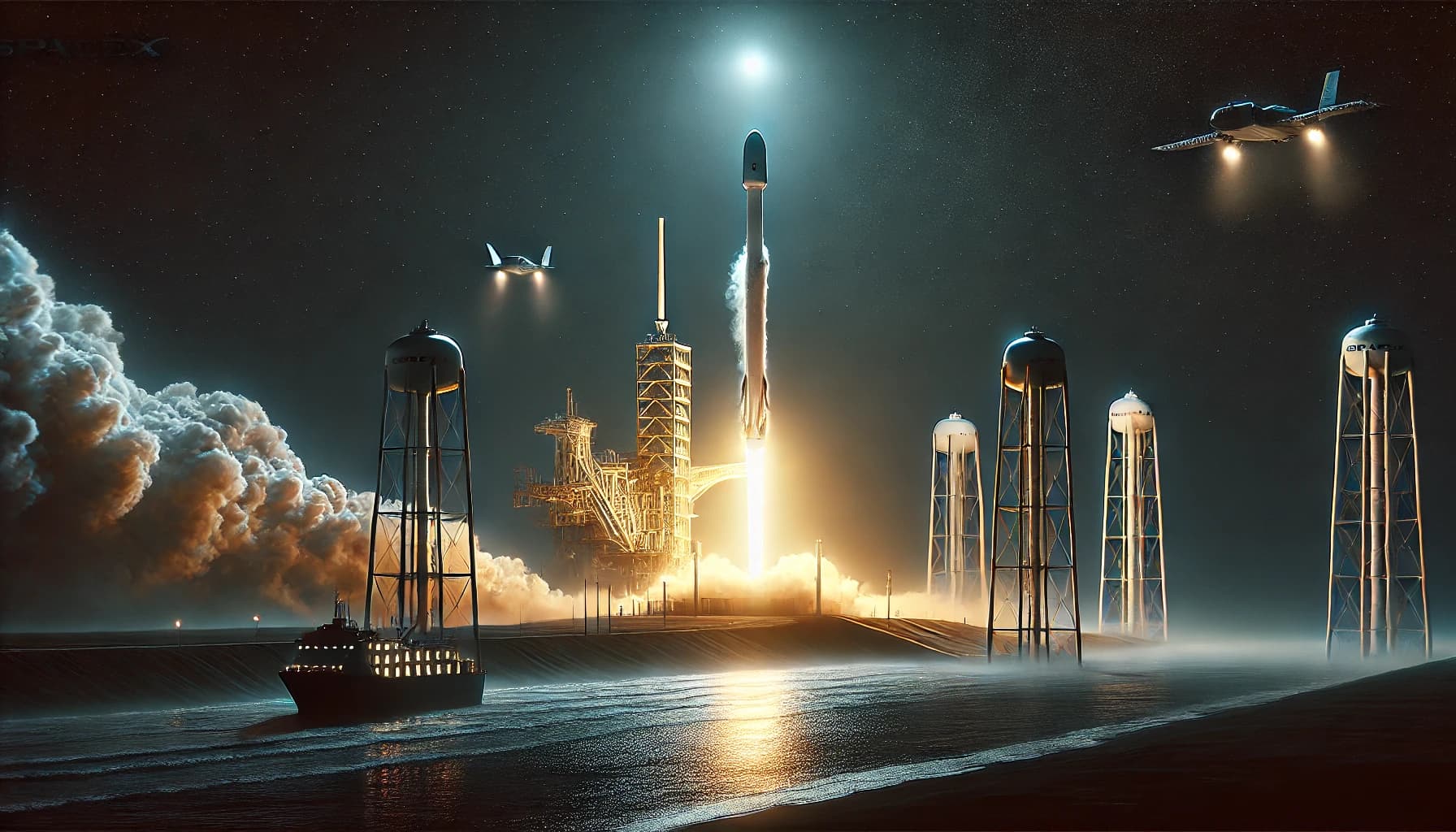
For most of spaceflight history, a rocket was a single-use instrument. You built it, you burned it, and you paid for it all over again the next time. The average cost to launch an expendable rocket runs between $110 million and $180 million per mission. That price tag didn't just make launches expensive; it dictated what missions were even worth attempting, how frequently governments could afford to fly, and who got left out of space entirely. Reusability changed the arithmetic in ways that are still rippling through the industry.
SpaceX has asserted that Falcon 9's recovery and refurbishment costs run under 10% of the vehicle's total value, with the program achieving financial breakeven after just two flights and yielding substantial savings by the third. That claim reshapes the whole accounting model: instead of treating each rocket as a disposable product, SpaceX treats its booster fleet more like an airline treats its aircraft, amortizing costs across dozens of flights. As of 2024, SpaceX's internal costs for a Falcon 9 launch are estimated between $15 million and $28 million, a fraction of what competing expendable systems charge. The Falcon 9 is advertised to customers at around $62 million per launch, meaning even the sticker price undercuts the expendable market while still leaving room for healthy margins.
Turnaround Time: The Real Competitive Weapon
The cost savings are only half the story. The other half is cadence, and here the numbers are genuinely startling. The Falcon 9 can be reused within 21 days after landing, a fast turnaround that allows rapid launches without waiting for new rockets to be built from scratch. In practice, SpaceX has pushed that envelope even further. One Falcon 9 booster spent just nine days in refurbishment between flights on the Starlink Group 4-16 mission, a record that stood until booster B1080 broke it by launching within 14 days between November 11 and November 24, 2024. At the extreme end, the drone ship "A Shortfall of Gravitas" achieved a fastest-ever landing-to-landing turnaround of just 84 hours between the Starlink Group 6-60 and Group 6-64 missions.
The cumulative effect on a single booster's lifespan is equally striking. Booster B1067 has now been flown and recovered 33 times, with flights stretching from late 2024 through February 22, 2026. B1085 became the first booster in history to fly ten times within a single calendar year, reaching that milestone on December 5, 2024. These are not laboratory achievements; they are the operational drumbeat of a program that now accounts for more than half of all global launches in 2024.
Starship: Rewriting What a Rocket Can Do
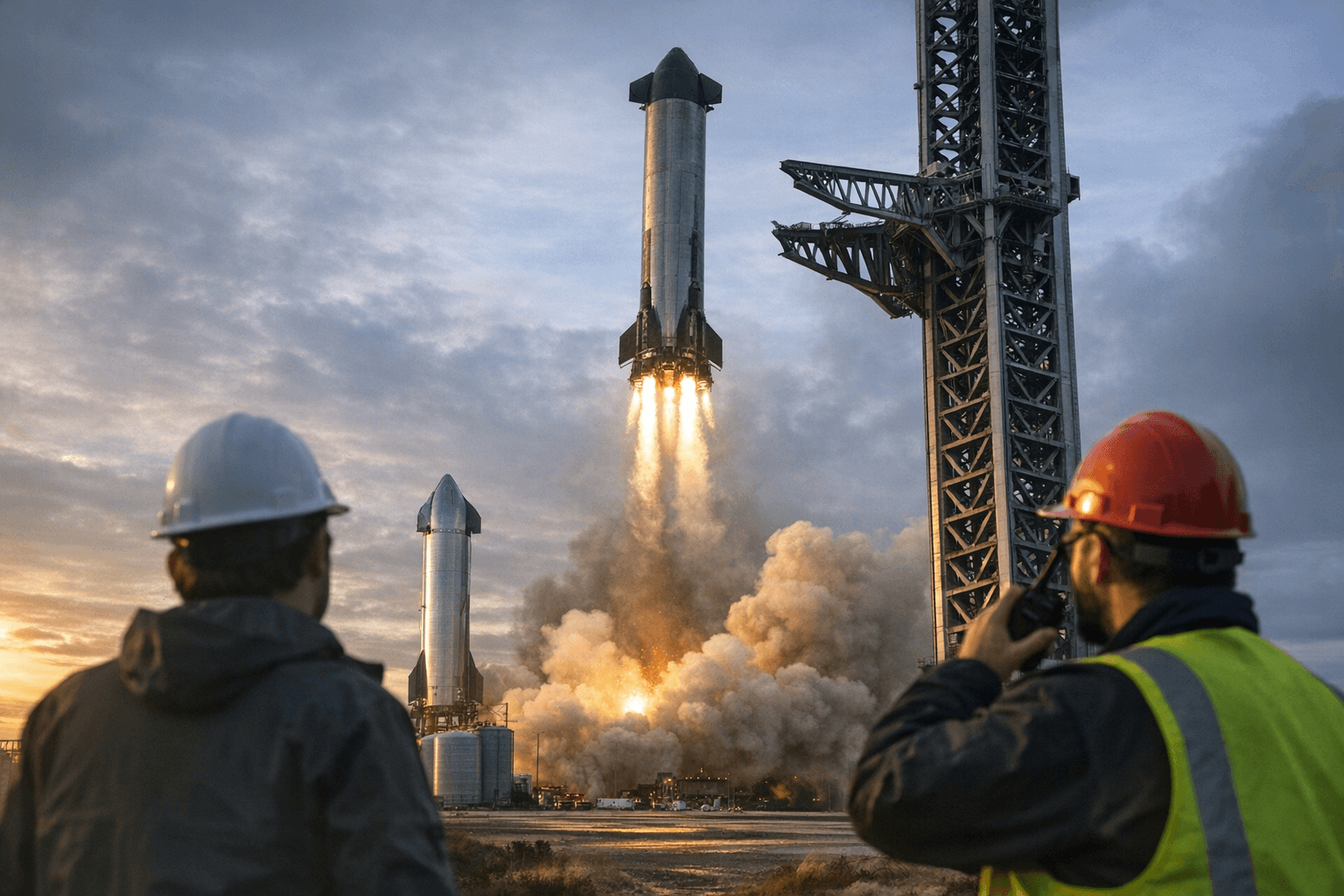
Falcon 9 proved the concept. Starship is the attempt to industrialize it. As of October 13, 2025, the Starship system had launched 11 times, recording 6 successes and 5 failures. The development cadence is deliberately iterative: rapid iteration is a core part of the program, with engineers analyzing data from each test flight and quickly implementing improvements in the next prototype, allowing SpaceX to identify issues early and refine systems before moving toward full-scale missions.
The vehicle's reusability architecture goes further than Falcon 9's. The Super Heavy booster removes the need for disposable rocket stages entirely; rather than relying on traditional landing legs, it uses a catch system that allows rapid recovery and reuse, which helps lower costs while increasing the speed between launches. The fuel choice matters too. SpaceX transitioned to liquid methane for Starship's propulsion in part because methane greatly minimizes residue accumulation compared to kerosene, decreasing cleaning needs and lowering overall launch costs.
The payload and cost targets are in a different category altogether. Starship is designed as a fully reusable system capable of launching 150 tons to orbit. Designed to be fully reusable, Starship aims to bring launch costs down to as little as $2 million to $10 million per mission, and by 2030, SpaceX targets an average cost of less than $100 per kilogram for LEO missions. For context, the NASA Space Launch System currently costs an estimated $2 billion per flight, making even a pessimistic Starship scenario roughly 200 times cheaper per launch.
Competition Accelerates the Curve
SpaceX is no longer the only player building toward reusability at scale. Blue Origin's New Glenn rocket reached orbit for the second time on November 13, 2025, carrying a pair of NASA ESCAPADE spacecraft headed to Mars orbit to study the planet's magnetic environment and atmosphere. That mission marked a meaningful step for New Glenn's credibility as a heavy-lift reusable vehicle. Blue Origin and Rocket Lab are arguably in the best position to challenge SpaceX with their next-generation rockets.
Rocket Lab is approaching the reusability challenge differently. Its Electron rocket has now flown 70 times with a success rate of 94.3 percent. The Electron posted a 100% mission success rate in Q1 2025, cementing its position as the workhorse of the small satellite launch industry. The company's more ambitious play is Neutron: a 13-ton, partially reusable medium-lift vehicle, with Neutron's Archimedes engine having been validated in test firings at NASA's Stennis Space Center. The broader market context reflects a sector in genuine expansion. The global launch market is projected to reach $11.9 billion, growing at a compound annual rate of 15.1%, driven by reusable rocket technology, lunar and Mars exploration, and the proliferation of satellite constellations.
The Path to Mars: What Reusability Actually Enables
The connection between launch economics and Mars is not metaphorical. Mars missions require enormous mass, orbital refueling, and the ability to absorb failures through multiple attempts. None of that is viable at $150 million per flight. It becomes conceivable at $10 million.
In a May 2025 presentation, Elon Musk stated that SpaceX was targeting the 2026/27 Mars launch window, contingent on a successful demonstration of orbital refueling capabilities. The plan calls for sending five Starships in an initial uncrewed campaign to test whether the vehicles can reliably land intact on Mars. Musk estimated a 50% chance of being ready in time for that window. If those uncrewed missions succeed, crewed flights to Mars could follow within approximately four years. If the 2026/27 window is missed, the next opportunity would extend the overall timeline by two years.
The honest constraints remain significant. Orbital refueling has not yet been demonstrated at operational scale. Starship's test record, six successes from eleven attempts, still reflects a vehicle in active development. And landing on Mars presents aerodynamic and atmospheric challenges that no amount of terrestrial booster catch-and-relaunch experience can fully simulate in advance.
What reusability has already delivered is proof of concept at every level: economic, operational, and architectural. The cost curve bent sharply downward when Falcon 9's first stage started landing upright on drone ships, and Starship's full-stack reusability represents the next bend in that curve. Whether the 2026/27 window holds or slips to 2028, the vehicles being built right now are the first in history where the economics of a Mars mission are not the primary obstacle.
This article was produced by Prism’s automated news system from verified source data, official records, and press releases, then run through automated quality and moderation checks before publishing. The system is built and supervised by the people who set the standards it runs under. Read our full AI policy.
Did this article answer your question?