RFK Jr.’s health agenda drives cuts, misinformation, measles surge
Measles cases reached 1,814 across 37 jurisdictions as Kennedy cut HHS staffing and budgets, while doctors warned vaccine policy was being politicized.
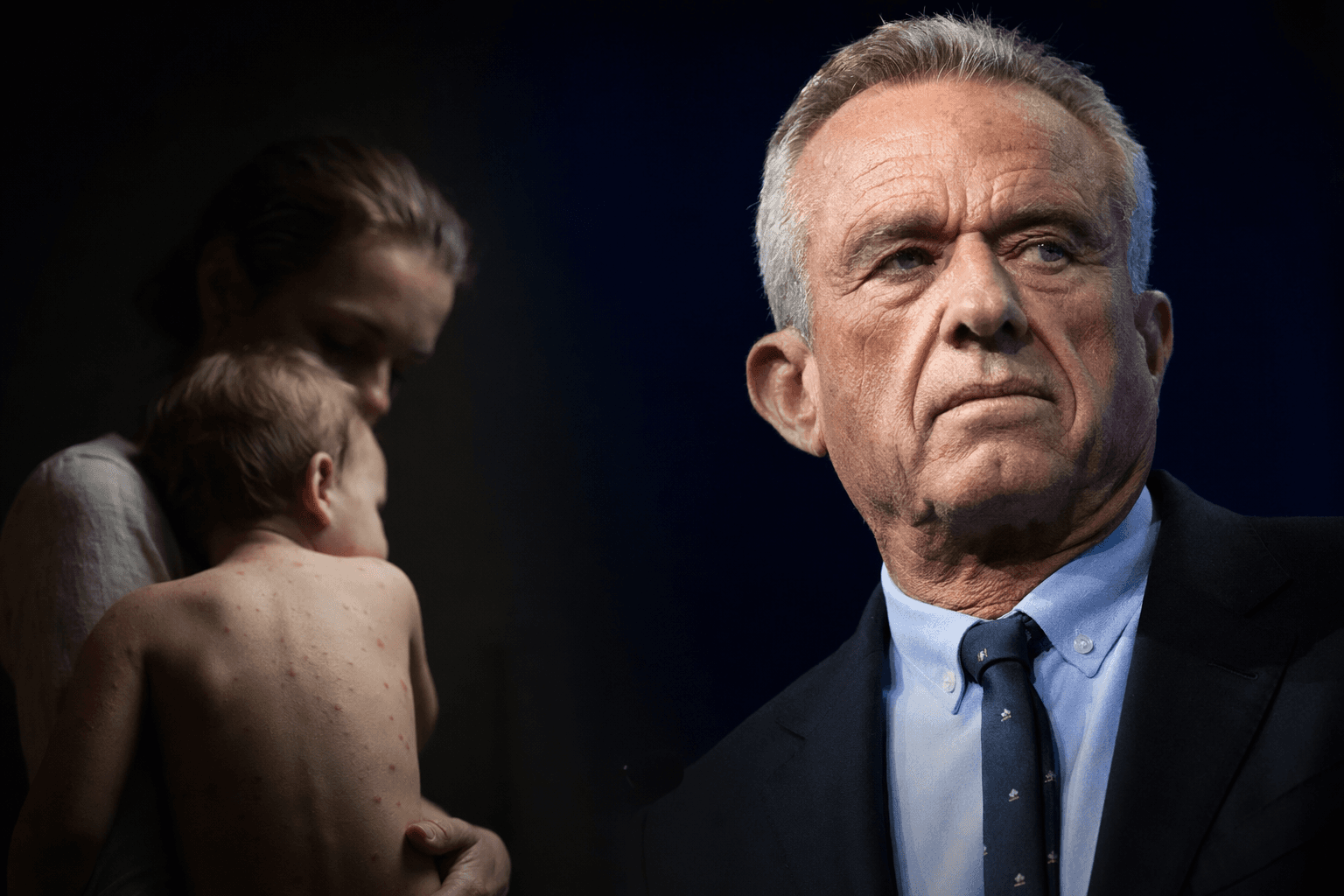
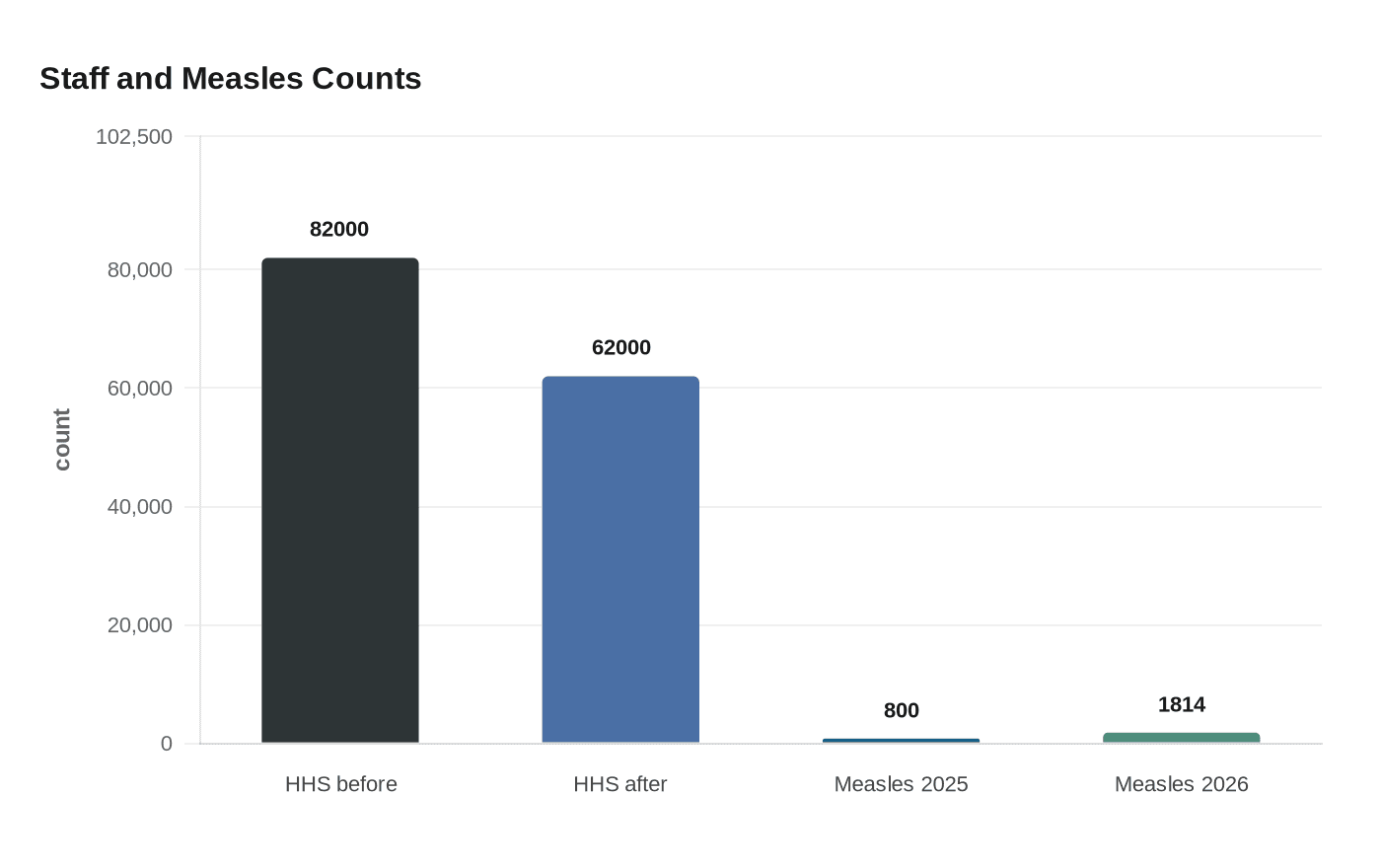
Robert F. Kennedy Jr.’s health agenda has moved beyond rhetoric and into the machinery of federal public health, where staffing cuts, budget reductions, and vaccine-policy fights are now colliding with a measles surge. Kennedy has said he reduced the U.S. Department of Health and Human Services from about 82,000 workers to 62,000, while reporting and advocacy groups say the fiscal 2026 budget would cut HHS by roughly 25 percent and sharply reduce programs at the Centers for Disease Control and Prevention and the National Institutes of Health.
The public-health consequences are already measurable. The Centers for Disease Control and Prevention reported 800 U.S. measles cases from January 1 through April 17, 2025, the second-highest annual total in 25 years. By April 30, 2026, the agency had recorded 1,814 confirmed cases across 37 jurisdictions. The World Health Organization said most of the 2025 cases it reviewed were among unvaccinated people, and 82 percent were tied to one outbreak spreading through New Mexico, Oklahoma and Texas. Hospitalization among the outbreak cases it reviewed reached 17 percent.

That outbreak is unfolding as Kennedy has attacked long-standing vaccine institutions. The American Medical Association wrote to him on June 18, 2025, expressing “significant concern” after he removed the entire membership of the CDC’s Advisory Committee on Immunization Practices. Medical groups and public-health leaders have argued that the move injects politics into decisions that shape vaccine access, insurance coverage and state immunization guidance. A federal judge blocked some of Kennedy’s vaccine-policy changes in March 2026, underscoring how far the fight has moved into the courts.
State and local health officials have warned that the damage is not limited to vaccine messaging. The Association of State and Territorial Health Officials said eliminating the Hospital Preparedness Program and cutting the Public Health Emergency Preparedness Program would mean a net loss of hundreds of millions of dollars in federal support, with rural and under-resourced states facing the steepest risk. Those programs help hospitals and health departments prepare for surges, outbreaks and emergency response, the exact systems now under strain as measles spreads again.
The political backlash has widened as Kennedy defends the agenda on Capitol Hill. ABC News reported that he faced questions about NIH cuts, vaccine messaging and the firing of the former CDC director during congressional testimony. Public opinion has not moved in his favor: KFF polling in April 2025 found broad opposition to cuts in federal health-agency funding and staffing, with majorities saying the reductions would hurt veterans’ care, cancer research, infectious-disease control and food safety. The Guardian’s framing of Kennedy’s health project as part of a Christian nationalist worldview has sharpened the criticism, but the governing record is easier to measure: fewer staff, smaller budgets, weakened advisory structures, and more patients ending up in hospitals with diseases public health once kept contained.
This article was produced by Prism’s automated news system from verified source data, official records, and press releases, then run through automated quality and moderation checks before publishing. The system is built and supervised by the people who set the standards it runs under. Read our full AI policy.
Did this article answer your question?