Rising Gas Prices Could Wipe Out Tax Refund Gains, Analysis Finds
Stanford economists find a $740 household gas spike tied to the Iran war could nearly erase the $748 per-person refund boost projected under Trump's new tax law.
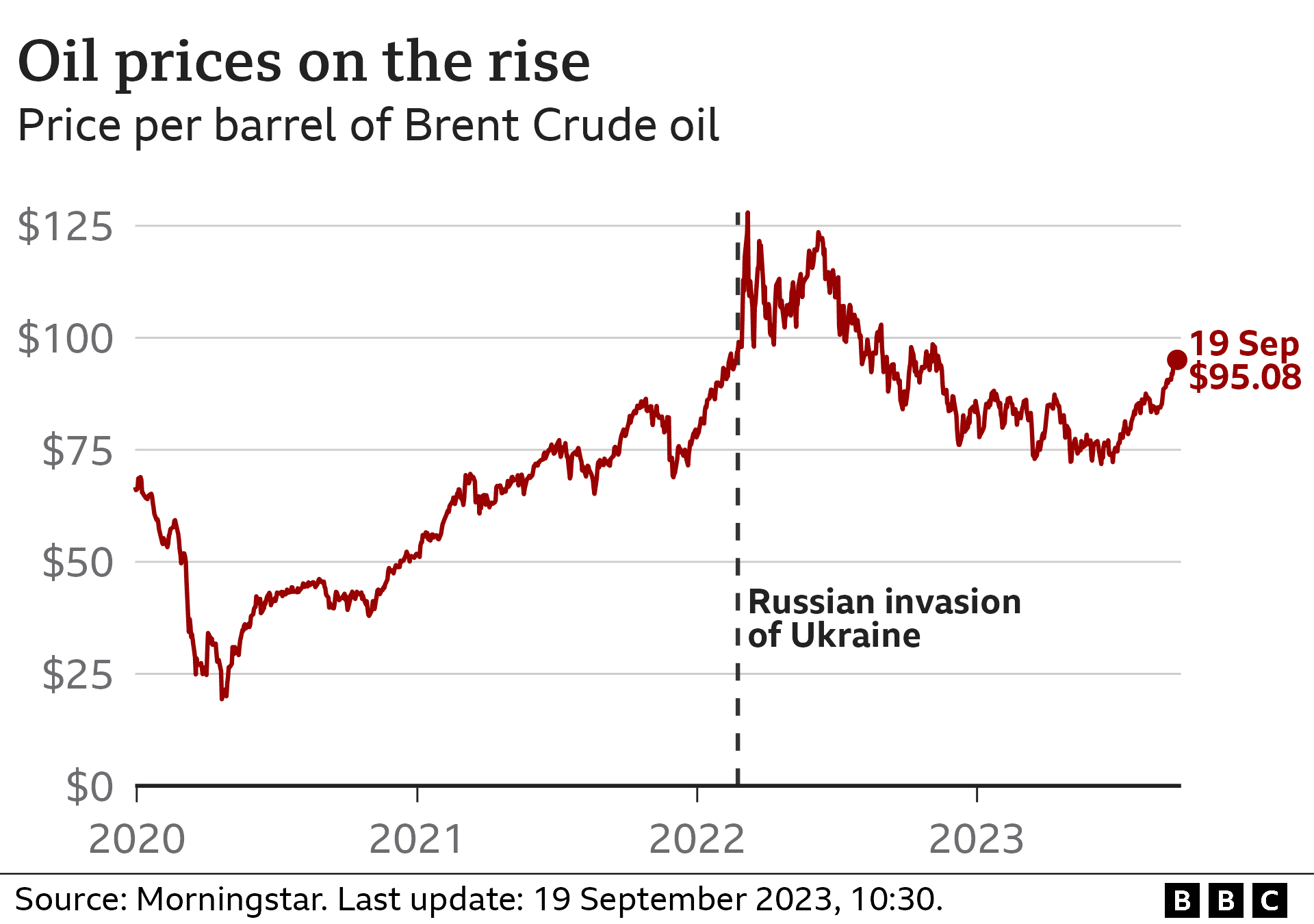
The math is almost perfect in its cruelty. Stanford economists have calculated that the average U.S. household will spend $740 more on gasoline this year because of oil price spikes tied to the Iran war, a figure that nearly erases the $748 increase in tax refunds projected under the Republican "One Big Beautiful Bill Act."
For a suburban commuter driving 15,000 miles annually at 25 miles per gallon, the roughly $1-per-gallon spike since Feb. 28 adds about $600 in extra fuel costs for the year. A rural driver logging 25,000 miles in a pickup averaging 18 miles per gallon absorbs more than $1,300 in additional yearly costs. A full-time gig worker at 40,000 miles sees the arithmetic turn sharply negative before a refund check arrives.
Neale Mahoney, director of the Stanford Institute for Economic Policy Research, projects gas could peak in May at $4.36 per gallon, based on Goldman Sachs oil forecasts, if the Strait of Hormuz remains closed for another three weeks and oil tops $110 per barrel in March. Even after any price peak, relief is expected to arrive slowly: economists describe the asymmetry as "rocket and feathers," where prices spike fast and fall slow.
Gas has already climbed sharply. The national average reached $3.88 per gallon, up 96 cents from a month earlier, according to AAA data, with Brent crude rising to nearly $111 a barrel and the U.S. benchmark jumping to roughly $99. The Strait of Hormuz, through which more than 20% of the world's oil supply is exported, has been effectively closed following ongoing strikes and counterattacks since President Trump initiated a military operation against Iran on Feb. 28, in coordination with Israeli forces.
Oxford Economics calculated two scenarios. If gas prices average $3.70 per gallon for the full year, consumers will spend roughly $70 billion more on fuel in 2026, exceeding the estimated $60 billion in additional aggregate refunds. At a $3.60 annual average, that consumer cost lands at $60 billion, which Oxford described as "almost exactly offsetting the boost from refunds."
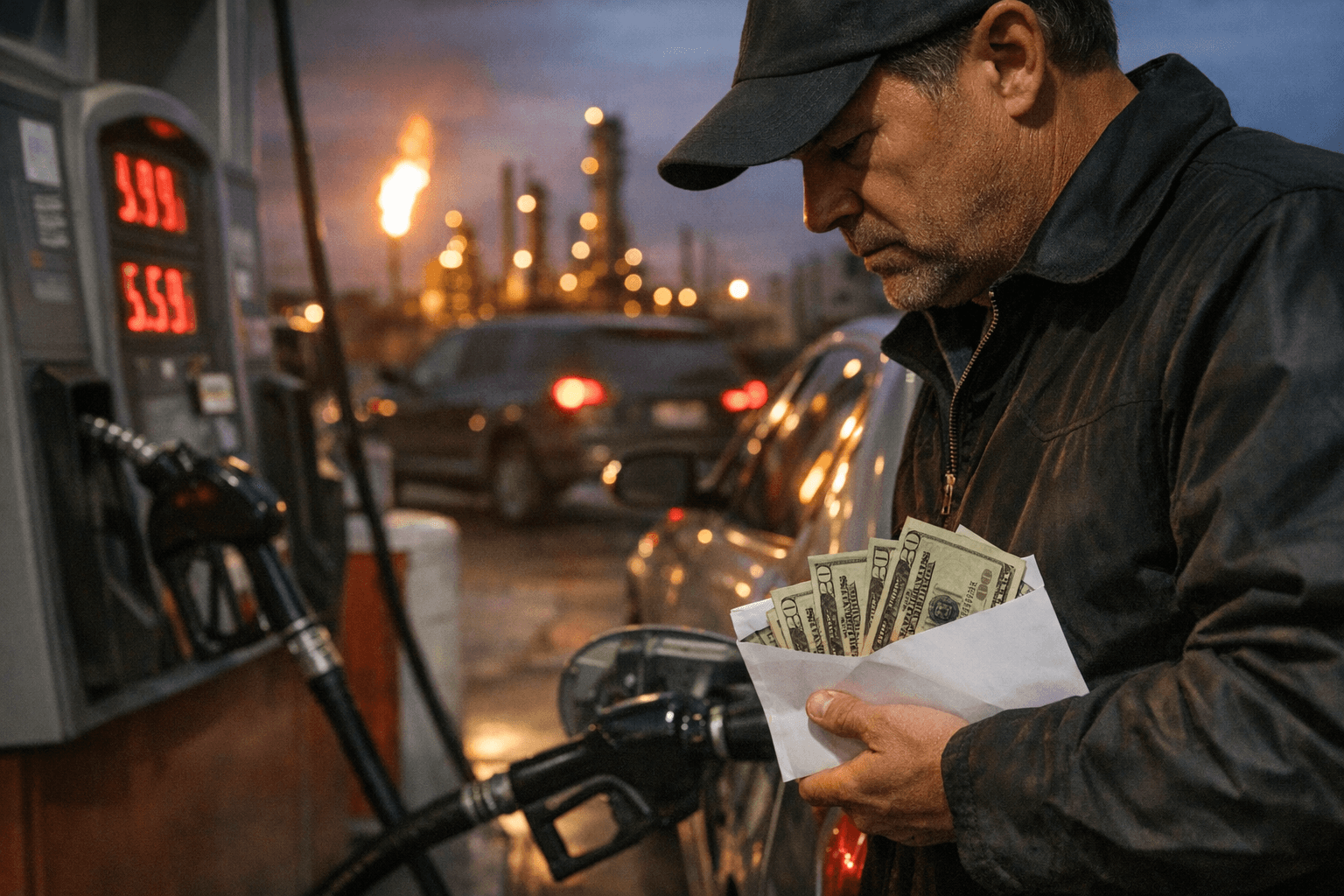
The burden falls hardest on lower earners. The bottom 80% of households spend close to 4% of their budget on gasoline, nearly twice the share of higher-income counterparts, Oxford analysts found. "The energy shock is going to hit those who have the least cushion," said Alex Jacquez, chief of policy at the left-leaning Groundwork Collaborative and a former economist in the Biden White House. "And it doesn't look like those tax refunds are going to be here to save them."
Drivers most exposed have practical options before the May price peak. Adjusting federal withholding now redirects the refund benefit into each paycheck rather than holding it for a lump sum that may be consumed at the pump by year's end. Gig workers and rural drivers face the steepest exposure; consolidating trips and maintaining tire pressure are modest tactics that compound meaningfully over tens of thousands of annual miles.
IRS data through March 6 showed average refunds at $3,676, up $352 from $3,324 in 2025, still well below the Tax Foundation's projected $748-per-person bump from the One Big Beautiful Bill Act. The law eliminated taxes on some overtime and tipped income and raised the state and local tax deduction cap from $10,000 to $40,000.
In December, Trump told the nation in a prime-time address: "Next spring is projected to be the largest tax refund season of all time." Whether those dollars survive the pump depends on how long the Strait of Hormuz stays closed.
This article was produced by Prism’s automated news system from verified source data, official records, and press releases, then run through automated quality and moderation checks before publishing. The system is built and supervised by the people who set the standards it runs under. Read our full AI policy.
Did this article answer your question?