Rising gas prices fuel concern as Trump’s Iran approval falls
Gas-price anxiety and doubts about Iran goals have pushed Trump’s approval lower, as most Americans say Washington still hasn’t explained the mission.
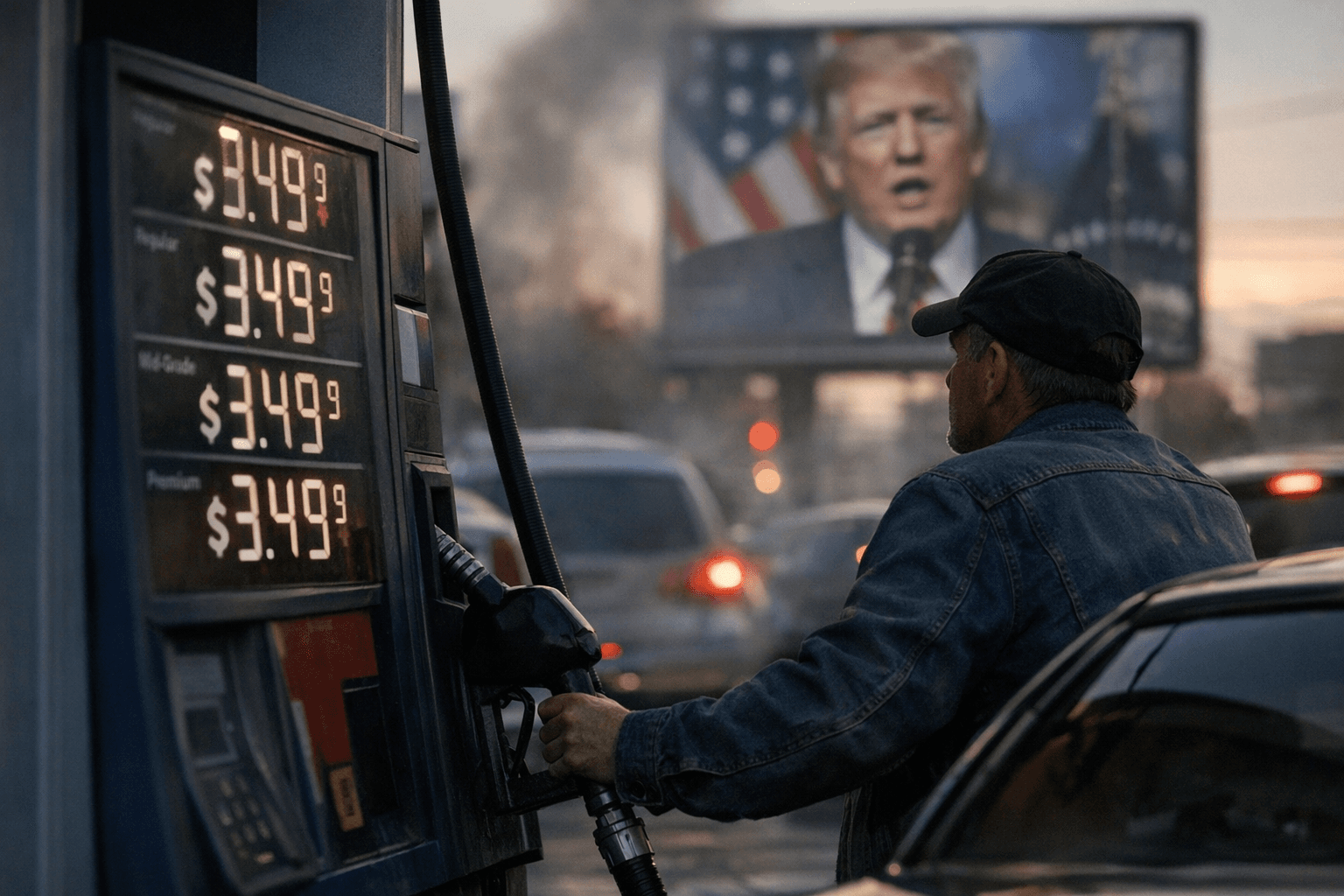
Higher gas prices are turning the Iran war into a pocketbook test for President Donald Trump, and the polling shows that voters are judging the conflict less by battlefield claims than by whether the mission makes sense at home.
CBS News found that most Americans said the Trump administration had not clearly explained the United States’ goals in the conflict with Iran. In a recontact survey of 1,399 adults taken March 2-3, after U.S. military action began, respondents also said the longer they believed the war would last, the more they disapproved. That came after a pre-strike survey of 2,264 adults fielded February 25-27, when public attitudes were measured before the fighting escalated.
By March 22, CBS News reported that Americans wanted several things at once: stopping Iran’s nuclear program, ensuring the Iranian people were free and avoiding a future in which the Iranian regime remained in power. But many also wanted the conflict to end quickly, because rising gas prices were deepening economic unease and many said Americans should not have to pay more at the pump for a war in the Middle East.
Pew Research Center sharpened that concern in a March 23-29 survey of 3,507 adults. It found 69% of Americans were concerned about higher gas and fuel prices because of the Iran war, including 45% who were extremely concerned. Only 35% said they were confident in Trump’s ability to make good decisions on Iran, while 64% said they were not. Pew also found Americans were closely divided on whether the United States was doing enough to prevent civilian casualties, underscoring how sharply public opinion has split between military aims and moral as well as economic costs.
The political damage has already shown up in broader approval numbers. Reuters/Ipsos reported Trump’s approval rating fell to 36% as fuel prices surged and disapproval of the Iran war widened. Just 25% approved of his handling of the cost of living, and 29% approved of his economic stewardship. For a president who campaigned on strength and competence, the numbers suggest that voters are linking foreign policy to the price they see on the pump sign.
The White House has said Trump’s objectives included destroying Iran’s missile capability, eliminating its navy, preventing a nuclear weapon and stopping Iran from arming and directing terrorist groups. But Congress has signaled how unsettled the politics remain. Senate Republicans blocked a war-powers resolution on March 4 by a 47-53 vote, and House Republicans later blocked a Democratic effort to end U.S. attacks on Iran on April 9. Meanwhile, traffic through the Strait of Hormuz, a critical oil transit route, remained significantly lower in early April despite ceasefire developments, keeping energy markets and consumer anxiety at the center of the political fight.
This article was produced by Prism’s automated news system from verified source data, official records, and press releases, then run through automated quality and moderation checks before publishing. The system is built and supervised by the people who set the standards it runs under. Read our full AI policy.
Did this article answer your question?

