Rising oil prices threaten higher U.S. gas bills this summer
Scotiabank economist Derek Holt says a "fear premium" pushed crude above $73, raising the odds of pricier pump costs as the driving season approaches.
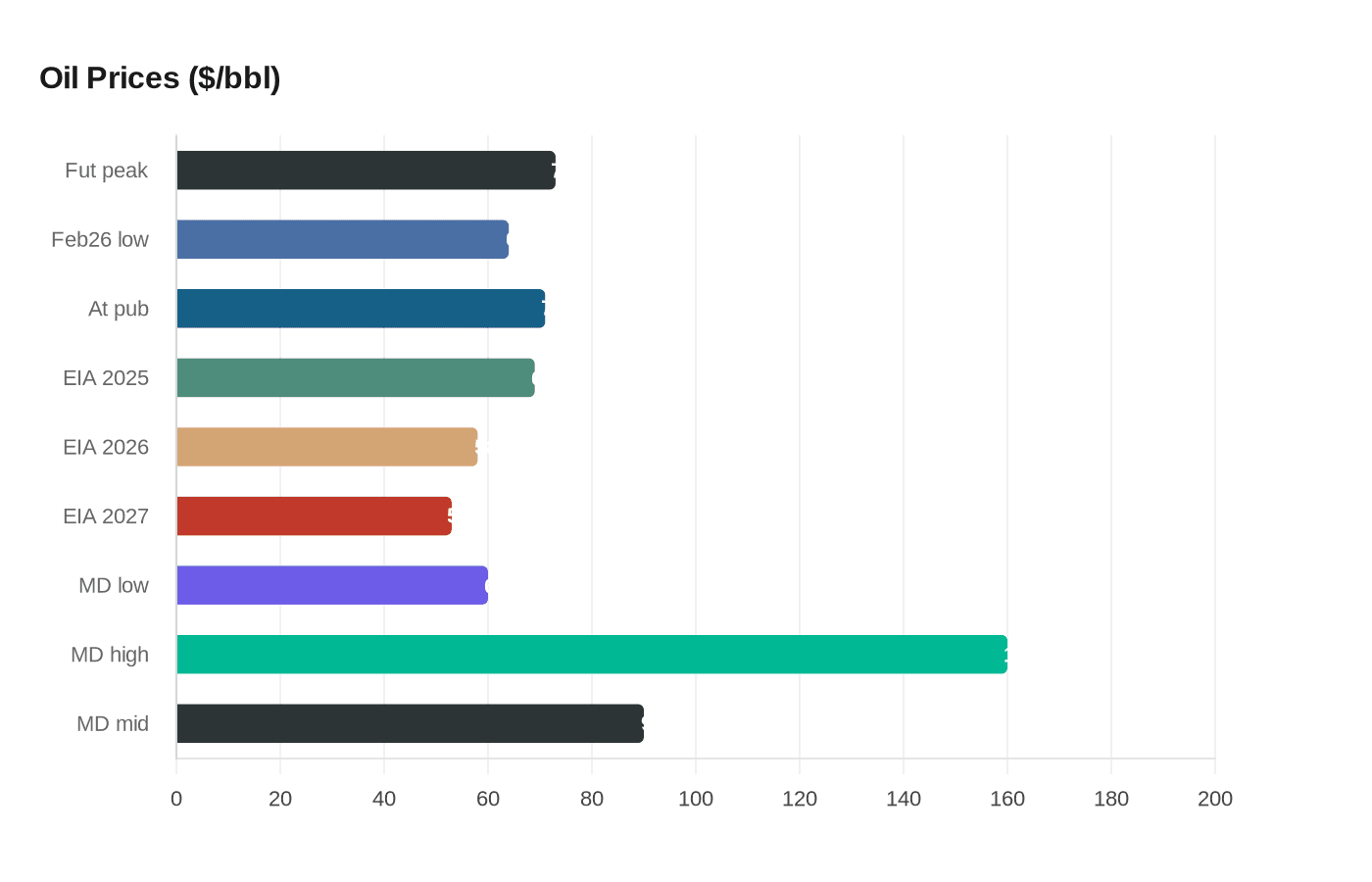
A surge in crude pushed global oil toward the low $70s and has market economists warning U.S. drivers to prepare for higher pump prices as the busy driving season nears. "A 'fear premium' is pushing up oil prices right now," said Derek Holt, vice-president and head of Capital Markets Economics at Scotiabank, as futures briefly topped $73 a barrel after trading below $64 on Feb. 26 and were about $71 at the time of publication.
Analysts say the immediate move is being driven by geopolitical risk tied to a conflict in the Middle East, layered on top of seasonal and refinery factors that traditionally lift gasoline costs in spring and summer. "The Iran situation is adding volatility and risk premium, but it’s landing on top of an already firming market," De Haan said. "Those forces were already pushing wholesale gasoline higher. The geopolitical premium simply accelerates the move."

The market mechanics are straightforward. The Middle East produces roughly a third of the world's oil supply, the U.S. Energy Information Administration notes, so any escalation that threatens flows can shrink available supply and raise crude prices. Refinery schedules amplify the effect: producers are switching to higher-cost summer gasoline blends and scheduled maintenance typically reduces refining throughput ahead of peak driving months, tightening wholesale gasoline availability even before any sustained supply shock.
How far higher pump prices could go is uncertain and depends on the duration of the conflict, inventory behavior and broader demand. Early indications that traders were pricing in a short-term disruption were reflected in the jump in crude. President Donald Trump said the conflict "could last for a month or longer," and markets responded within days.
Longer-term outlooks diverge. The EIA, in its Feb. 11, 2026 analysis, forecast that global production would continue to exceed demand and that Brent crude prices would fall from an average of $69 per barrel in 2025 to $58 in 2026 and $53 in 2027. The agency said "persistently high implied global oil inventory builds in the near-term are putting downward pressure on crude oil prices despite heightened uncertainty around the volume of crude oil exports from Russia and Venezuela." The EIA also noted that crude oil tanker rates reached multi-year highs in late 2025, a separate logistical cost that can affect delivered fuel prices.
Other modeling underscores how different scenarios can alter the outlook. A Maritime Dot study, using importer refiner acquisition costs measured in constant 2008 dollars, modeled oil prices through 2020 that ranged from a low of $60 to a high of $160 per barrel and placed a central-case outcome above $90 per barrel. That report warned of a potential eightfold increase in a pessimistic scenario and highlighted how sustained high oil prices could shift U.S. freight economics toward greater waterborne transport, if public policy and infrastructure investment support the shift.
For U.S. motorists the immediate risk is higher prices at the pump this spring and summer driven by a combination of the geopolitical risk premium, seasonal refinery transitions and stronger seasonal demand. Policymakers and market participants will be watching inventory statistics, export flows from major producers and refinery utilization closely; those variables will determine whether current price moves are a short-lived spike or the start of a longer-lived pass-through to consumer fuel costs.
This article was produced by Prism’s automated news system from verified source data, official records, and press releases, then run through automated quality and moderation checks before publishing. The system is built and supervised by the people who set the standards it runs under. Read our full AI policy.
Did this article answer your question?

