Riverhead underclassmen fuel distance surge with county relay success
Riverhead freshmen and sophomores ran personal bests and helped place third in the Suffolk County freshman/sophomore 4x800 relay (9:17). This shows deeper program growth and year-round development.
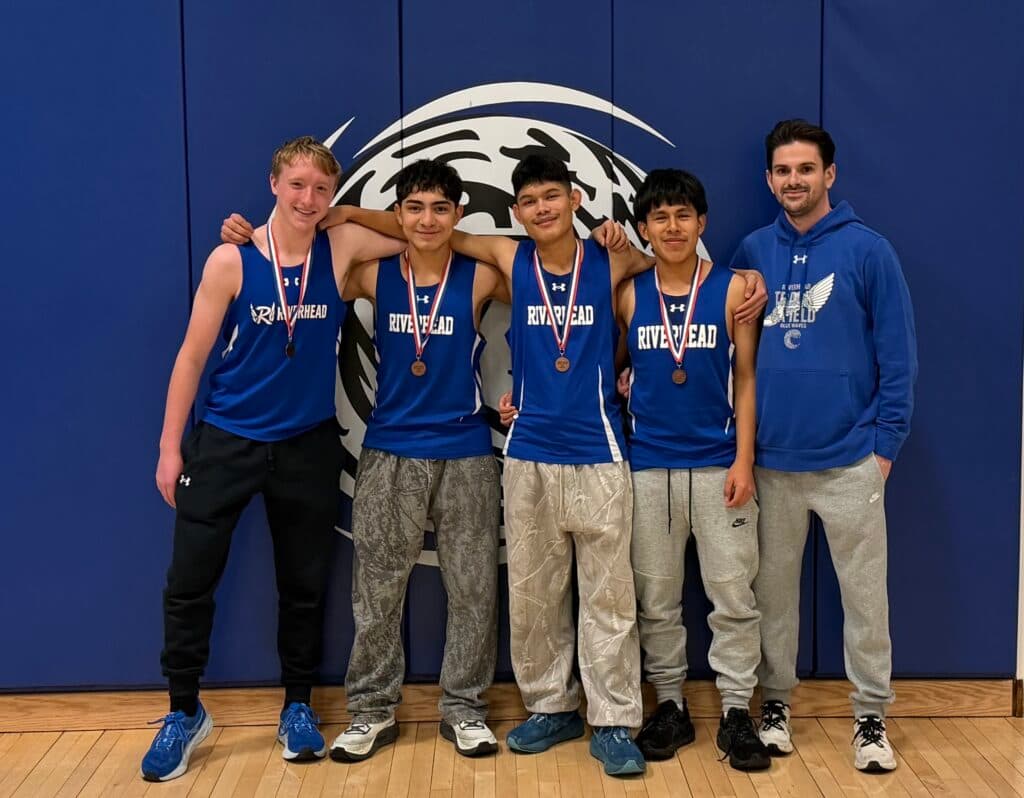
Riverhead High School’s distance program is showing measurable growth as a wave of freshmen and sophomores produced personal records at indoor meets and helped the team place third in the Suffolk County freshman/sophomore 4x800 relay on January 15, 2026, posting a time of 9:17. Coach Tyler Lobenhofer credited the underclassmen for accelerated progression and framed their performances as foundational for the program’s future.
The results came at a cluster of winter indoor meets that function as both a testing ground and a development milestone for young runners. Several first- and second-year athletes improved times across middle-distance events, trimming seconds from early-season efforts and elevating depth on relay nights. That depth translated into a podium finish at the county level, an outcome that signals more than a single-day success: it reflects a pattern of disciplined, year-round training that Riverhead has prioritized.

Institutionally, the push underscores how consistent coaching and structured development at the freshman-sophomore level can reshape a program’s trajectory. Lobenhofer’s emphasis on steady progression has created a pipeline of athletes ready to challenge for varsity roles in cross-country and spring track. For a community like Riverhead, where high school sports are community fixtures, building depth among younger cohorts helps sustain competitiveness through graduation cycles and reduces the all-or-nothing volatility that can follow an isolated senior class of stars.
The local impact is practical and immediate. Increased performance from underclassmen broadens the pool of athletes who can score in county meets, which in turn can boost team standings and attract greater community attention at home meets. For parents and prospective athletes, the results signal that Riverhead offers a developmental environment that prioritizes incremental gains and consistent coaching. For school administrators and booster groups, the trend raises policy and resource questions: sustaining year-round development requires access to indoor facilities during Long Island winters, transportation to meets, and support for offseason training programs.
Those operational needs have budgetary implications. If Riverhead wants to convert this promising freshman-sophomore cohort into long-term varsity success, the district and community stakeholders will need to weigh investments in facilities, staffing, and schedule flexibility that keep athletes engaged beyond the traditional season.
Looking ahead, the immediate next tests will arrive with the remainder of the indoor circuit and the transition to outdoor track. If the underclassmen continue to improve at the current rate, Riverhead could enter spring with a deeper, more competitive roster. For local runners and families, the lesson is clear: disciplined, year-round work is translating into miles of measurable progress, and the program’s building blocks are beginning to stack in plain view.
Know something we missed? Have a correction or additional information?
Submit a Tip