Rivian Spinoff Also Raises $200M, Partners With DoorDash on Autonomous Delivery Vehicles
Also, the Rivian spinoff, closed a $200M Series C with DoorDash aboard to build autonomous bike-lane delivery vehicles, lifting its valuation past $1 billion.
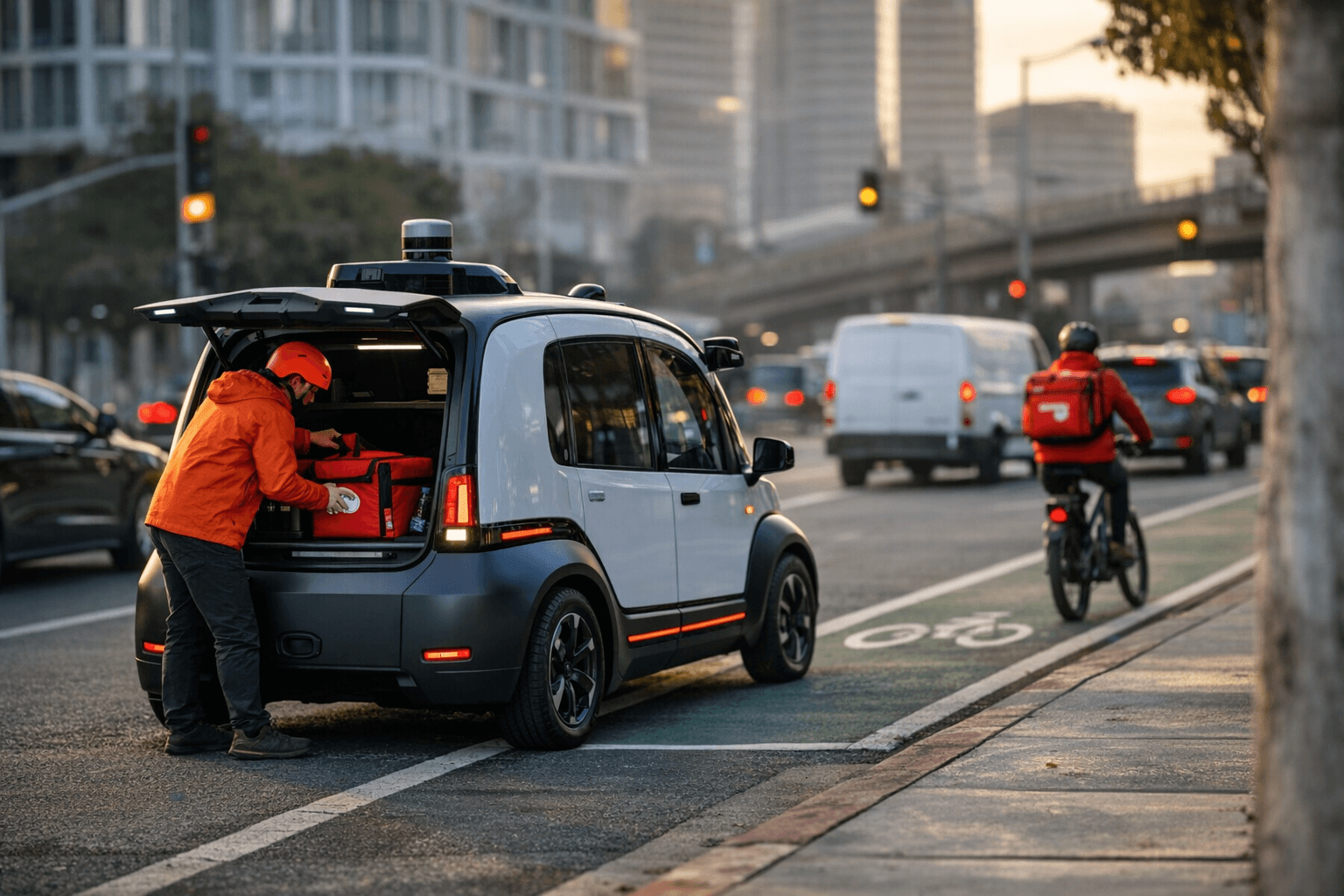
Also, the electric vehicle startup that grew inside Rivian before spinning out last year, raised $200 million in a Series C round and announced a commercial partnership with DoorDash to develop autonomous delivery vehicles, pushing its total funding to roughly $505 million and its valuation above $1 billion.
DoorDash joined the round as a direct investor and will take a seat on Also's board, a structural commitment that goes beyond a typical logistics contract and signals the delivery giant is treating Also as infrastructure rather than a vendor.
The autonomous vehicles Also is building are not the boxy sidewalk robots that have drawn sporadic attention in last-mile logistics. Also's existing product line includes small pedal-assist electric vehicles engineered to carry more than 400 pounds while fitting within bike lanes, a form factor designed to solve one of urban delivery's core constraints: the final several hundred yards where neither a cargo van nor a drone is practical. The DoorDash partnership points toward autonomous versions of those same vehicles, capable of navigating city streets and bike lanes without a human operator aboard. The sensor suite remains in development but could include cameras, ultrasonic sensors, radar and potentially lidar, mirroring approaches in use across the broader autonomous vehicle industry.
Also grew inside Rivian beginning in 2022, drawing on the EV maker's engineering talent and design infrastructure, including collaborative work with the design studio LoveFrom. Rivian has been developing proprietary autonomy hardware and custom silicon, and while it remains unsettled whether Also will integrate Rivian's autonomy stack directly or build independent systems, the technical inheritance gives Also a development foundation that would be expensive to replicate from scratch.
The commercial foundation is already substantial. Eclipse made an early $105 million investment in Also, and the company secured a significant Amazon order for thousands of delivery vehicles before the autonomous push began. The Series C closes a funding arc that began as an internal Rivian project and now sits at a nine-figure capitalization with two of the largest logistics-adjacent platforms in the country as stakeholders.
For DoorDash, the math is direct: autonomous small vehicles operating in dense neighborhoods could compress the per-delivery labor cost that strains the unit economics of fast delivery. At sufficient route density, vehicle autonomy doesn't just reduce overhead; it expands which delivery windows are commercially viable at all. DoorDash's order volume, distributed across millions of urban routes, provides the environmental variety that autonomous systems require to train effectively and justify the capital they demand.
The urban implications are harder to resolve. Fleets of small autonomous vehicles operating on bike infrastructure will pressure cities to update permitting frameworks written long before robot cargo carriers existed as a category. Pedestrian safety, bike-lane congestion and liability rules for driverless vehicles on public roads remain unsettled in most municipalities. The displacement of delivery workers, currently numbering in the hundreds of thousands across U.S. gig platforms, adds a labor dimension that local governments will find difficult to ignore as pilot programs expand.
Also's trajectory, from an internal Rivian skunkworks to a billion-dollar autonomous logistics company, is an early test of whether micromobility hardware can absorb the investment autonomy requires and still produce margins. The answer may depend less on the technology than on whether DoorDash's scale can generate the route density to make the numbers work.
This article was produced by Prism’s automated news system from verified source data, official records, and press releases, then run through automated quality and moderation checks before publishing. The system is built and supervised by the people who set the standards it runs under. Read our full AI policy.
Did this article answer your question?

