Romania’s pro-European government collapses after no-confidence vote ousts Bolojan
Romania’s parliament toppled Ilie Bolojan by 281 votes to 4, deepening a fiscal and political crisis in an EU frontier state bordering Ukraine.
Lawmakers toppled Ilie Bolojan’s pro-European coalition on May 5, handing Romania a new political crisis less than a year after he was sworn in. The no-confidence motion passed 281-4, while Bolojan’s National Liberal Party, the Save Romania Union and the small ethnic Hungarian UDMR party abstained.
The defeat was a severe blow to a government formed in June to calm one of Romania’s worst post-communist political crises and to push through deficit reduction. It collapsed in a country already wrestling with one of the European Union’s highest budget deficits, high inflation and a technical recession, a mix that made austerity politically explosive from the start.
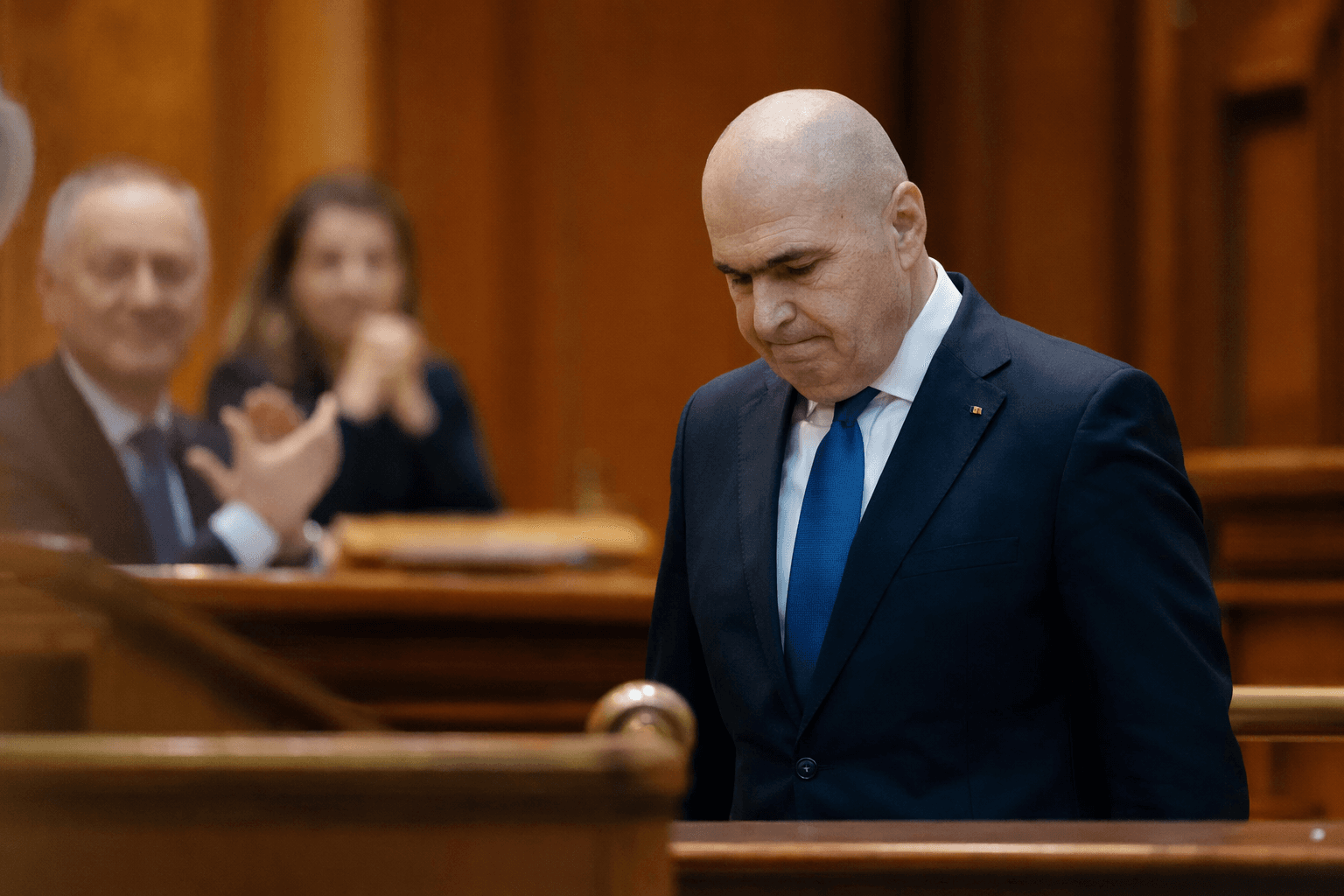
The motion was jointly submitted by the Social Democratic Party and the nationalist Alliance for the Unity of Romanians after the Social Democrats withdrew from the coalition last month. Bolojan’s fiscal agenda, built around tax hikes, public-sector wage and pension freezes and spending cuts, repeatedly put him at odds with his former partners. As the pressure mounted, the coalition’s promise to restore order and discipline in the public finances gave way to open fragmentation.
President Nicusor Dan called for calm and said negotiations were already under way to form a new government. He also made clear that he expected Romania to remain pro-Western and did not foresee early elections. That matters well beyond Bucharest: Romania sits on the European Union’s eastern flank and borders Ukraine, so prolonged instability could complicate regional planning on security, budgets and support for Kyiv.
The collapse also carries market implications. With investors already focused on Romania’s large deficit and the next government’s willingness to sustain spending restraint, the uncertain period before a new cabinet is assembled could unsettle policymakers and financial markets alike. For a country trying to bring down borrowing costs while maintaining political support for reform, the vote exposed how quickly fiscal exhaustion and political fragmentation can converge.
This article was produced by Prism’s automated news system from verified source data, official records, and press releases, then run through automated quality and moderation checks before publishing. The system is built and supervised by the people who set the standards it runs under. Read our full AI policy.
Did this article answer your question?