Royal Tunbridge Wells exhibition charts 200 years of royal photography
A free royal-photography show in Tunbridge Wells turns 200 years of monarchy into a local story about identity, tourism and heritage beyond London.
Royal memory goes on tour
A new exhibition in Royal Tunbridge Wells is doing more than displaying royal photographs. It is turning two centuries of monarchy-linked imagery into a case study in how places outside London use heritage to define themselves, draw visitors and strengthen civic identity.
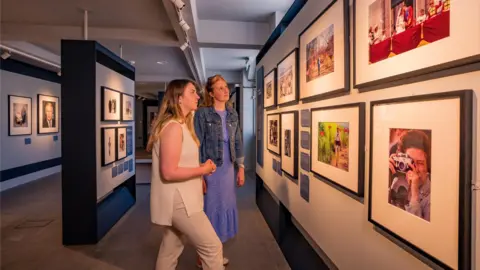
At The Amelia Scott, *Life Through a Royal Lens* brings together more than 100 photographs taken of and by the British Royal Family, tracing the relationship between the Crown and the camera over 200 years. It is the first touring exhibition from Historic Royal Palaces, and in Tunbridge Wells it runs until 7 June with free admission.
Why Tunbridge Wells is the right setting
Jeremy Kimmel of The Amelia Scott says the town’s appeal is rooted in a much older royal story. “Royal Tunbridge Wells has been shaped by centuries of royal connections, from the first royal visit in the early 1600s to what was then just woodland, to becoming the favourite summer retreat of Princess Victoria,” he said.
That local framing matters. The exhibition is not landing in a neutral venue, but in a town that has long traded on monarchy-linked prestige. By placing a national story inside a municipal museum, the display helps show how royal heritage is repackaged for modern audiences as both culture and place-making. In practical terms, that is the kind of programming that helps institutions beyond the capital turn memory into footfall.
The choice of Tunbridge Wells also reflects a wider shift in British heritage presentation. Instead of concentrating major royal narratives only in London, Historic Royal Palaces is touring a collection that can now speak to different regional audiences while still carrying the weight of national history.
From Kensington Palace to a wider audience
Historic Royal Palaces says the exhibition first appeared at Kensington Palace in 2022, where it was presented as a unique collection documenting the Royal Family’s changing relationship with photography over the last 200 years. It later travelled to Hillsborough Castle and Gardens in 2024, where the organisation said it brought together over 60 of the most iconic images ever taken of the Royal Family, dating back to the reign of Queen Victoria.
That touring history is important because it shows how monarchy-linked heritage is being recast as a portable national asset. The same material that once sat inside one palace now moves between institutions, each with its own local audience and cultural role. In effect, the royal image archive has become a touring public resource, not just a fixed palace attraction.
Eleri Lynn, chief curator at Historic Royal Palaces, has described the exhibition as spanning 300 years of family photoshoots, commissioned portraiture and official engagements, and says it is intended to tour venues across the UK. Her background as a curator and expert in fashion, image-making and the communication of power helps explain the exhibition’s broader purpose: this is not only about the monarchy as a family, but about the visual language of authority.
What the photographs reveal
The Royal Family remains one of the most photographed families in the world, and that constant exposure is central to the exhibition’s appeal. The images range from state ceremonies and royal tours to more personal pictures that offer a glimpse behind the scenes. Together, they show how the monarchy has been recorded, staged and interpreted across changing media and changing public expectations.
The exhibition’s value lies in that tension between public ritual and private life. A portrait, a press image and a candid moment all carry different meanings, yet together they track how the monarchy has adapted to photography as both an instrument of publicity and a record of national life. Historic Royal Palaces says the display explores not just royal history, but moments of national identity, cultural change and shared experience.
That wider reading helps explain why a local museum would invest in a royal exhibition now. The attraction is not simply nostalgia for crowns and palaces. It is the chance to use familiar royal imagery to tell a larger story about how Britain has seen itself, from the Victorian age to the present day.
Elizabeth II’s final public image gives the show its emotional centre
One of the exhibition’s most significant images is the last public photograph taken of Queen Elizabeth II. Captured by PA photographer Jane Barlow at Balmoral Castle on 6 September 2022, it was taken just two days before the Queen died at the age of 96.
The image carries unusual historical weight because it was taken before she formally received Liz Truss as her 15th British prime minister in the historic “kissing of hands” ceremony. That sequence, the last public image followed so closely by the end of a 70-year reign, gives the exhibition a sharp sense of historical closure. It also underlines how royal photography can become an immediate part of constitutional memory.
The inclusion of that photograph ensures the show does more than look backward. It connects Victorian portraiture, twentieth-century press photography and the digital-era monarchy in a single visual arc. The effect is to place continuity and rupture side by side, with Elizabeth II standing at the point where old ceremonial Britain and modern media culture meet.
The new reign is already part of the archive
The exhibition does not stop with the late Queen. It also includes portraits and press photographs from the first three years of King Charles III and Queen Camilla’s reign, showing how quickly a new royal era is being documented and interpreted.
That matters for the same reason the touring show itself matters. The monarchy is still being photographed into relevance, and institutions are still deciding how to frame it. By including the early Charles III period alongside Queen Victoria-era images and Elizabeth II’s final public appearance, the exhibition presents the Crown as a living institution whose image is continually remade.
For museums and heritage organisations outside London, that is the real story. Royal imagery still carries commercial appeal, but it also offers a language for explaining national change through local venues. In Royal Tunbridge Wells, *Life Through a Royal Lens* does exactly that: it turns a royal archive into a civic asset, and a palace story into a town’s own account of Britain’s identity industry.
This article was produced by Prism’s automated news system from verified source data, official records, and press releases, then run through automated quality and moderation checks before publishing. The system is built and supervised by the people who set the standards it runs under. Read our full AI policy.
Did this article answer your question?