RSPB Urges Bird Lovers to Remove Feeders in Spring and Summer
Routine garden feeding can spread a parasite that has wiped out two-thirds of Britain's greenfinches; the RSPB now says take feeders down in spring and summer.
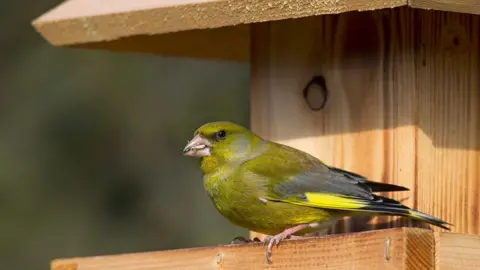
Britain's greenfinch was the seventh most common visitor to garden feeders in 1979. By 2025, it had fallen to 18th place in the RSPB's annual Big Garden Birdwatch count, a 68% collapse that scientists now tie directly to a disease that spreads fastest at garden feeders during warmer months. The Royal Society for the Protection of Birds is responding with new guidance that asks bird lovers to remove feeders altogether in spring and summer.
The shift marks a meaningful reversal for the UK's largest bird charity, which previously encouraged year-round supplementary feeding. The RSPB now acknowledges that birds can find insects, berries, and seeds more readily during warmer months, making feeders not just unnecessary but potentially dangerous during those seasons. The disease at the center of this reassessment is trichomonosis, caused by the protozoan parasite Trichomonas gallinae, which takes hold in the upper digestive tract and respiratory system of infected birds. Affected birds drool, struggle to swallow, regurgitate food, and eventually suffocate. The parasite can survive and replicate in damp food for up to 48 hours, and flat feeder surfaces where birds crowd together are particularly efficient transmission points.
Trichomonosis was once primarily a disease of pigeons and doves. Since 2005, it has moved into songbird populations with devastating results. Greenfinch numbers have collapsed by roughly 66% since the mid-2000s, prompting the RSPB to place the species on its Red List of most at-risk birds in 2021. Chaffinch populations have dropped by approximately 40% over the past decade. Dunnocks, too, have been affected in gardens where large finch populations congregate. The contrast with goldfinches is stark: that species, which can feed from hanging tube feeders rather than flat surfaces, saw its population grow by 80% between 2002 and 2012 as supplementary feeding expanded.
In December 2025, the RSPB took what observers called an unprecedented precautionary step, suspending the sale of all bird tables, window feeders, seed-catching trays, and other flat-surface products from its shops while awaiting the conclusions of two major research projects into transmission routes. That ongoing investigation is a collaboration among RSPB scientists, the British Trust for Ornithology, and the Institute of Zoology, funded by Natural England through the RSPB-Natural England Action for Birds in England partnership.
Katie-Jo Luxton, RSPB Executive Director for Global Conservation, framed the tension plainly: "Feeding garden birds helps them survive during colder weather and periods where there is a shortage of wild food. But we have to weigh this against the risks of disease spread through garden feeding." Luxton also pointed to a broader stakes: "In a biodiversity-depleted country where many are disconnected from nature, aiding that connection is more important than ever."

Jon Carter of the British Trust for Ornithology offered a measured read on the science: "Research demonstrates that there are both pros and cons to feeding the wild birds that visit our gardens. We understand the concerns that people may have about possible negative effects, particularly those linked to the emergence of infectious diseases such as finch trichomonosis. It is the evidence from this research that shapes the advice that we provide on feeding, and we will continue to update this advice as new evidence comes to light."
For those who continue feeding during the warmer months, the RSPB is specific about what to avoid. Fat balls and other fat-based foods should not be put out in summer because they go rancid in heat. Peanuts must only be offered in rigid mesh feeders, never on flat surfaces, as large pieces can choke fledgling chicks. Any feeder that remains in use should be scrubbed with mild disinfectant each week and relocated regularly to prevent droppings from accumulating in one spot.
The guidance arrives against a grim backdrop: Britain has lost an estimated 38 million birds over the past half-century. The RSPB's new seasonal approach reflects a growing scientific consensus that good intentions, executed at the wrong time or on the wrong equipment, can quietly accelerate the losses people are trying to reverse.
This article was produced by Prism’s automated news system from verified source data, official records, and press releases, then run through automated quality and moderation checks before publishing. The system is built and supervised by the people who set the standards it runs under. Read our full AI policy.
Did this article answer your question?