Rubber Tramp Rendezvous in Quartzsite, La Paz County Builds Nomad Community
Nomads gathered in Quartzsite for the Rubber Tramp Rendezvous, trading repairs, meals and mutual aid; the event highlights vehicle-dwelling as shelter and a community safety net.
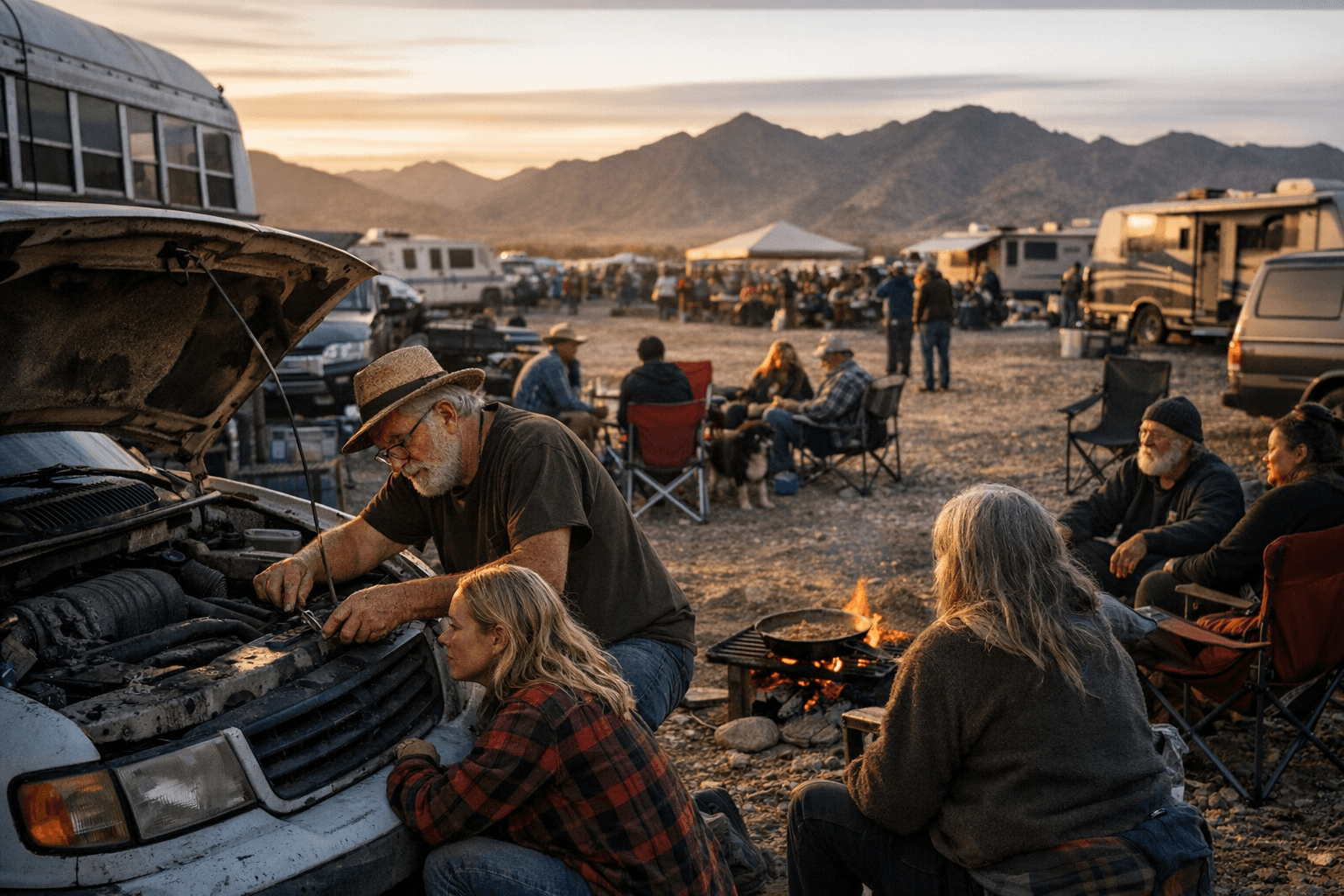
Self-described nomads who live in vans, buses, cars and RVs converged in Quartzsite in mid-January for the annual Rubber Tramp Rendezvous, an event that has grown into an organized hub for mutual aid, practical skills-sharing and basic social services. Founder Bob Wells started the first RTR in 2011. Attendees repair vehicles, swap tips and run volunteer projects that fill gaps in shelter and support.
The gathering centers on communal work and shared meals. Volunteers spent full days setting up kitchens and service points, then ate an open-air Taco Tuesday dinner as the sun slipped below jagged mountains. Derrick Hansler, known as D Rock, brought his mobile cooking project called Smell what D Rock is Cooking. “I have built a little chuckwagon. And I pull it around to all kinds of nomadic gatherings and put out food, beer, for donations or whatever you have,” Hansler said as he served a couple dozen volunteers after a day of work.
Raffle prizes at the event included a $10,000 cash award and a kitted-out ambulance designed by Bob Wells. Organizers use such incentives and volunteer-run services to sustain the event while reinforcing collective safety nets. The RTR functions as more than a hobby meet-up; participants describe it as a place where people become each other’s support systems, safety nets and security blankets.
Individual stories underscored both resilience and hardship. Retired nurse Rachele Adair faced a sudden breakdown of her van and had to be “hundreds of miles away in a matter of days” to volunteer. She scrounged up $500, bought a truck in California, loaded a mattress and clothes into the back and drove to the Arizona desert, planning to sleep in an unheated vehicle during the January event. Suanne Carlson, who co-founded the alliance with Wells, framed vehicle living as a strategy for shelter: “They’re looking at moving into a vehicle as a way to find shelter and to thrive rather than consider themselves homeless on the street.”
For La Paz County, the RTR spotlights several public health and policy issues. Vehicle-dwelling can reduce visible street homelessness, but it raises exposure risks during cold spells and creates dependence on informal networks when vehicles break down. Volunteer labor and projects like mobile kitchens mitigate immediate needs but do not replace formal access to health care, stable shelter and emergency services. The ambulance raffle nods to medical access as a community priority, yet organizers have not published comprehensive attendance figures, raffle rules or the alliance’s formal structure.
Local officials and service providers can view the RTR as both a partner and an indicator. Coordinated outreach, emergency planning for vehicle-dwelling populations and clearer pathways to affordable housing and health services would address systemic drivers that leave people choosing vehicle residence. For readers in La Paz County, the gathering is a reminder that mutual aid sustains lives in the desert now, and that policy choices about shelter, transport and health care will determine whether those safety nets hold in colder months and during emergencies.
Know something we missed? Have a correction or additional information?
Submit a Tip