Rubio Says US Expects to Finish Iran War Within Weeks
Rubio said the US is "ahead of schedule" and expects to finish Iran operations in weeks, even as G7 allies push back and the Strait of Hormuz remains effectively closed.
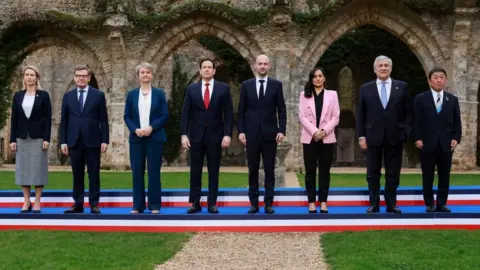
Secretary of State Marco Rubio said the United States expects to finish its operations in Iran "in the next couple of weeks," claiming its objectives were being achieved "ahead of schedule" — a confident assertion delivered at a moment when the war is grinding into its fifth week, more than 2,000 people are dead, and a critical global waterway remains largely shut down.
Rubio discussed the war in Iran with foreign ministers from leading European nations and Japan in France on Friday. He told reporters after the meeting that Washington was "on or ahead of schedule in that operation, and expect to conclude it at the appropriate time here — a matter of weeks, not months." One source said Rubio stressed the U.S. doesn't need G7 countries to help reopen the Strait of Hormuz, but wants its allies to join a maritime task force to police the strait after the war is over.
The gap between that optimism and the reality on the ground was stark. On February 28, 2026, the United States and Israel initiated coordinated airstrikes on Iran under Operation Epic Fury, targeting military facilities, nuclear sites, and leadership, resulting in the death of Supreme Leader Ali Khamenei. Iran's retaliation has been sweeping: retaliatory missile and drone strikes targeting U.S. embassies, military installations, and oil infrastructure throughout the Middle East, including vessels near the Strait of Hormuz. On March 27, the IRGC announced that the strait is closed to any vessel going "to and from" the ports of the U.S., Israel, and their allies.
Oil prices surged faster than during any other conflict in recent history, with Brent crude surpassing $100 per barrel for the first time in four years; the closure has been described as the largest disruption to the energy supply since the 1970s energy crisis. Iran has also gone further than simply blocking ships: Iranian media reported that the country's parliament is seeking to pass legislation to collect tolls for ships transiting the waterway.
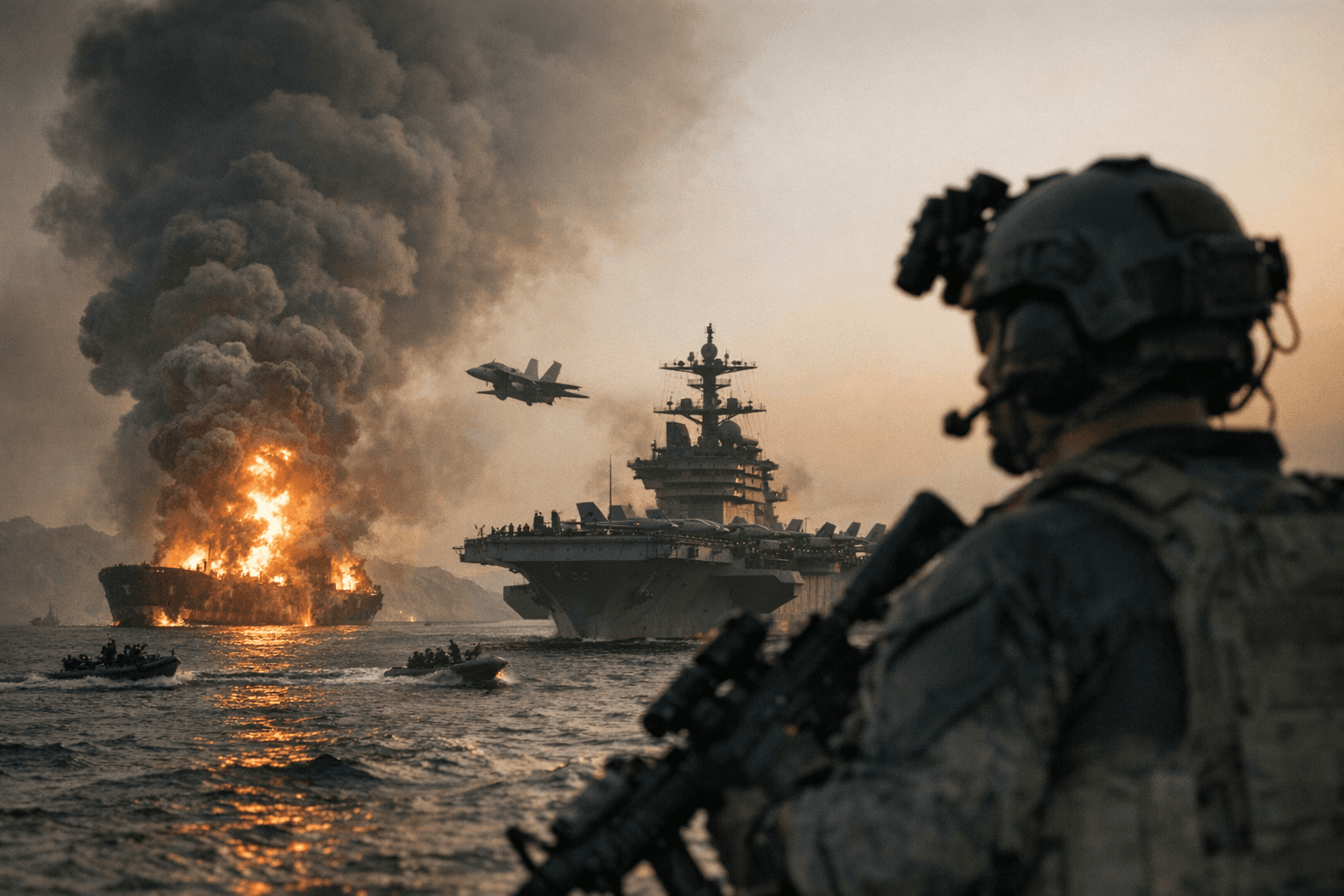
The military buildup accompanying Rubio's diplomatic mission reflects how far the conflict has escalated. A group of U.S. ships carrying about 2,500 Marines moved closer to the region, and at least 1,000 paratroopers from the 82nd Airborne, trained to land in hostile territory and secure key airfields, have been deployed to the Middle East. Israel launched a new wave of strikes on Iran and threatened that its attacks "will escalate and expand" after President Trump claimed talks on ending the war were "going very well" and gave Tehran more time to open the Strait of Hormuz.
Trump had previously announced a five-day extension to his ultimatum for Iran to reopen the Strait of Hormuz, then extended the deadline by 10 more days to Monday, April 6, 2026. He posted on social media that he hoped countries including China, France, Japan, South Korea, and the United Kingdom would send forces to secure shipping through the strait.
Allied frustration with Washington was palpable in France. The chief of the French defense staff, Gen. Fabien Mandon, complained that U.S. allies had not been informed about the start of hostilities, saying the U.S. "is less and less predictable and doesn't even bother to inform us when it decides to engage in military operations." France's Armed Forces Minister Catherine Vautrin said plainly that the war "is not ours," and called for a different path: the G7 issued a joint statement calling for the "immediate cessation of attacks against civilians and civilian infrastructure" and the restoration of "safe and toll-free freedom of navigation in the Strait of Hormuz."
Rubio dismissed the criticism. "Frankly, I think countries around the world — even those that are out there complaining a little bit — should actually be grateful that the United States has a president that's willing to confront a threat like this," he said Thursday.
Diplomacy itself remains tangled. Rubio told his G7 counterparts that the U.S. is still communicating with Iran through mediators rather than directly, and acknowledged there is unclarity about who is actually making decisions in Tehran. Rubio said Washington was waiting for a formal response from Iran to a 15-point proposal, describing the state of contacts as "an exchange of messages and indications from the Iranian system, whatever's left of it, about a willingness to talk about certain things," while still waiting for clarity on "who is it that we will be talking to, what will we be talking about and when will we be talking."
An Iranian health official reported that the death toll from the war has reached at least 1,937 people, including 240 women and 212 children, with more than 24,800 others wounded. Hundreds of thousands remain displaced in Lebanon, and hundreds of thousands of travelers remain stranded across the region. Meanwhile, 35 countries joined military talks hosted by France's Gen. Mandon on how to reopen the Strait of Hormuz "once the intensity of hostilities has sufficiently decreased." Whether Rubio's "couple of weeks" timeline aligns with that moment is a question no one assembled at Vaux-de-Cernay could answer with confidence.
This article was produced by Prism’s automated news system from verified source data, official records, and press releases, then run through automated quality and moderation checks before publishing. The system is built and supervised by the people who set the standards it runs under. Read our full AI policy.
Did this article answer your question?


