Rubio Walks Tightrope as Iran Talks Test His Loyalty and Ambition
Secretary of State Marco Rubio called the Iran war "a favor" to the world, but now must broker a deal he doubts is possible, with his 2028 ambitions hanging on the outcome.
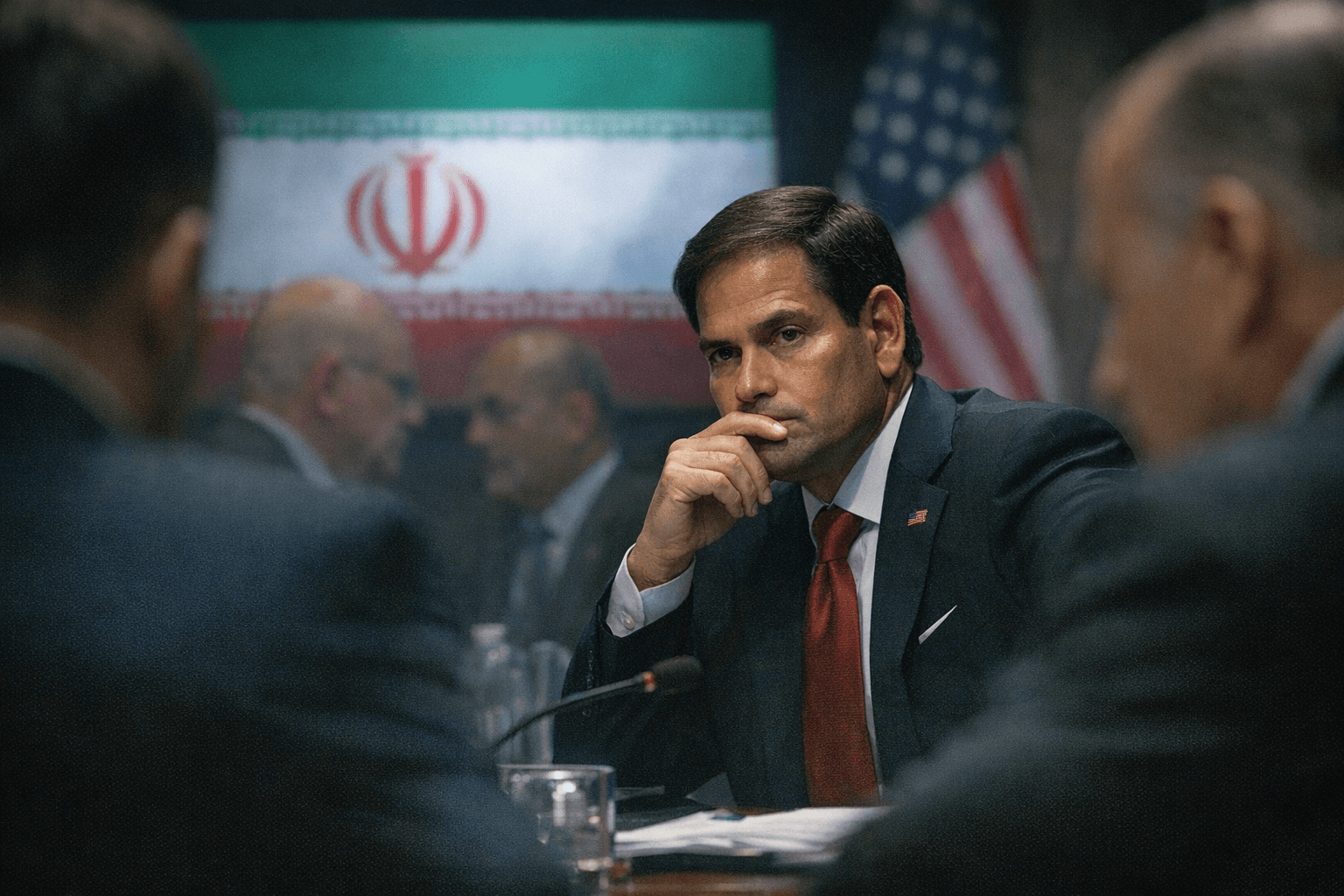
Secretary of State Marco Rubio walked into the Iran crisis wearing his hawkishness like a badge. When President Donald Trump convened his Cabinet to assess the war, Rubio gave an impassioned defense of the conflict, calling it "a favor" to the United States and the world. Now, after more than 38 days of war, a fragile two-week ceasefire, and Iran's closure of the Strait of Hormuz sending energy prices surging, Rubio faces a more uncomfortable assignment: convince three mutually suspicious audiences that a deal is both achievable and worth signing.
On the eve of talks in Switzerland, Rubio warned that Iran's reluctance to discuss its development of intercontinental ballistic missiles was a significant stumbling block. "The negotiations will be largely focused on the nuclear program, and we hope progress can be made... But it's also important to remember that Iran refuses – refuses – to talk about ballistic missiles," he told reporters, calling the impasse "a big, big problem."
The core of the standoff is the enrichment question. Trump has called Iran's 10-point proposal "a workable basis on which to negotiate" in upcoming talks, but many of Iran's demands conflict directly with the Trump administration's own offer. White House Press Secretary Karoline Leavitt stated that Trump's red lines, namely the end of Iranian enrichment in Iran, have not changed. Iran, meanwhile, insists enriching uranium on its own soil is a national right. On sanctions, Iran's requests include the withdrawal of all U.S. combat forces from bases in the region and the ending of sanctions, demands that U.S. officials privately regard as nonstarters.
Rubio must also manage Washington's allies. In April, Rubio urged European countries to quickly decide on reimposing sanctions against Iran, warning that Iran is violating the existing agreement and nearing the capability to develop a nuclear weapon. European governments, wary of another destabilizing sanctions cycle, have been slow to commit.
Inside the White House, Rubio operates in a crowded and sometimes competing diplomatic lane. Trump said that Vice President JD Vance, special envoy Steve Witkoff, and former senior presidential adviser Jared Kushner were talking to intermediaries in Pakistan on ending the war. Vance was separately reported as the U.S. interlocutor in the ceasefire talks, reflecting Trump's preference for loyalists who can move outside the conventional diplomatic process. Rubio's State Department has watched that dynamic with friction.
Both Rubio and Vance are seen as the Republican Party's strongest potential candidates in the next presidential election, but the Iran war could prove to be a political millstone for both of them. Their divergence is already visible: Rubio's hawkish posture appeals to traditional GOP national security voters, while Vance's push for restraint tracks with the MAGA base's skepticism of foreign entanglements.
Rubio, known for his hawkish views, gave an impassioned defense of the war, calling it "a favor" to the United States and the world. Vance, who has long pushed for restraint in U.S. military intervention, diverged from that framing. The two positions will be difficult to reconcile in a primary contest if a deal collapses.
Rubio himself has offered the clearest-eyed summary of where the negotiations stand. "I'm not sure you can reach a deal with these guys," he said. "But we're going to try to find out." For a secretary of state with presidential ambitions, that is a gamble with unusually high personal stakes. A failed deal leaves oil markets volatile, U.S. troops in the region exposed, and a 2028 campaign biography shadowed by a war he cheerfully endorsed.
This article was produced by Prism’s automated news system from verified source data, official records, and press releases, then run through automated quality and moderation checks before publishing. The system is built and supervised by the people who set the standards it runs under. Read our full AI policy.
Did this article answer your question?

