Runway’s AI film festival showcases Hollywood’s cautious experiment with generative video
Runway drew more than 6,000 submissions to its 2025 AI film festival as Hollywood kept AI at arm’s length, bound by union rules and rights concerns.
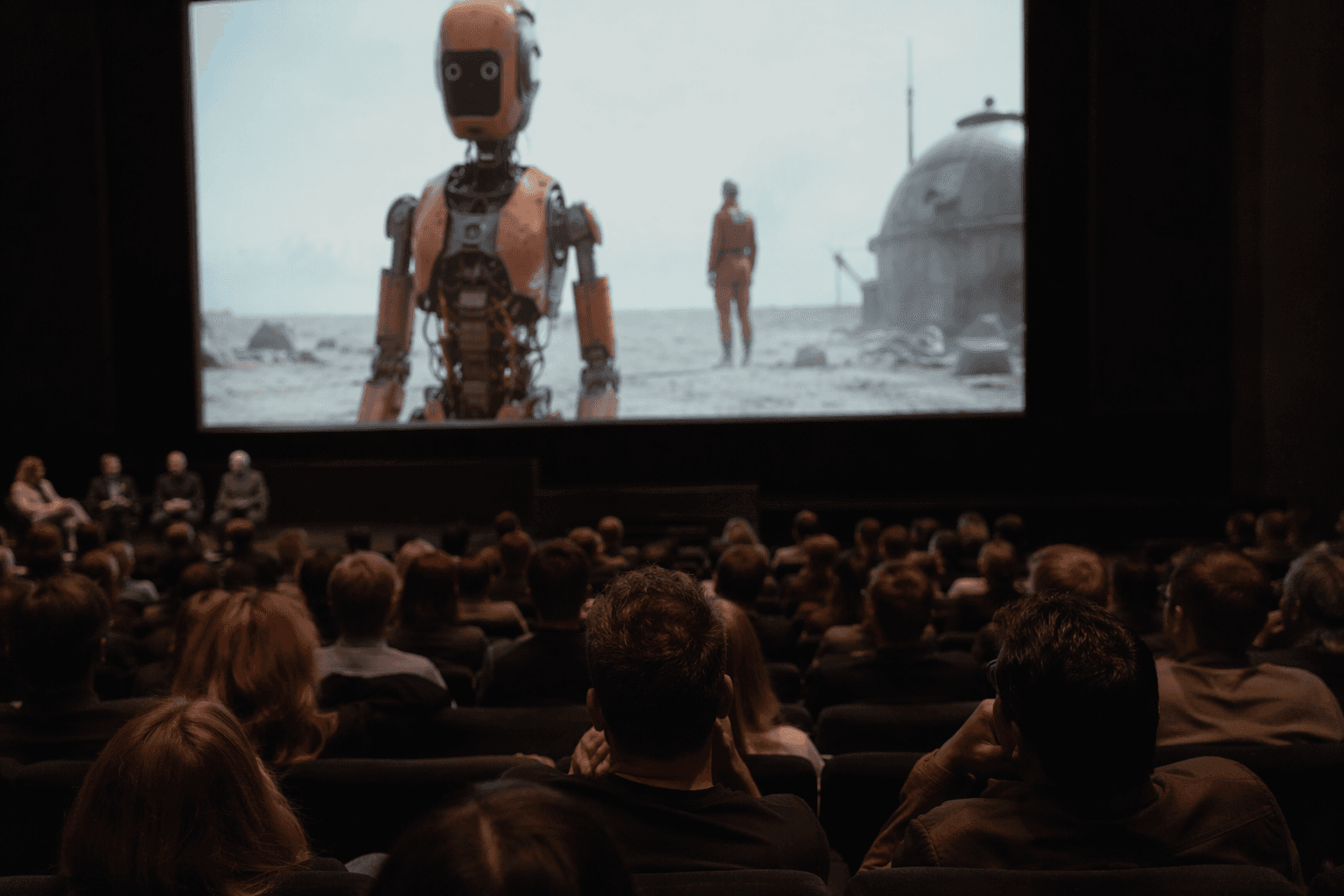
Generative video has made the loudest promises in Hollywood, but the work itself is still mostly short clips, technical demos and controlled experiments. Runway’s growing AI Film Festival has become one of the clearest signals of where the technology actually stands: the company said its 2025 edition drew more than 6,000 submissions, then screened the winners at Lincoln Center in New York with IMAX. That turnout showed real curiosity from creators, even as it underscored how far the industry remains from a true prompt-to-movie pipeline.
Runway established the festival in 2022, and the event has since become a kind of stress test for the category. Its third annual edition widened markedly in 2025, but the format still points to the limits of current tools. Runway’s Gen-4.5 is marketed as a high-fidelity video generator, and the company says it is the world’s top-rated video model. Runway says the model is built to improve physics, human motion, camera movement and cause-and-effect consistency, a telling list of the problems that still separate polished cinematic output from convincing synthetic footage.

Those technical gains matter because the business case for generative video remains uneven. Most video models are still producing only short bursts of footage, and the current best use cases are concentrated in tests, commercials and festival screenings rather than feature films or prestige television. That gap is why Runway’s festival has drawn so much attention: it shows what creators can do today, not what studio executives have been promised in product pitches.
The bigger constraint is not just software quality. Hollywood’s labor and copyright concerns have kept AI on a tight leash. SAG-AFTRA, which represents about 160,000 actors and media artists, made AI a central issue in its 2023 strike. The union ratified its TV and theatrical contract on December 5, 2023, with 78% approval, after securing consent and compensation rules for digital replicas and continued meetings with producers about generative AI training uses.
SAG-AFTRA has paired those restrictions with limited licensing paths for approved uses. On August 14, 2024, the union announced a deal with Narrativ that allowed members to license digital voice replicas for audio advertising. That balance, protecting performers from unauthorized synthetic work while permitting some consented uses, captures the industry’s current posture. The result is not a wholesale embrace of AI, but a cautious experiment in which studios, unions and vendors are still deciding whether generative video becomes a production tool, a labor threat or a new content engine.
This article was produced by Prism’s automated news system from verified source data, official records, and press releases, then run through automated quality and moderation checks before publishing. The system is built and supervised by the people who set the standards it runs under. Read our full AI policy.
Did this article answer your question?