Russia launches large drone barrage that cripples Ukraine energy network
Russian strikes target Ukraine’s power system, cutting electricity to households across five regions amid freezing temperatures and limited repair access.
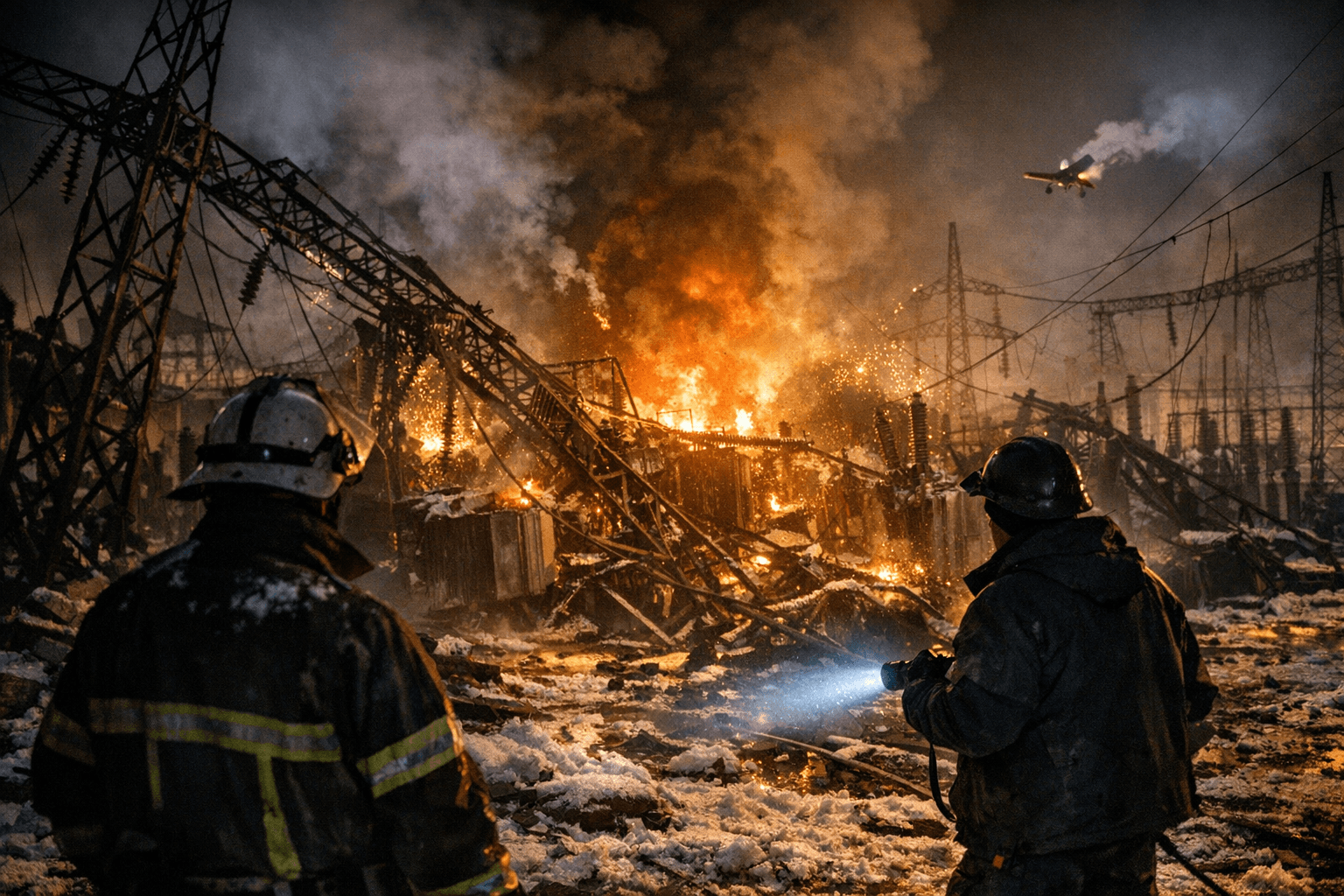
A large Russian aerial assault has struck Ukraine’s energy network, leaving hundreds of thousands of consumers without power across at least five regions and complicating repairs as freezing temperatures increase humanitarian risk. Ukrainian military and energy authorities say the attacks focused on generation and transmission facilities, and air-defence units intercepted the majority of incoming drones.
The Ukrainian air force reported that 145 drones were launched and that air-defence units shot down 126 of them. Officials from the energy ministry said emergency repair work is under way where "the security situation allows," underscoring the limits placed on restoration by continuing hostilities and the threat of follow-on strikes.
Damage assessments vary by region. In Odesa, the regional governor said energy and gas infrastructure was damaged and one person was injured. DTEK, Ukraine’s largest private energy company, said one of its facilities in Odesa was "substantially" damaged, cutting power to about 30,800 households. In northern Chernihiv, a local power grid company reported that five important energy facilities were damaged, leaving "tens of thousands" of consumers without electricity.
Ukraine’s energy ministry identified consumers in Sumy and Dnipropetrovsk regions among those affected by outages. Kharkiv, the country’s second-largest city, suffered strikes that local authorities described as hitting essential systems. Mayor Ihor Terekhov said a "critical infrastructure facility" was significantly damaged, and municipal teams are assessing needs across affected neighbourhoods.
Official casualty figures remain limited and unevenly reported. Regional authorities confirmed at least one injury in Odesa linked to the strikes; other local sources and some regional officials have reported higher numbers of wounded and several deaths in related overnight attacks, but these figures have not been independently verified by central authorities. The divergence in tallies highlights the difficulty of confirming civilian harm amid active operations and disrupted communications.
Beyond mainland infrastructure, some reports attributed to regional maritime and defence officials suggested incidents in the Black Sea and cross-border strikes into Russian territory, including alleged damage at industrial sites in Russia’s Rostov region. Those claims are being treated by Ukrainian and international responders as provisional and require independent verification.
The current assault comes amid a pattern of intensified winter attacks on Ukraine’s power system. An online encyclopedia entry documents repeated targeting of civilian energy infrastructure since 2022, and notes that by mid-2024 a substantial share of pre-war generating capacity had been lost, leaving the grid more vulnerable to sustained campaigns. Energy-sector experts warn that strikes during periods of high heating demand materially increase risks to vulnerable populations, disrupt hospitals and heating centres, and complicate wartime logistics.
Restoration teams face a dual challenge: repairing damaged equipment and conducting those repairs safely under the threat of renewed attacks. The energy ministry's caveat that fixes proceed only where "the security situation allows" reflects a grim calculus for engineers and emergency planners. International humanitarian organisations and Western partners are monitoring the outages and their impact on civilian services as Kyiv seeks to stabilise supply ahead of what officials expect will be a difficult stretch of winter.
This article was produced by Prism’s automated news system from verified source data, official records, and press releases, then run through automated quality and moderation checks before publishing. The system is built and supervised by the people who set the standards it runs under. Read our full AI policy.
Did this article answer your question?