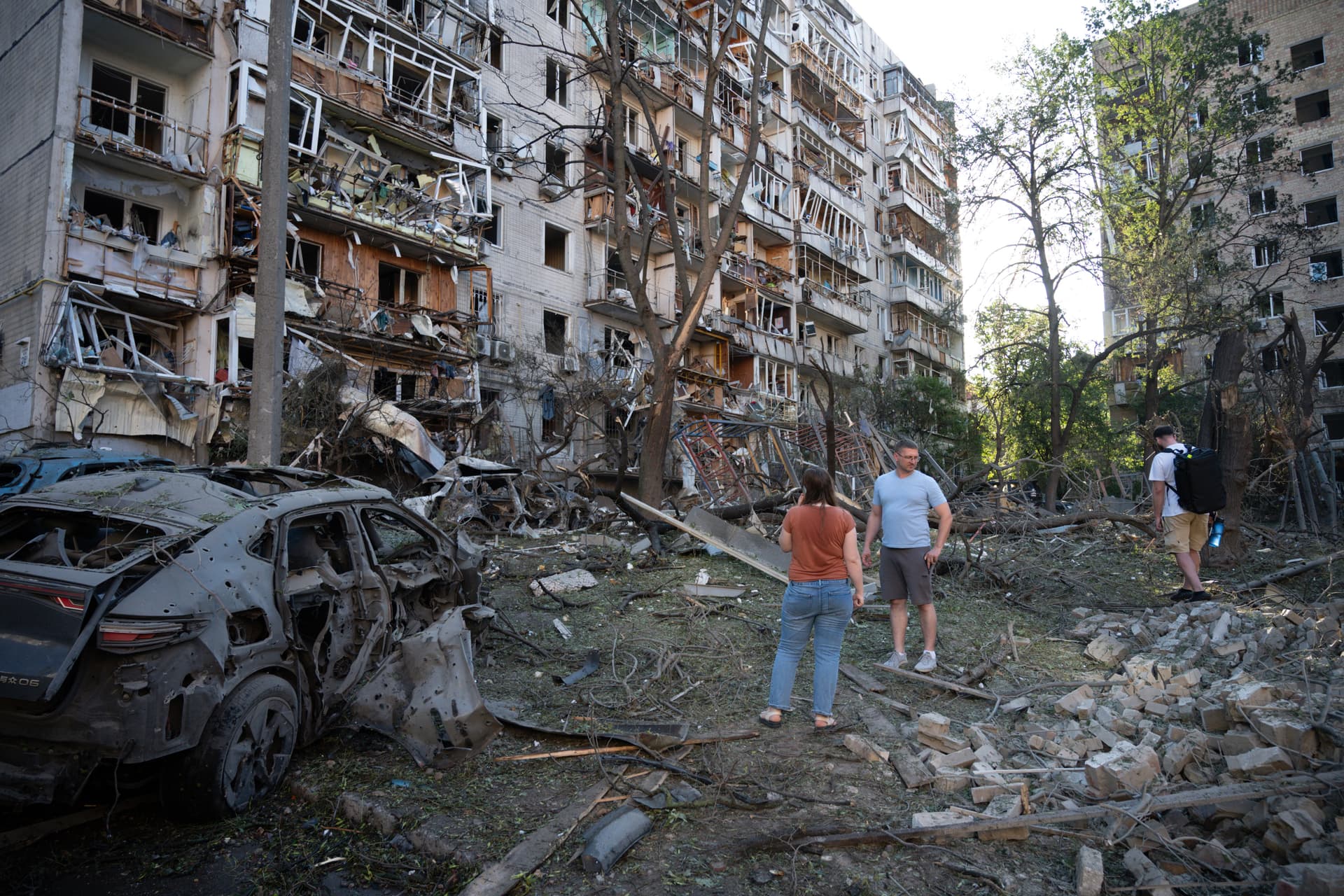
Russia Launches Record Drone Assault on Ukraine, Killing Eight and Wounding Dozens
Russia's largest-ever single-day drone assault killed at least 8 people, struck a UNESCO heritage site in Lviv, and wounded nearly 100 as Kyiv warned the West was distracted by Iran.

Smoke was still rising from a residential building in Lviv's historic city center when Ukrainian air force spokesperson Yuriy Ignat put the scale of what had just happened into words: "On such a large scale, it's basically the first time. I don't recall there being such daytime strikes with this number of drones," he told reporters.
Russian forces pummeled Ukrainian cities over the past two days, launching more than 1,000 drones that killed at least eight people and wounded nearly 100, Ukrainian officials said. Kyiv called it the largest single-day drone assault of the war. Some 392 drones were launched Monday night into Tuesday, the Ukrainian Air Force said, followed by more than 550 in a rare and deadly daytime assault on Tuesday, with another 147 launched overnight into Wednesday, striking more than a dozen locations.
The daytime attack particularly targeted cities in western Ukraine, normally considered relatively safer, hitting civilian areas including a maternity hospital. In Lviv, the damage extended to the city's UNESCO-protected heritage district: a drone slammed into a UNESCO world heritage site in central Lviv, with video showing a fire in a residential building next to the 16th-century Bernardine monastery. Lviv's mayor Andriy Sadoviy said at least 22 people were wounded in the city alone.
The daytime strikes on the center of Ivano-Frankivsk killed two people and wounded four, including a 6-year-old child, with around 10 residential buildings and a maternity hospital damaged, regional head Svitlana Onyshchuk said. In the Vinnytsia region, one person was killed and 11 wounded.
Ukraine's air force said at least 15 hits were identified and at least 541 drones were shot down or neutralized. The Institute for the Study of War, in its March 24 Russian Offensive Campaign Assessment, concluded that the Russian strikes on March 23 to 24 "represent a significant inflection in Russian strike tactics that allow Russia to threaten more areas of Ukraine for longer periods of time and disproportionately affect civilian areas."
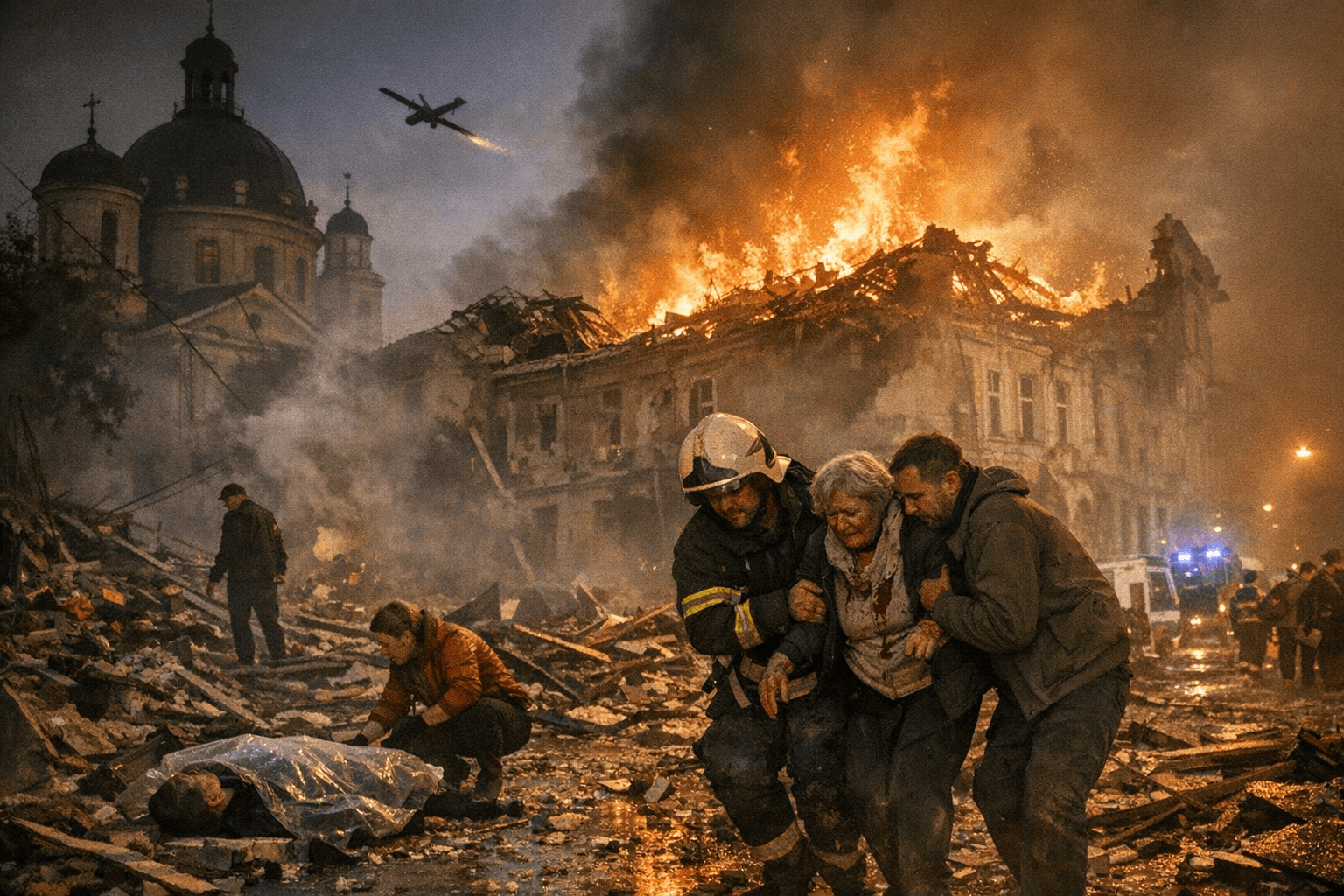
The strikes carried particular strategic weight given their timing. The attacks came as Ukraine struggled to repel relentless Russian aerial strikes with dwindling U.S. air defense supplies, and as a third round of U.S.-brokered talks between Moscow and Kyiv aimed at ending the invasion was derailed by the war in the Middle East. President Volodymyr Zelensky pointed directly at the connection: "The geopolitical situation has become more complicated due to the war against Iran, and unfortunately, this is emboldening Russia," he said, adding that "Russia continues this war and its destabilization of Europe, supports the Iranian regime with intelligence, and thereby prolongs the war in that region."
In Moldova, on Ukraine's southwest border, authorities urged citizens to spare electrical energy during peak hours after Russian strikes on Ukraine's energy grid cut a key power line between Moldova and Romania. Another power line to the Zaporizhzhia nuclear power plant was also cut, the International Atomic Energy Agency reported.
UNESCO said it was "deeply alarmed" by Russia hitting the World Heritage site in Lviv during the bombardment. The large-scale attacks also came as Russian forces began a spring offensive in eastern Ukraine, including the use of dozens of tanks and armored vehicles, according to the Ukrainian military and analysts. Moscow has typically fired its barrages overnight throughout the four-year-long war, which started with Russia's full-scale invasion in February 2022. Sending nearly a thousand drones into Ukrainian skies in broad daylight signals that the calculus, at least for now, has changed.
This article was produced by Prism’s automated news system from verified source data, official records, and press releases, then run through automated quality and moderation checks before publishing. The system is built and supervised by the people who set the standards it runs under. Read our full AI policy.
Did this article answer your question?