Russia vows more strikes on Kyiv after deadly aerial assault
Russia told foreigners to leave Kyiv after one of the war’s heaviest bombardments, as at least four people were killed and damage spread across 40 sites.
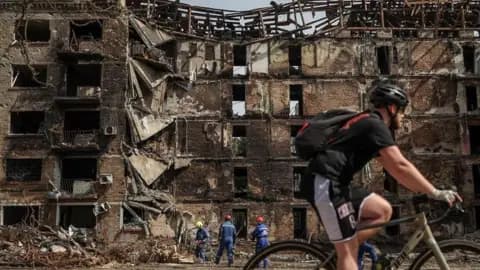
Russia warned foreign citizens and diplomats to leave Kyiv on Monday and said it planned more strikes on the capital, sharpening fear in a city that had just endured one of the war’s heaviest aerial assaults. The message was not only military. It was a signal meant to unsettle civilians, test embassy resolve and show that the threat to Kyiv could deepen rather than ease.
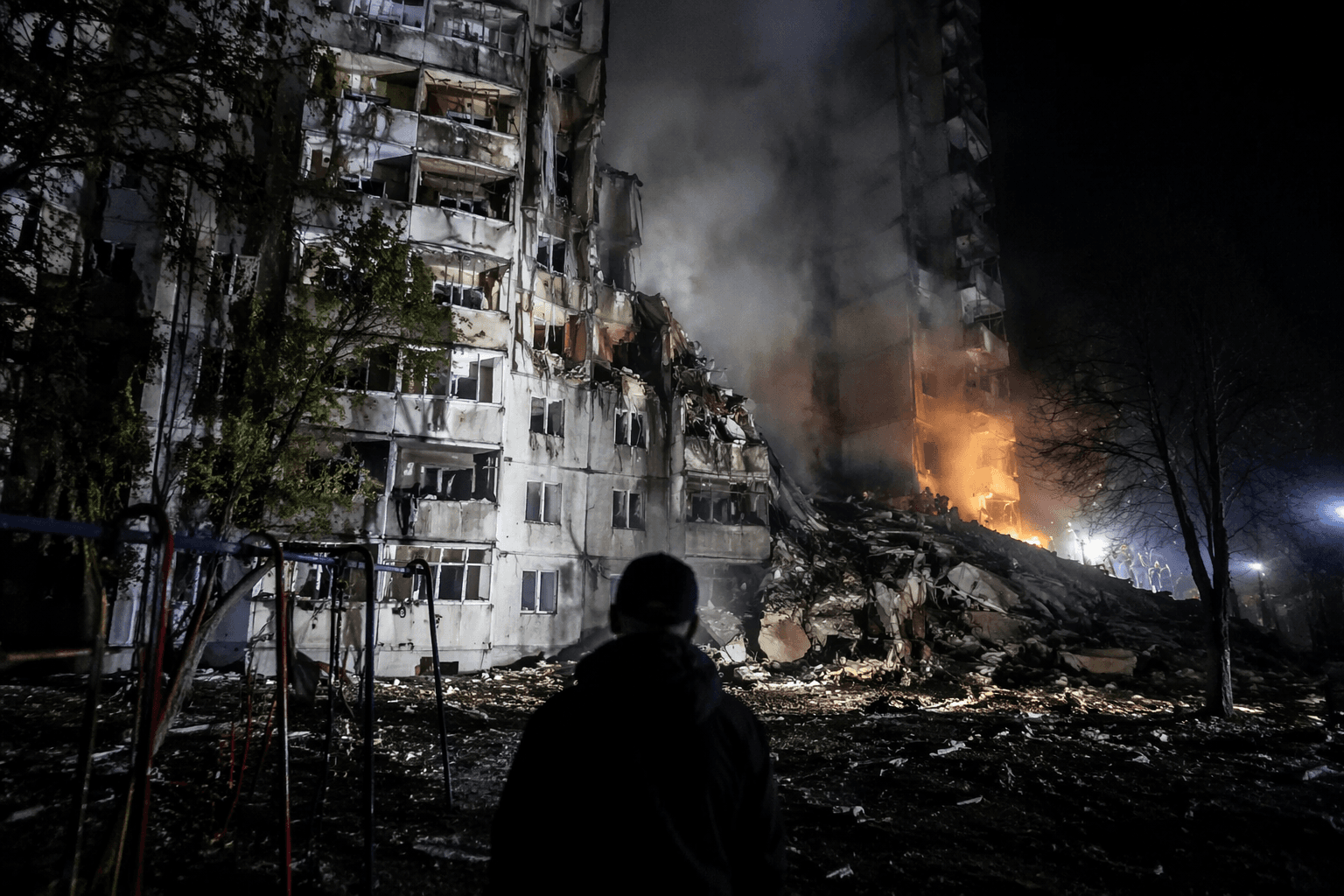
Ukrainian officials said the overnight attack on May 24 killed at least four people and injured about 100 across Kyiv and other areas. Damage was reported in 40 locations across several districts of the capital, including residential buildings, while the cabinet building and the Foreign Ministry both suffered minor damage. The scale of the strike underscored how air-defense crews were being pushed to protect a sprawling city under repeated missile and drone fire.
Russia’s Foreign Ministry said the planned strikes would target “decision-making centres” and defense-related facilities in Kyiv. It said the warning was a response to what Moscow described as a Ukrainian drone strike on a student dormitory in Russian-controlled Luhansk. Ukraine’s military denied the accusation and said it had hit an elite drone command unit in the area. The exchange fits a broader pattern in which both sides frame attacks as retaliation, while civilians bear the immediate cost.
The timing suggests more than a single reprisal. Earlier in May, Russia warned foreign diplomats to evacuate Kyiv ahead of Victory Day celebrations and threatened retaliation if Ukraine disrupted commemorations tied to the May 9 military parade in Red Square. Now, after another heavy night of bombardment, the renewed warning looks like a mix of escalation and psychological pressure, with the added possibility that Moscow is preparing for a sustained campaign against the capital’s political and military infrastructure.
For people living in Kyiv, the consequences are already visible in daily life: damaged apartment blocks, shattered government facades, crowded shelters and another round of uncertainty for embassies, aid groups and international staff. Reuters-linked reporting said the city had already faced several waves of deadly missile and drone attacks in May, a pace that leaves little room for normal routine and even less for complacency.
This article was produced by Prism’s automated news system from verified source data, official records, and press releases, then run through automated quality and moderation checks before publishing. The system is built and supervised by the people who set the standards it runs under. Read our full AI policy.
Did this article answer your question?


