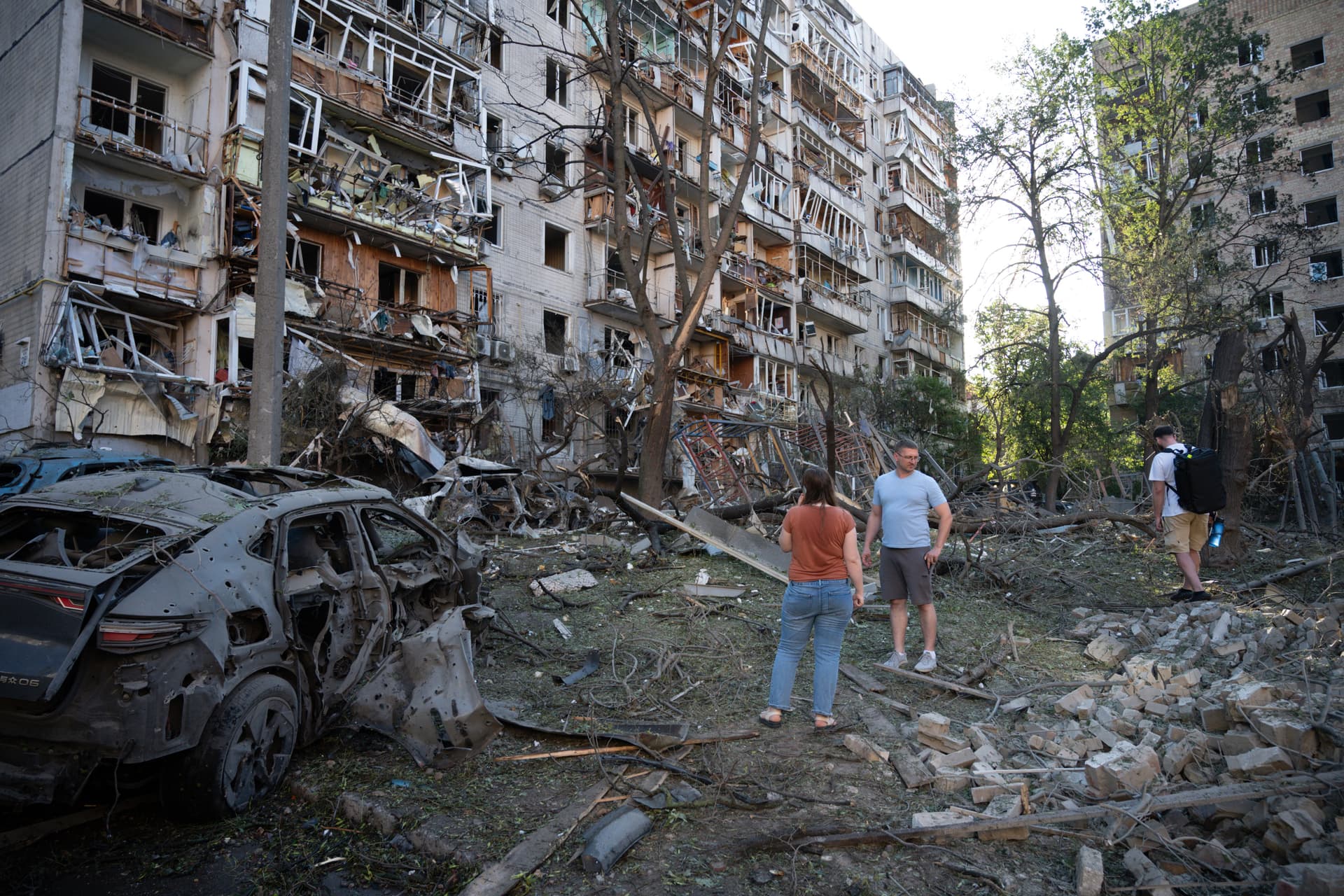
Russian Advances Stall at Ukraine's Fortress Belt Despite Tactical Gains
Russia's Spring-Summer offensive stalled at Ukraine's Fortress Belt, with tactical gains near Kryva Luka failing to translate into a breakthrough toward Slovyansk.
Elements of Russia's 3rd Combined Arms Army pushed east of Slovyansk last week, recording what military analysts classified as tactically significant ground. But when those gains reached the northern tier of Ukraine's deliberately fortified Fortress Belt, the advance stopped.
That is the central finding of the Institute for the Study of War's Russian Offensive Campaign Assessment published March 29, and it cuts against the narrative of a broad, coordinated Russian surge across the front. What ISW documented instead was a battlefield defined by isolated penetrations, absent the synchronized flank operations that would be needed to convert any of those local gains into something operationally decisive.
The assessment specifically cited advances near Kryva Luka as an example of the pattern: ground taken, but not supported. Without simultaneous flank operations to protect and exploit the penetration, those gains remain tactical footnotes rather than strategic leverage. ISW concluded that a failure to execute enabling flank operations, or to coordinate advances across adjacent sectors, would likely stall offensives and produce, in the assessment's words, "critically high casualties for disproportionately minimal gains."
The 3rd CAA, operating under the Southern Military District, drove the most notable advances east of Slovyansk before slowing after its initial push. ISW drew a contrast between the 3rd CAA's performance and that of other Russian formations operating elsewhere along the line, including the 20th, 25th, and 8th Combined Arms Armies. Those units recorded slower progress in their respective directions, a disparity that limits Moscow's ability to exploit any single breakthrough even when local commanders achieve one.
The Spring-Summer offensive, which ISW assessed as having launched between March 17 and 21, followed a recognizable escalation sequence: intensified mechanized assaults, increased drone and artillery strikes, and the visible movement of heavy equipment. That sequencing was a signal. But the offensive's operational coherence, as of March 29, has not matched its initial tempo.
Ukraine's Fortress Belt, a deliberate network of fortified positions concentrated in the northern sector, has emerged as the central structural barrier in ISW's analysis. Unlike improvised field defenses, the Fortress Belt was engineered as a holding system, and ISW's reporting suggests it is performing that function. Russian forces have not cracked it.
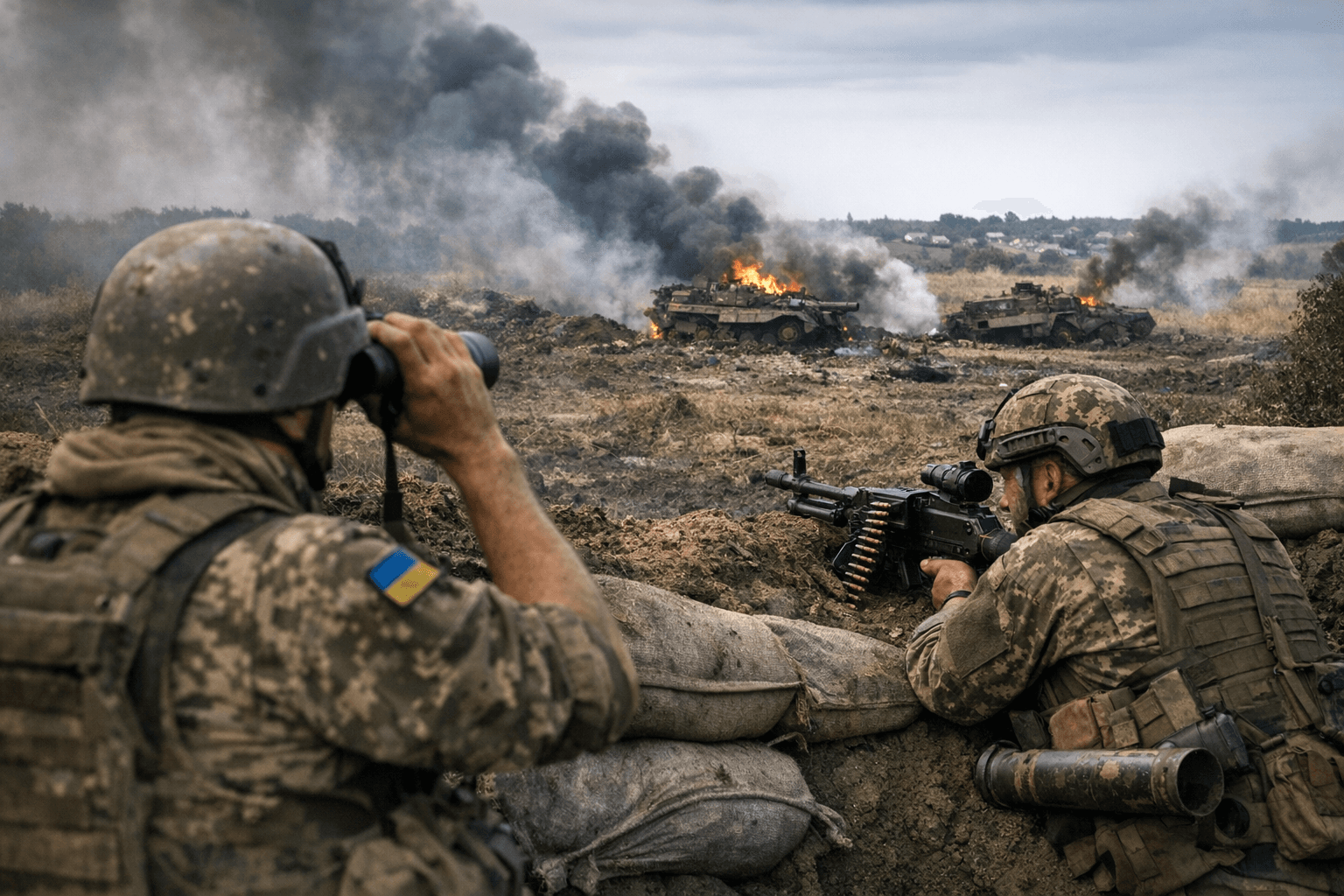
The implications for any Russian drive on Slovyansk are sobering by ISW's own accounting. To mount a direct assault on the city, Russia would face a choice between reallocating forces from other axes, a move that would expose vulnerabilities elsewhere along a front already under strain, or absorbing a significant increase in resources and casualties. ISW characterized both options as politically costly and militarily risky for Moscow.
Some of the tactical gains recorded in this assessment are not without future value. ISW acknowledged that advances in certain positions could support moves to the north or south in subsequent phases of the campaign. But that is a longer horizon. As of March 29, none of those gains were sufficient to position Russian forces for a decisive strike on Slovyansk itself.
The structural constraint ISW identified, the need for mutually-supportive operations across multiple axes, points to a deeper vulnerability in Russia's current operational posture. Logistics, personnel losses, and the coordination demands of multi-axis warfare have compressed what Russian commanders can realistically attempt at any given moment.
For Western military planners and Ukraine's support partners, the findings carry a specific kind of weight. ISW's granular front-line accounting will be used to calibrate assistance decisions, particularly around munitions and counter-battery systems, the tools that make attritional defense viable over time. A grinding dynamic that frustrates rapid Russian territorial gains also, by definition, places sustained pressure on Ukrainian resources. Both things remain true simultaneously.
What ISW's March 29 assessment ultimately describes is a front in tension: Russia capable of localized penetration, constrained from operational exploitation. Ukraine holding through fortification and attrition, but holding at cost. The Fortress Belt, built as a system rather than a statement, may be doing more to shape the trajectory of this war's next phase than any single engagement east of Slovyansk.
This article was produced by Prism’s automated news system from verified source data, official records, and press releases, then run through automated quality and moderation checks before publishing. The system is built and supervised by the people who set the standards it runs under. Read our full AI policy.
Did this article answer your question?