Russian drone strikes hit Odesa before Easter truce, killing two
Russian drone strikes hit residential Odesa before a Kremlin-declared 32-hour Orthodox Easter ceasefire, killing at least two and damaging apartments, a dormitory and a kindergarten.
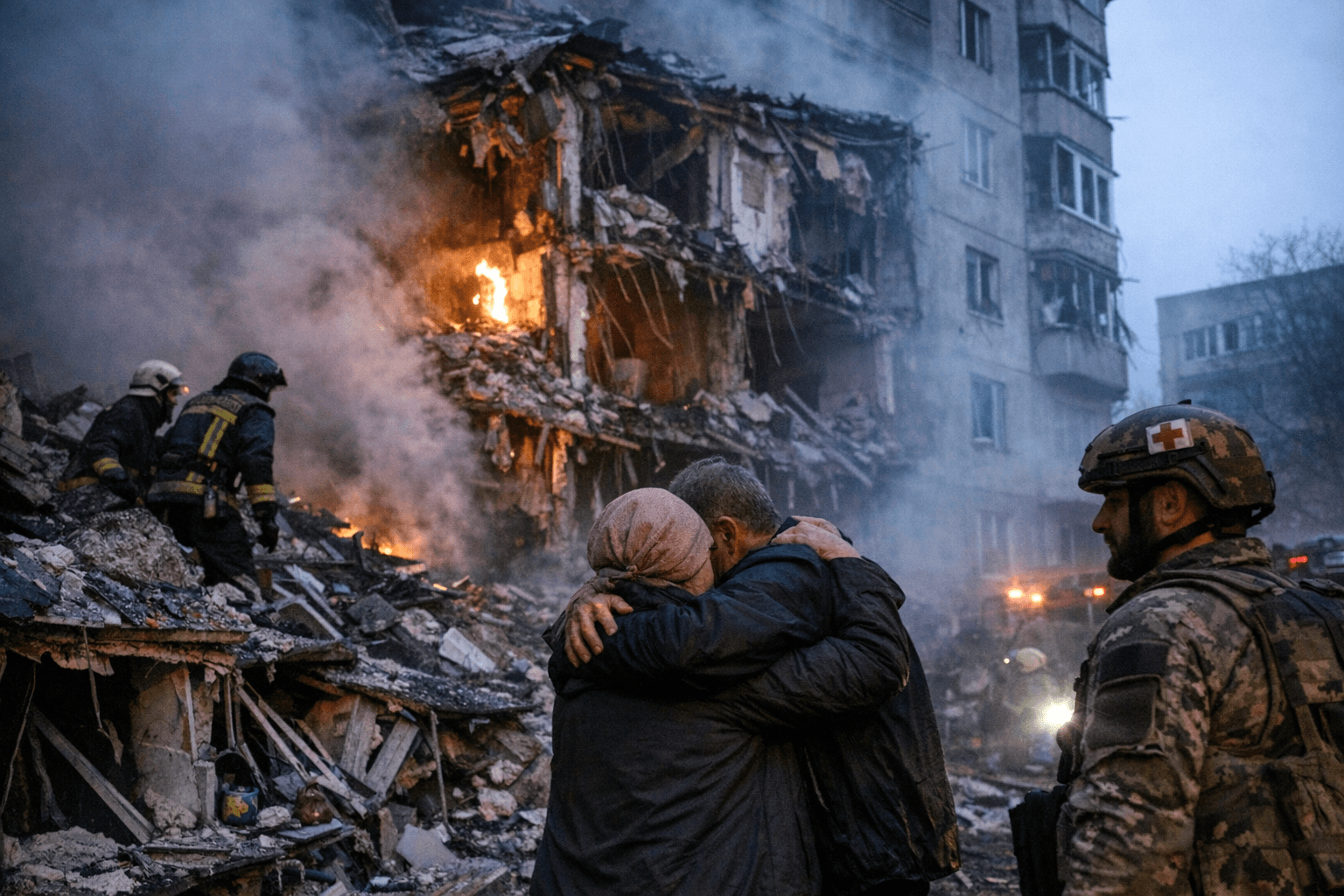
Russian drone strikes struck residential areas in Odesa, killing at least two people and wounding others in the early hours before a Kremlin-declared Orthodox Easter ceasefire was due to begin at 4 p.m. Kyiv time on April 11, 2026. Serhii Lysak, head of Odesa’s regional military administration, reported the fatalities as rescuers worked through the night to extinguish fires and search rubble for survivors.
Ukraine’s State Emergency Service said the overnight attack damaged dozens of private and apartment buildings, a dormitory and a kindergarten, and that utility crews and a mobile operational headquarters were deployed to restore power and water at multiple strike sites. Local emergency units described crews treating the wounded at rubble sites while clearing debris from hit residential zones, and rescuers found the two bodies during firefighting operations in a private home struck by an unmanned aerial vehicle.
The Ukrainian Air Force reported groups of UAVs approaching Odesa from the Black Sea before the strikes, signaling an attack vector that overwhelmed local defenses in at least some neighborhoods. The scale of damage to civilian infrastructure — apartment blocks, houses and a kindergarten — intensified concerns about whether air defense and civil protection systems had adequate warning and capacity to shield noncombatants ahead of a narrow holiday pause.
The timing of the strikes, hours before a 32-hour truce the Kremlin ordered to run from 4 p.m. on April 11 until midnight on April 12, undercut the stated purpose of a humanitarian pause tied to Orthodox Easter. After the truce began, Ukraine’s General Staff reported 469 alleged violations of the ceasefire in the first hours, while Russian regional governors separately accused Ukraine of post-truce drone attacks, highlighting an immediate “he said, she said” dynamic that complicates monitoring and verification of short temporary pauses.
Beyond the human toll in Odesa, the strikes carry immediate implications for diplomatic and humanitarian planning. Humanitarian agencies and local authorities mobilized response teams to assist the injured and restore services, while Kyiv and Western diplomats reiterated calls for humanitarian pauses at religious festivals and for full protection of civilians under international humanitarian law. Officials warned that prisoner exchanges and other confidence-building measures tied to holiday truces could be jeopardized if parties cannot guarantee safe corridors and independent verification.
The Odesa strikes also sharpen policy debates over the effectiveness of short, holiday-linked ceasefires in a conflict where a major Black Sea port has been repeatedly targeted over the past year. Analysts and officials will now face pressure to design verification mechanisms, deploy independent observers, and strengthen civil-defense capacities if limited truces are to provide meaningful protection for civilians and support the diplomatic measures that depend on them.
This article was produced by Prism’s automated news system from verified source data, official records, and press releases, then run through automated quality and moderation checks before publishing. The system is built and supervised by the people who set the standards it runs under. Read our full AI policy.
Did this article answer your question?