Russian Military An-26 Transport Crashes in Crimea, Killing All 29 Aboard
All 29 aboard a Soviet-era Russian military transport died when the An-26 crashed in Crimea on March 31, with Moscow citing technical failure but offering no independent verification.
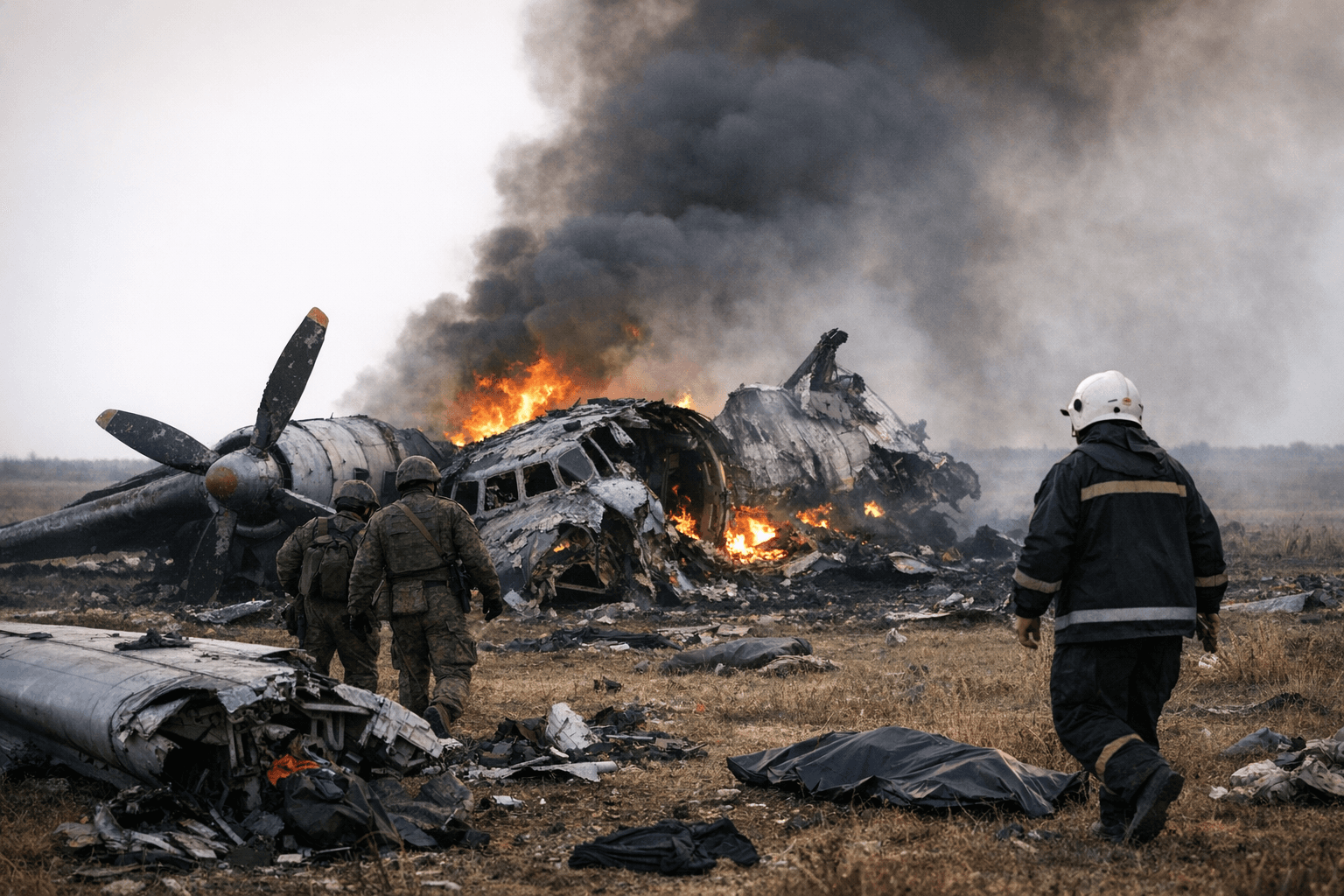
A Russian military An-26 transport plane crashed over the Crimean peninsula on the evening of March 31, 2026, killing all 29 people aboard in the deadliest single aviation loss the Russian military has publicly acknowledged in the theater in recent memory. The dead included six crew members and 23 passengers, all military personnel, according to the Russian Defense Ministry.
Contact with the aircraft was cut off at approximately 18:00 Moscow time during what officials described as a scheduled flight. "Contact with an An-26 military transport aircraft was lost during a routine flight over Crimea at about 6:00 p.m. Moscow time," the ministry said in an initial statement, adding pointedly: "There was no report of the aircraft being struck." Once search and rescue teams located the wreckage, a second ministry statement confirmed the full toll: "A search and rescue team has located the crash site of the An-26 aircraft. According to reports from the scene, six crew members and 23 passengers on board died."
Regional officials offered a preliminary assessment of technical malfunction. Some early accounts cited a possible collision with a cliff face, though that detail remained unconfirmed. Russia announced a formal investigation, and no final determination of cause had been made at the time of initial reporting. Independent corroboration from non-Russian sources was not immediately available, and Kyiv did not claim involvement.
The An-26 is a twin-engine turboprop of Soviet design, manufactured between 1969 and 1986, capable of carrying up to 40 troops or roughly 5.5 tons of cargo. The type has accumulated a lengthy accident record. In July 2021, an An-26 crashed in Russia's Kamchatka region, killing all 28 people aboard. The pattern is not unique to the type: a comparable An-24 operated by a Russian regional carrier killed all 48 aboard in the Amur region in July 2025. That such aircraft remain in frontline military service reflects both the breadth of Russia's logistics requirements and the constraints on replacing aging fleets during an extended, resource-intensive conflict.
Crimea's role as a military hub compounds the risk calculus. Since Russia's annexation of the peninsula in 2014, it has served as a staging ground for air, naval, and ground operations, with personnel and materiel cycling through its bases at high tempo. In September 2025, Ukrainian military intelligence destroyed two Russian An-26 transport aircraft on the ground in Crimea in a drone strike, underscoring both the peninsula's operational significance and the persistent threat environment for aircraft operating there. Russian authorities said Tuesday's crash showed no signs of external attack, but the official framing, delivered exclusively through state channels with no independent access to the crash site, carries the verification limits typical of military incidents in occupied territory.
The crash is the latest data point in a mounting picture of strain on Russia's transport and logistics infrastructure. Older airframes, high operational tempo, and the compounding pressures of an active war zone create conditions in which technical failures carry disproportionate consequence. The investigation's findings, if made public, may reveal whether Tuesday's loss reflects a systemic maintenance gap or an isolated mechanical failure. Either conclusion will carry weight for analysts tracking the durability of Russia's military posture in Crimea.
This article was produced by Prism’s automated news system from verified source data, official records, and press releases, then run through automated quality and moderation checks before publishing. The system is built and supervised by the people who set the standards it runs under. Read our full AI policy.
Did this article answer your question?