Russian strikes knock out power for millions in Kyiv
A January 24 attack left millions in Kyiv without power; the mayor says hundreds of thousands fled the capital during January amid repeated strikes on energy infrastructure.
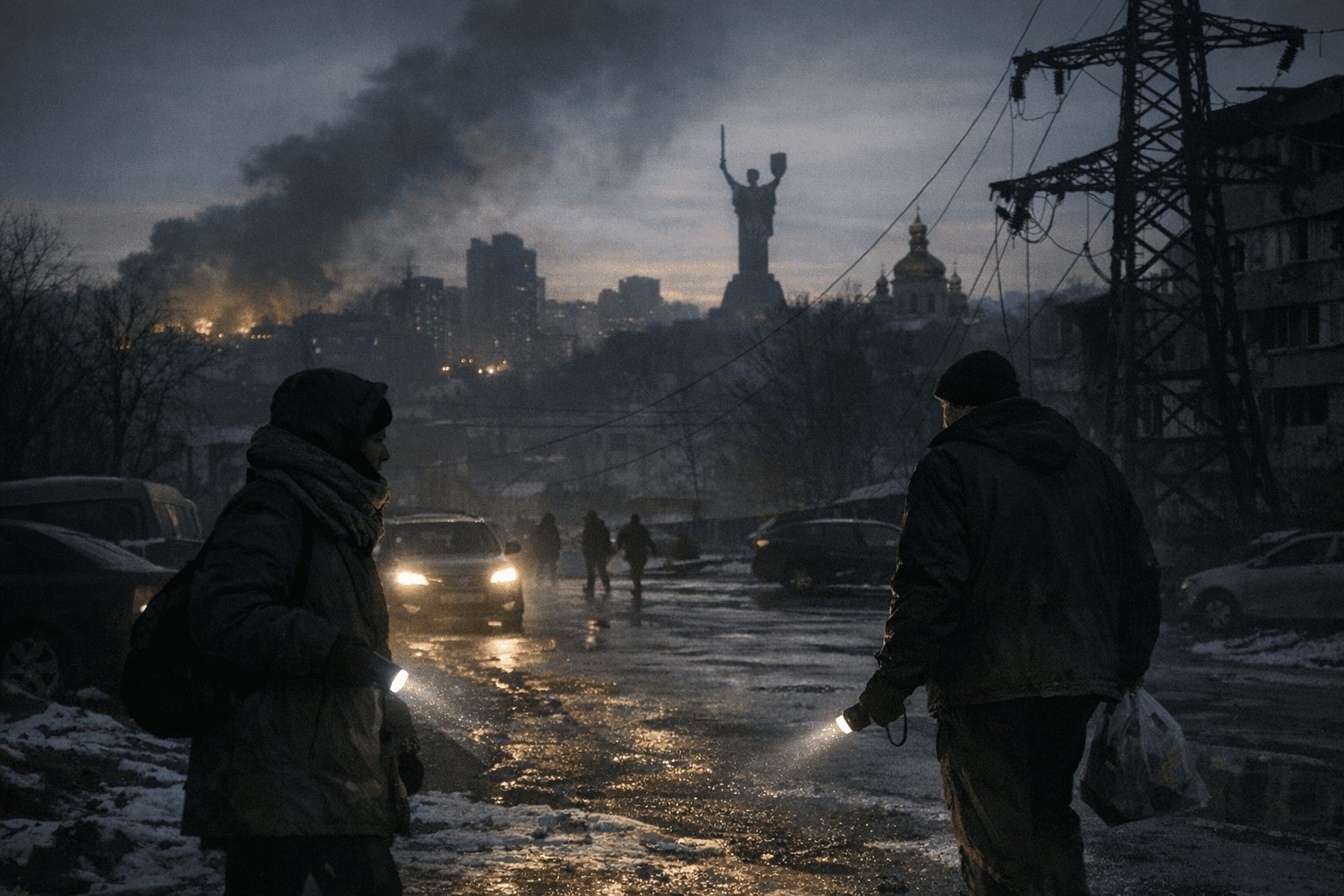
Russian strikes on January 24 severely damaged Kyiv’s energy network, plunging millions of residents into darkness and deepening a humanitarian and economic crisis that local officials say has driven hundreds of thousands to leave the capital over the month of January. The newest attack followed a string of strikes on Ukraine’s power system throughout the month that authorities say have intentionally targeted generation and transmission assets.
City officials reported widespread outages that affected residential neighborhoods, businesses and critical services. Emergency teams worked through the night to reroute power and prioritize hospitals, water stations and heating centers, but repair crews faced constrained materials and continuing security risks. Kyiv’s mayor, Vitali Klitschko, said hundreds of thousands of residents had fled the capital during January, a level of displacement that strains accommodation and services in other regions and raises the cost of short-term relief.
The human toll is accompanied by immediate economic costs. Extended winter outages disrupt industrial output, shutter small businesses that cannot operate without electricity, and force additional public spending on emergency generators and shelter. In a country already contending with years of war-related damage, the cumulative effect of repeated strikes on energy infrastructure compounds fiscal pressures and will increase Ukraine’s near-term borrowing needs and reconstruction bill.
From a market perspective, the attacks add volatility to Ukrainian sovereign credit and currency markets. Investors reassess sovereign risk when critical infrastructure is repeatedly targeted, which can widen borrowing spreads and push Kyiv to seek additional external financing. For European energy markets the impact is more indirect; Kyiv’s blackout increases urgency for emergency humanitarian and energy aid from partners but does not immediately alter continent-wide supply balances. However, sustained damage to Ukraine’s grid could increase demand for international support for off-grid power and fuel supplies during the winter months.
Policy implications are stark. The pattern of strikes highlights the limits of a traditional centralized grid in a conflict zone and strengthens the case for diversifying energy resilience strategies. Hardened transmission, distributed generation, microgrids for critical facilities, and prepositioned spare parts are immediate priorities. Long term, Ukraine faces a costly trade-off between rapidly repairing capacity and investing in more resilient, decentralized systems that could reduce vulnerability to future attacks.
International partners will be pushed to respond with a mix of humanitarian assistance and financial instruments. Reconstruction financing, technical aid to accelerate repairs, and guarantees to stabilize markets are likely to rise on the agenda in donor capitals and multilateral institutions. Domestic policy choices will matter as well: Kyiv will need to balance emergency relief, repair spending and continued defense financing while managing inflationary risks and preserving social services for displaced populations.
The January attacks underline a persistent trend in the conflict: energy systems have become a strategic battleground with immediate human consequences and long-term economic implications. Restoring reliable power in Kyiv is now not just an engineering task but a central element of economic stabilization and recovery planning for Ukraine.
This article was produced by Prism’s automated news system from verified source data, official records, and press releases, then run through automated quality and moderation checks before publishing. The system is built and supervised by the people who set the standards it runs under. Read our full AI policy.
Did this article answer your question?


