Russia’s return to Venice Biennale sparks protests, funding threats
Russia’s pavilion reopened at Venice under EU sanctions and protest, with activists and Kyiv allies calling the move wartime whitewashing.
Protesters met Russia’s return to the Venice Biennale with pink smoke flares, resignations and funding threats, turning the world’s best-known art fair into a test of whether cultural institutions can stay neutral while a war still rages. Russia is back in the Giardini for the first time since its full-scale invasion of Ukraine, and the decision has split officials in Venice, Brussels and Kyiv.
The 61st International Art Exhibition runs from May 9 to November 22, 2026, under the title In Minor Keys, a show curated posthumously after Koyo Kouoh died of cancer in May 2025 at age 57. Biennale officials said Russia was not invited but was allowed to participate because it owns the pavilion. Because of European Union sanctions, the Russian pavilion will be open only during the four days of press previews; for the rest of the six-month run, visitors must stay outside and watch videos projected on the exterior walls.
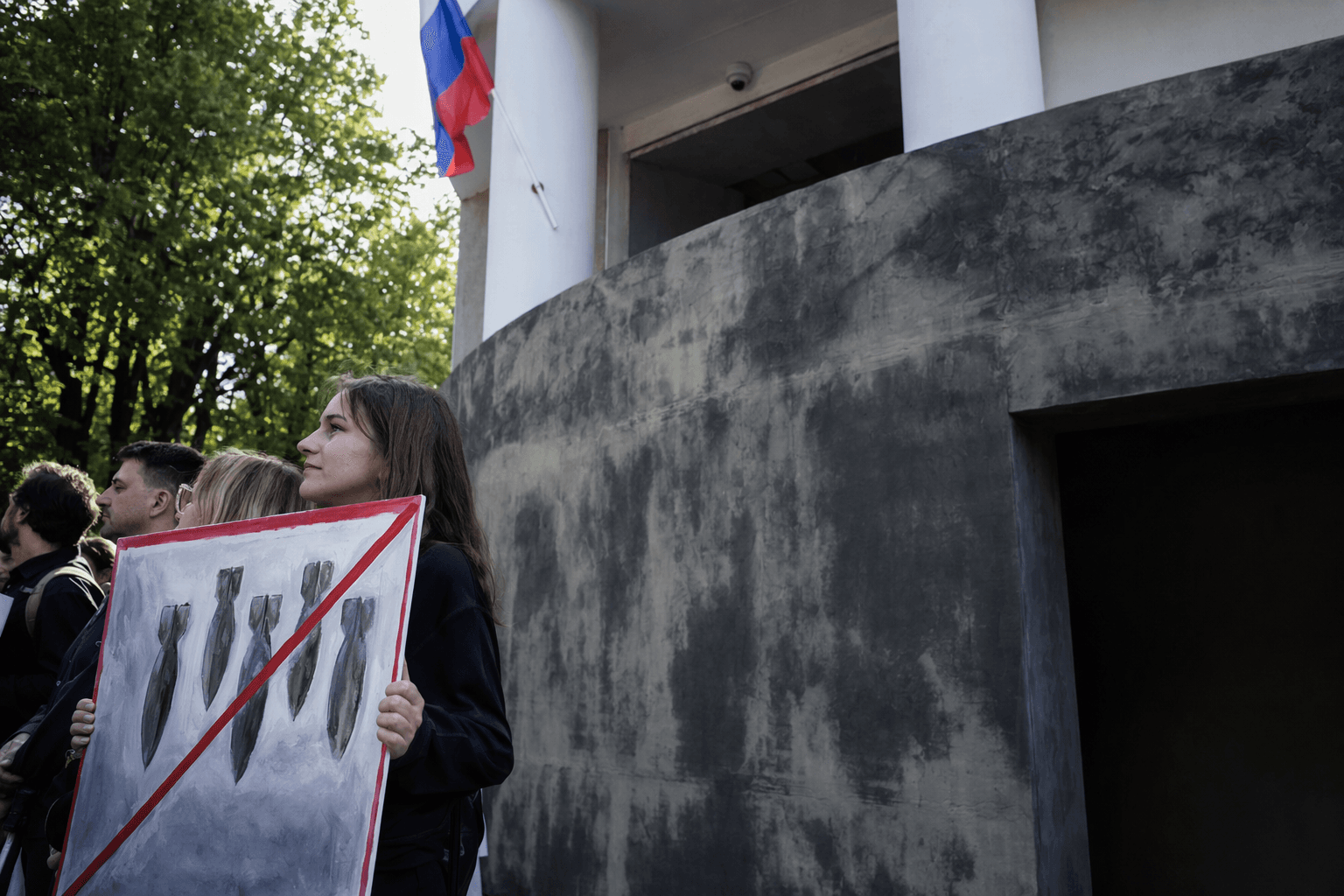
That compromise has not quieted the political fallout. The European Union has threatened to withhold about 2 million euros, or $2.3 million, in funding over the decision, while the Italian government has also criticized the move. Biennale president Pietrangelo Buttafuoco defended the choice, saying the exhibition is a space of dialogue and “not a court of law,” and that the Biennale cannot boycott on an automatic basis. For critics, that argument only sharpens the question of whether “separating art from politics” is itself a political act with reputational costs.
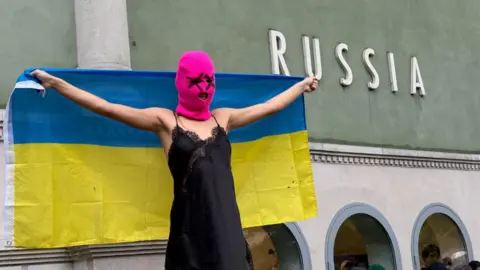
The objections were visible at the opening. FEMEN and Pussy Riot staged a joint protest outside the Russian pavilion, using pink balaclavas, bare breasts and pink smoke flares. Inna Shevchenko said, “the only Russian culture, the only Russian art today is blood.” Ukrainian foreign minister Andrii Sybiha warned that the Biennale must not become a stage for “whitewashing the war crimes” Russia commits against Ukraine’s people and cultural heritage. Ukrainian artist Zhanna Kadyrova, who is representing Ukraine, said she would focus on her own pavilion and that “this is our fight.”
The dispute has widened beyond Russia. The Biennale jury resigned after saying it would not award prizes to countries led by figures subject to International Criminal Court arrest warrants, a move that would affect Russia and Israel; the traditional Golden Lion ceremony was canceled and replaced by visitor voting for Visitor Lions. The 2026 edition includes 100 national participations, with seven first-time entrants, while Iran withdrew on May 4 and about 100 pro-Palestinian demonstrators gathered outside Israel’s pavilion with banners reading “No artwashing genocide.” Russian cultural representative Mikhail Shvydkov said the pavilion will feature more than 50 young musicians, poets and philosophers, arguing that Russian culture has not been isolated or canceled.
This article was produced by Prism’s automated news system from verified source data, official records, and press releases, then run through automated quality and moderation checks before publishing. The system is built and supervised by the people who set the standards it runs under. Read our full AI policy.
Did this article answer your question?