Russia's Sberbank cuts 2026 growth forecast after weak first quarter
Sberbank cut its 2026 growth view after Russia’s economy shrank 0.3% in the first quarter, a sign that tighter money and weaker oil are biting hard.
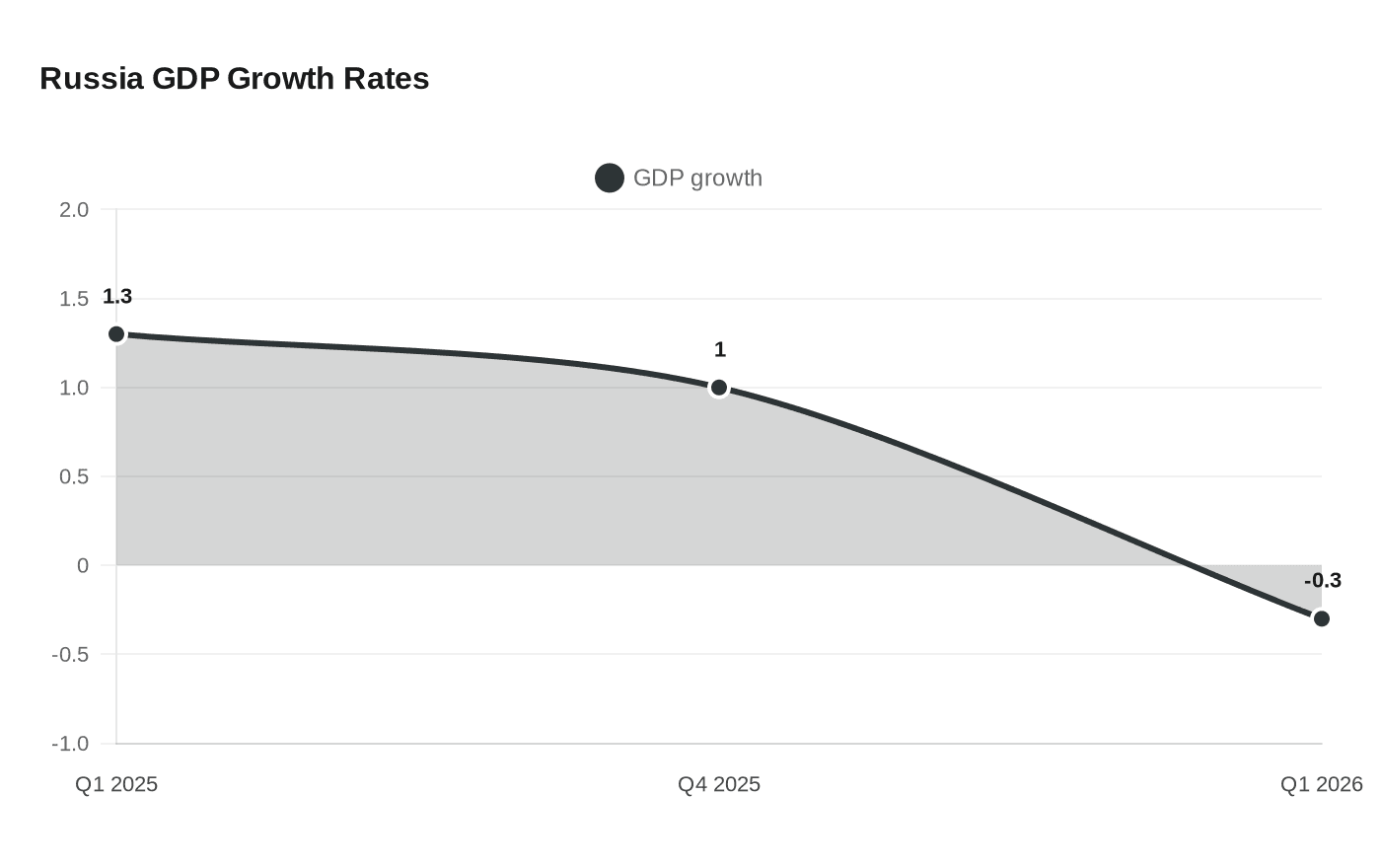
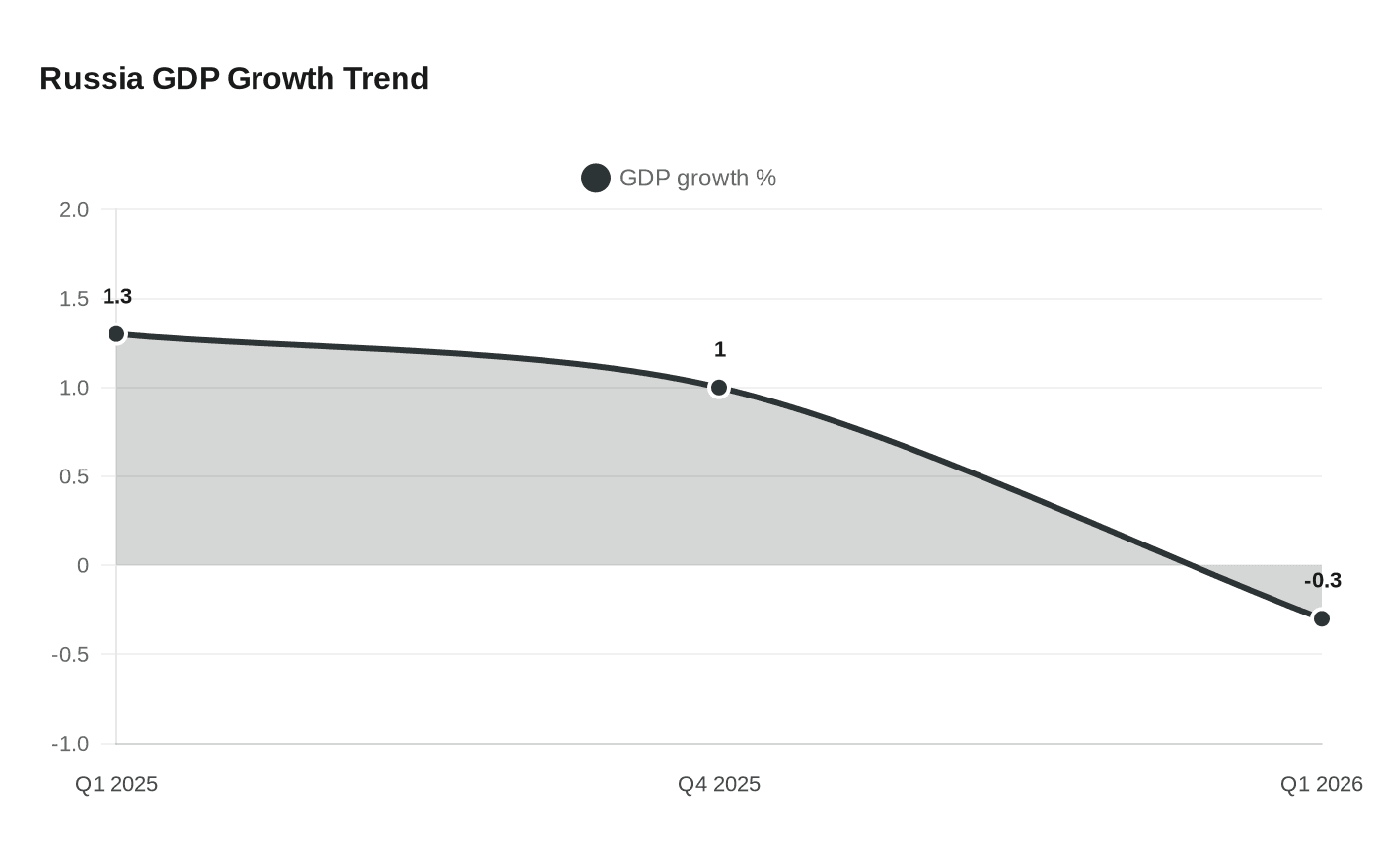
Sberbank cut its 2026 GDP growth forecast for Russia to 0.5% to 1.0% from 1.0% to 1.5% after a weak first quarter, a downgrade that underscored how quickly the wartime economy is losing momentum. Russia’s economy contracted 0.3% in the first three months of 2026, its first quarterly decline since early 2023, a sharp reversal from growth of 1.0% in the final quarter of 2025 and 1.3% in the first quarter of 2025.
Taras Skvortsov, Sberbank’s deputy chief executive, said, “The situation in the first quarter of the Russian economy was challenging against the backdrop of tight monetary conditions.” The bank said mining and manufacturing were hit hardest, while consumer spending slowed sharply and construction stagnated. That broad weakness matters because it shows the slowdown is not confined to one sector but is spreading through the parts of the economy that support jobs, trade and household demand.
The forecast cut also sharpened the policy dilemma facing Moscow. Sberbank said it expects inflation of 6.0% to 6.5% in 2026, above the Bank of Russia’s own forecast of 4.5% to 5.5%. The central bank trimmed its key rate to 14.5% on April 24, but credit remains expensive, and Economic Development Minister Maxim Reshetnikov warned in late March that the government would lower its 2026 growth forecast in April and expected a “tough” first half. A Reuters poll of 16 economists in March had already put the average 2026 growth forecast at 0.8%.
The pressure is also showing up in the public finances. Oil and gas tax revenues were expected to rise in May as higher oil prices linked to the Iran war lifted crude, but they were still set to trail last year’s levels for the first five months of 2026. Oil and gas revenues fell nearly 50% year on year in January and February, and the federal budget deficit widened to 3.45 trillion rubles, or 1.5% of GDP, over the same period. For Moscow, slower growth means fewer tax receipts, weaker investment and less room to keep absorbing the costs of war without straining domestic stability.
This article was produced by Prism’s automated news system from verified source data, official records, and press releases, then run through automated quality and moderation checks before publishing. The system is built and supervised by the people who set the standards it runs under. Read our full AI policy.
Did this article answer your question?
%3Amax_bytes(150000)%3Astrip_icc()%2FCertificate-of-deposit-2301f2164ceb4e91b100cb92aa6f868a.jpg&w=1920&q=75)