Rust compiler team launches Debugging Survey 2026 to collect cross-platform feedback
The Rust compiler team opened the Rust Debugging Survey 2026 on February 23, asking developers for five-minute anonymous reports on cross-platform debugger pain points; submissions close March 13, 2026.
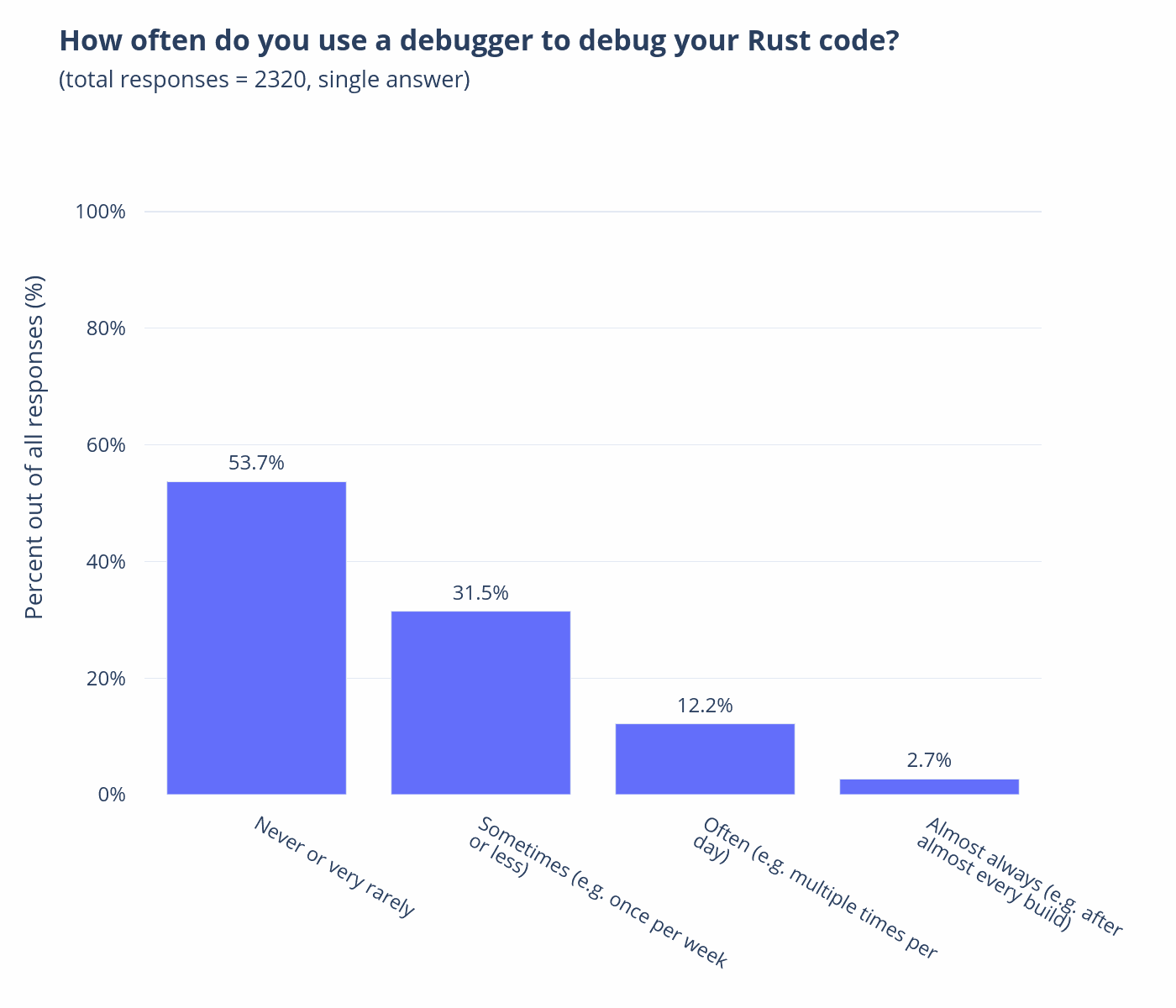
The Rust compiler team published a call for participation on February 23, 2026 titled the "Rust Debugging Survey 2026," inviting Rust users to describe "experiences and pain points related to debugging Rust code across platforms and debuggers." The original announcement appears in a rust-lang blog post and includes the fragment "(authored on behalf of the compil" verbatim from the source text.
The blog opens plainly: "We're launching a Rust Debugging Survey." It follows with the project's diagnosis that "Various issues with debugging Rust code are often mentioned as one of the biggest challenges that annoy Rust developers. While it is definitely possible to debug Rust code today, there are situations where it does not work well enough, and the quality of debugging support also varies a lot across different debuggers and operating systems."
The post explicitly flags maintenance and regression risks for debugger support, writing "Furthermore, it is also challenging to ensure that debugging Rust code keeps working well, across newly released debugger versions, changes to internal representation of Rust data structures in the standard library and other things that can break the debugging experience." That language frames the survey as a data-gathering step to identify concrete points of fragility across toolchains and platforms.
Practical details in the announcement are concise: "Filling the survey should take you approximately 5 minutes, and the survey is fully anonymous. We will accept submissions until Friday, March 13th, 2026. After the survey ends, we will evaluate the results and post key insights on this blog." The project therefore commits to publishing a synthesis of findings after the March 13 deadline rather than releasing raw data immediately.

The post thanks one contributor by name: "We would like to thank Sam Kellam (@hashcatHitman) who did a lot of great work to prepare this survey." The announcement repeats the directive "You can fill out the survey here." twice in the text, echoing the call to participate that appears in the rust-lang blog entry.
Beyond the survey notice, the blog layout includes navigation and community links labeled "#### Get help!" and "#### Terms and policies," and a "#### Social" section listing Mastodon, Bluesky, YouTube, Discord and GitHub, plus "#### RSS." Those elements position the survey within the project's normal community channels and support infrastructure.
The authors temper ambition with realism: "In order for Rust to have truly stellar debugging support, it should ideally: `async` [...] `async`" and "Rust is not quite there yet, and it will take a lot of work to reach that level of debugger support." The post closes by restating the purpose and invitation: "We already have some plans to start improving debugging support in Rust, but it would also be useful to understand the current debugging struggles of Rust developers. That is why we have prepared the Rust Debugging Survey, which should help us find specific challenges with debugging Rust code." "We invite you to fill the survey, as your responses will help us improve the Rust debugging experience. Thank you!
This article was produced by Prism’s automated news system from verified source data, official records, and press releases, then run through automated quality and moderation checks before publishing. The system is built and supervised by the people who set the standards it runs under. Read our full AI policy.
Did this article answer your question?