RWE first-quarter profit jumps on Dutch coal-plant compensation payment
A coal-plant payout from the Dutch state lifted RWE’s first-quarter profit 25%, masking a business that would have been broadly flat without it.
A taxpayer-funded compensation check tied to a Dutch coal plant gave RWE a sharp lift in first-quarter profit, turning a climate-policy restriction into a boost for one of Europe’s biggest utilities.
The German power producer said adjusted EBITDA rose 25% to 1.6 billion euros, while adjusted earnings per share increased to 0.85 euros from 0.68 euros a year earlier. Much of that improvement came from a 332 million euro payment linked to RWE’s Eemshaven plant in the Netherlands, where the state compensated the company for restricted coal generation under a statutory cap in the first half of 2022.
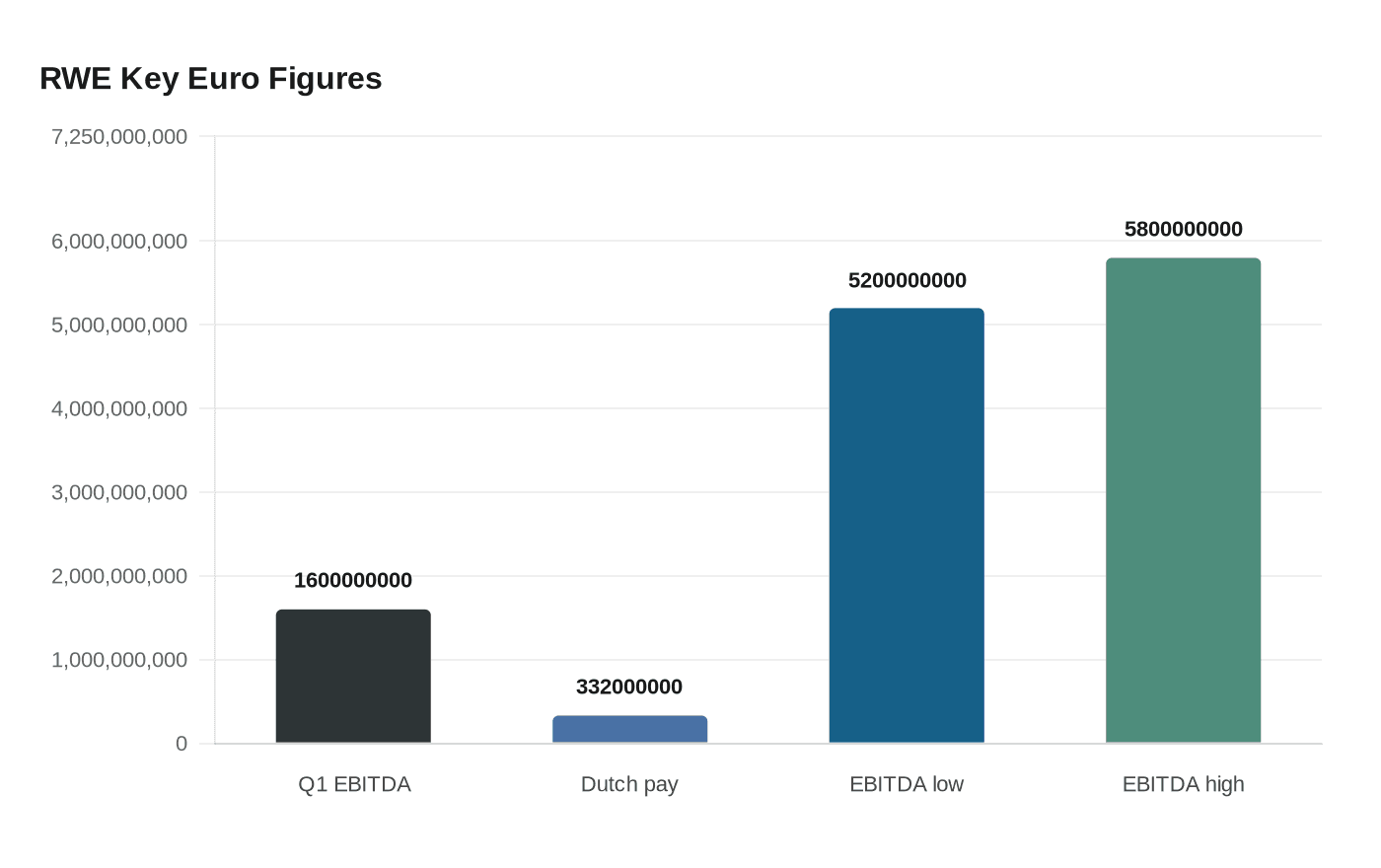
Without that payment, the underlying business would have been broadly flat. RWE also said stronger wind conditions in Europe and 2.3 gigawatts of new wind, solar and battery-storage capacity commissioned since the end of March 2025 helped earnings, though weaker trading performance partially offset those gains.
The group kept its full-year 2026 guidance unchanged, still expecting adjusted EBITDA of 5.2 billion to 5.8 billion euros and adjusted net income of 1.55 billion to 2.05 billion euros. That left the company broadly in line with market expectations, but not dramatically ahead of them, reinforcing the view that the quarter was steadier than spectacular.
The Dutch payment has been years in the making. In September 2023, the Dutch government said it would pay RWE 331.8 million euros after capping coal-fired generation at 35% of capacity for the 2022 to 2024 period. The measure was designed to cut carbon-dioxide emissions, then was lifted early because of energy-market disruptions after Russia’s invasion of Ukraine. RWE had previously sued the Netherlands for 1.4 billion euros over the country’s coal phase-out law before the broader arbitration dispute was discontinued.
For RWE, the quarter shows how legacy fossil assets can still move earnings even as the company pushes deeper into renewables and flexible generation. The Eemshaven payment cushioned a period that also benefited from better wind output and recent capacity additions, yet it also exposed the hidden budgetary cost of speeding up the energy transition. Similar claims could surface elsewhere in Europe if governments keep tightening coal rules while trying to preserve supply security and compensate owners for curtailed production.
This article was produced by Prism’s automated news system from verified source data, official records, and press releases, then run through automated quality and moderation checks before publishing. The system is built and supervised by the people who set the standards it runs under. Read our full AI policy.
Did this article answer your question?

