Safer, More Sustainable Home Yoga Practice Using Props, Pacing, Progression
Set aside an uninterrupted 20–30 minute window, clear your space, mind temperature and ventilation, and consider simple home upgrades to make a safer, greener yoga practice.
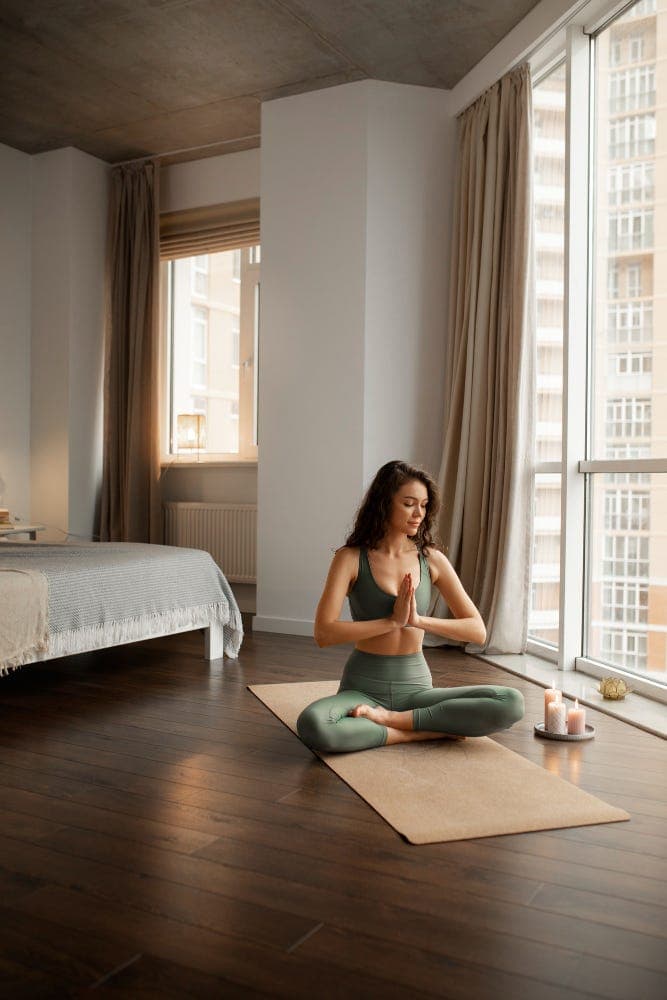
A short, consistent home practice starts with the basics: temperature, ventilation, a clear floor and a dedicated 20–30 minute window. Those are the explicit environment items listed in an evergreen checklist for injury-aware home yoga, which also advises keeping a towel and water nearby.
Start with that tidy foundation before adding supports. Props reduce strain and help progression, but the guide’s props section is incomplete in the materials available here. Treat props as tools for support and alignment rather than goals in themselves; pace rep counts, hold times, and transitions so you build tolerance over weeks rather than forcing range of motion in a single session. An injury-aware approach means listening to how your body responds and increasing intensity slowly.
Comfort and indoor air matter when your practice migrates from a sunny corner to a finished basement or converted attic. Evergreen Home Performance suggests that sustainable remodeling improves comfort and energy efficiency, and a testimonial on the Evergreen Home Performance website describes concrete insulating work: “Evergreen insulated our attic with blown-in cellulose, built a new, super-insulated attic hatch, sealed off the old one (which was just a piece of plywood in a closet ceiling), and also talked us through our best options to upgrade our heating system given the plans we have to add onto the house.” Evergreen Home Performance lists certifications including Portland Buy Local, Efficiency Maine, EPA Lead-Safe Certified, Building Performance Association, and BPI Certified, and its office is at 190 Riverside St, #2A, Portland, ME 04103.
If your practice lives in a basement, moisture control is a safety and air-quality question as much as a comfort one. Evergreenyourhome notes, “Some basements also struggle with high humidity and moisture levels and insulation alone won’t solve the issue,” and recommends encapsulation: “By installing drainage and a vapor barrier in addition to spray foam insulation, your basement will be airtight, reinforced, and safe from moisture, radon, and other pollutants.” That airtightness helps regulate temperature and reduces respiratory irritants that can disrupt breathing practices.

Design choices also shape a calm, sustainable practice room. Redecor advises, “Designing your home for natural ventilation can significantly reduce your energy consumption and improve indoor air quality,” and suggests natural materials such as cotton, linen, hemp, FSC-certified wood, bamboo, and cork to keep a space breathable and lower environmental impact. Where climate and sun permit, Dstreetbrokers points out that solar panels can “drastically reduce a home’s reliance on traditional energy sources, leading to lower utility bills and a reduced carbon footprint,” and notes that high altitude and clear skies in places such as Evergreen, CO “maximize solar energy production.”
On a policy level, the Evergreen Sustainable Development Standard frames building design as a way to promote activity and healing: the ESDS is “a building performance standard required of all affordable housing projects or programs receiving capital funds from the Housing Trust Fund,” and “is comprised of 89 Criteria, each of which either is Mandatory, or is Optional and carries a point value.” The standard highlights Active Design and creating healthy living environments that avoid re-exposing residents to past trauma and instead promote social connection and physical activity.
Practical next steps: clear a 20–30 minute slot, tidy a clutter-free mat zone, check ventilation, keep a towel and water to hand, and pace your sessions so progression is gradual. If comfort or humidity is a problem, consider insulation upgrades or basement encapsulation; if energy and sustainability matter, investigate attic sealing, efficient upgrades, or solar where appropriate. Small changes to the room and how you practice will protect your joints, stabilize breath, and lengthen your practice life.
Know something we missed? Have a correction or additional information?
Submit a Tip