Samsung chip workers avert strike after last-gasp pay deal
A last-gasp pay deal stopped a strike at Samsung’s Pyeongtaek chip complex, but it left open a deeper fight over AI-era profits and worker pay.

The deal that spared Samsung Electronics from a strike also exposed the fault line running through South Korea’s chip boom: record profits on one side, labor strain and local anxiety on the other.
Around Samsung’s vast Pyeongtaek campus southwest of Seoul, workers and residents greeted the agreement with relief, even as some worried the compromise had only delayed a bigger confrontation. The National Samsung Electronics Union had been preparing an 18-day strike that could have involved about 47,000 workers starting May 21, before suspending the walkout and sending the tentative deal to a vote beginning May 22.
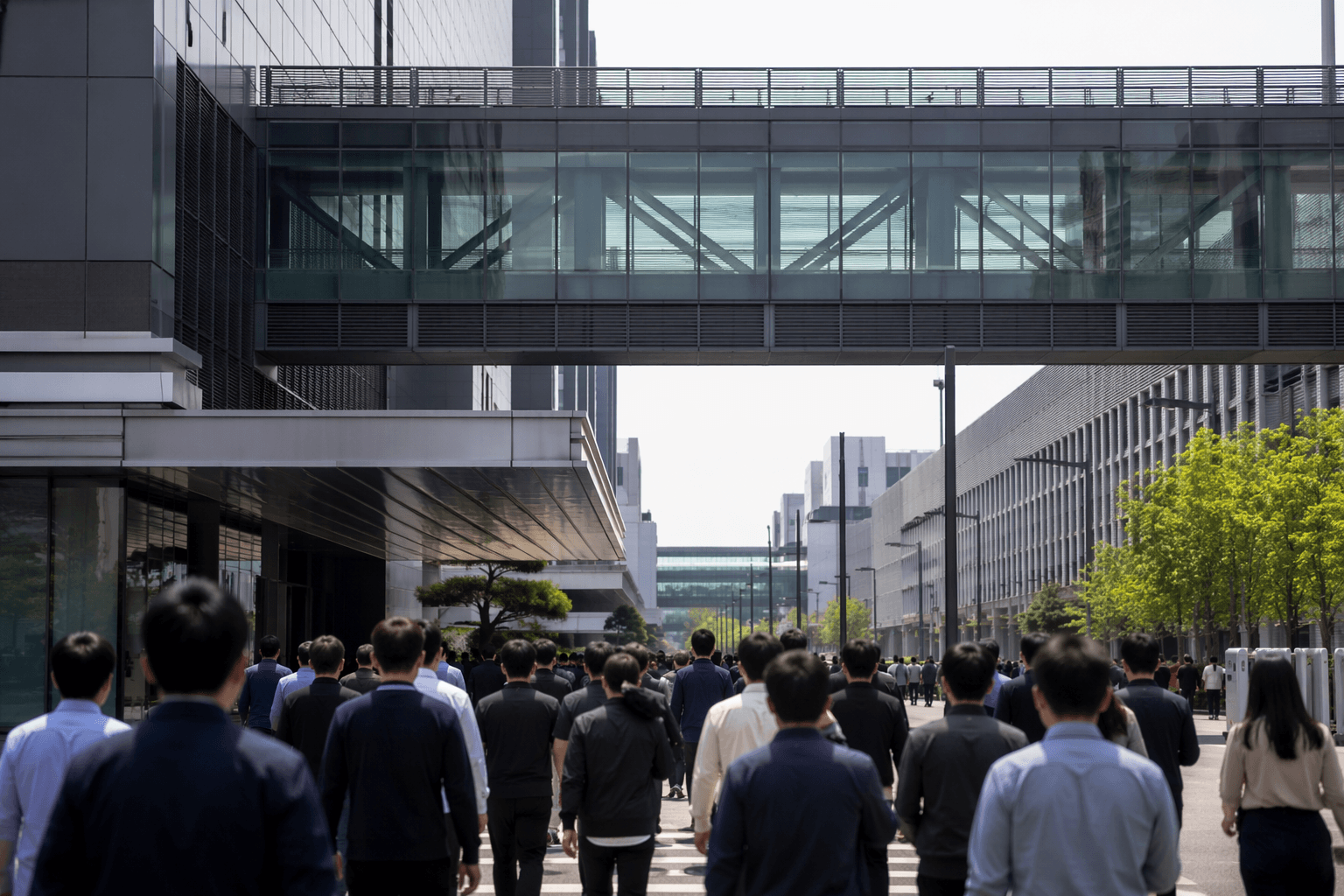
South Korea’s labor minister personally mediated the final round of talks, reflecting how high the stakes had become. Government and business officials warned that a strike at Samsung could cost the economy billions, a risk sharpened by the company’s central role in global semiconductor supply chains. At Pyeongtaek, where Samsung says it operates the world’s largest semiconductor production complex, even a short stoppage could have rippled far beyond the factory gates, affecting suppliers, nearby stores and households that depend on the daily flow of workers and orders.
The immediate threat eased, but the dispute showed no sign of disappearing. The fight centered on Samsung’s performance-based bonus system and how the gains from the AI boom should be shared. In late April, Samsung reported first-quarter operating profit that jumped more than eightfold to a record level, powered by strong chip demand tied to artificial intelligence. For workers, that surge only sharpened the question of whether pay was keeping pace with the company’s results.
The tension is especially visible at Pyeongtaek, where active production lines run through fabs P1 to P3 while parts of P4 and P5 remain under construction as Samsung pushes expansion to meet demand. That growth has made the site a symbol of South Korea’s strategic push to dominate advanced chips, but it has also intensified resentment over bonuses and bargaining power. Some Samsung employees have compared their system with SK Hynix’s more generous bonus structure, adding to pressure on management.
For now, the tentative agreement has bought time. It removed the threat of an immediate shutdown at a site vital to phones, computers, cloud systems and AI data centers, but it did not resolve the larger debate over who gets paid when semiconductor profits soar. In Pyeongtaek, the chip boom remained both an economic triumph and a reminder that industrial success can leave workers and neighbors still asking who benefits most.
This article was produced by Prism’s automated news system from verified source data, official records, and press releases, then run through automated quality and moderation checks before publishing. The system is built and supervised by the people who set the standards it runs under. Read our full AI policy.
Did this article answer your question?
%3Amax_bytes(150000)%3Astrip_icc()%2FCertificate-of-deposit-2301f2164ceb4e91b100cb92aa6f868a.jpg&w=1920&q=75)