Samsung launches Galaxy S26 series with on-device AI and privacy display
Samsung unveiled the Galaxy S26, S26+ and S26 Ultra with expanded on-device and agentic AI and a privacy-focused Ultra display, shifting more intelligence and control onto phones.
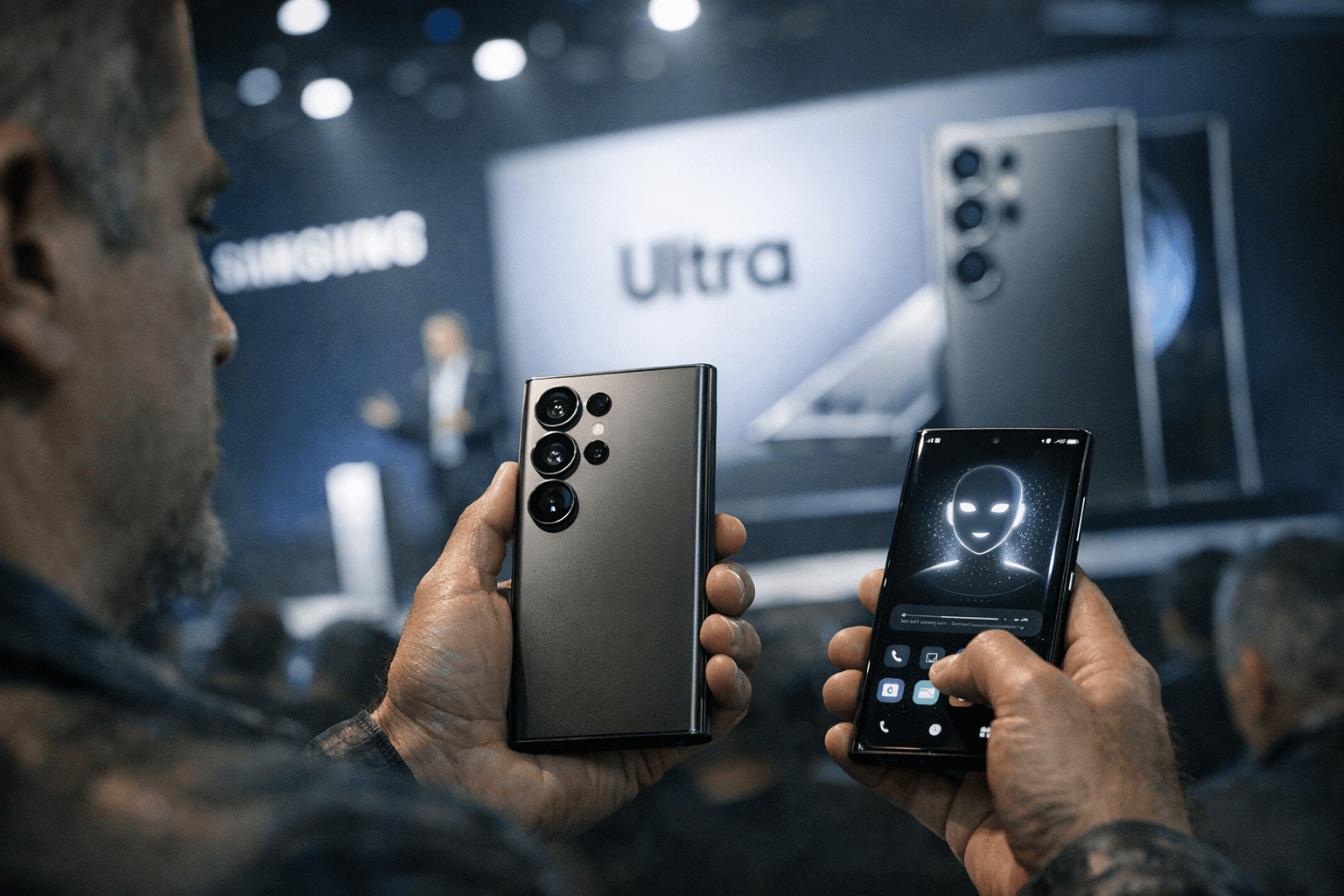
Samsung Electronics unveiled the Galaxy S26 family at its Galaxy Unpacked event, positioning the S26, S26+ and S26 Ultra as devices built to run more intelligence locally and to give users tighter privacy controls. The company framed the new phones around "on-device" and agentic AI services and introduced a privacy-focused display exclusive to the Ultra as part of a push to reduce cloud dependence and increase user control.
At the Feb. 25 presentation, Samsung emphasized that a larger portion of routine AI tasks will be processed on the device itself rather than routed through remote servers. That shift is meant to speed up responses, preserve battery life in certain cases, and limit the amount of personal data transmitted off the handset. Samsung also highlighted agentic AI capabilities, referring to assistants designed to take multi-step actions on behalf of users across apps and settings, delegating tasks without constant prompts.
The S26 family continues Samsung's multi-tier approach. The base S26 targets mainstream buyers, the S26+ expands battery and screen size options, and the S26 Ultra adds the company's most advanced hardware and software combination. Samsung described the Ultra's privacy-focused display as a new measure intended to bolster on-device protections; the company said the screen and accompanying software features work together to keep more data and processing local to the device.
Samsung's architecture for the S26 series mixes improved silicon performance, more local AI inference, and software agents that can orchestrate functions across Samsung apps and third-party services. By relocating model inference to the handset, the company aims to deliver faster, context-aware features such as enhanced camera intelligence, smarter notifications, and more capable voice assistants even when networks are spotty. For users and enterprises, those capabilities offer concrete benefits: less latency for time-sensitive tasks, fewer uploads of personal audio and visual data, and reduced reliance on persistent network connections.
The strategy also responds to growing consumer and regulatory scrutiny about how personal information is handled by cloud-based AI services. Moving inference on-device can limit the exposure of raw data to large cloud providers, but it also concentrates responsibility on device makers for securing models, updates and data storage. Security researchers and privacy advocates will likely scrutinize how Samsung implements protections against model leakage, side-channel attacks, and unauthorized access to locally stored training signals.
Shifting AI workloads to phones carries trade-offs. Running more complex models locally increases pressure on battery life and thermal design, and it raises questions about long-term model updates and the economics of delivering continual improvements without constant cloud connections. For developers, the move could create demand for optimized, energy-efficient models and new tools to port AI features safely to edge devices.
Samsung's launch places the S26 family at the center of an industry debate over where AI should live and who should control the data it requires. As consumers weigh responsiveness, privacy and battery performance, the S26 rollout will test whether a hardware-first approach to generative and agentic features can satisfy both everyday users and regulators focused on digital safety.
This article was produced by Prism’s automated news system from verified source data, official records, and press releases, then run through automated quality and moderation checks before publishing. The system is built and supervised by the people who set the standards it runs under. Read our full AI policy.
Did this article answer your question?