Samsung plans $1.5 billion Vietnam chip testing plant amid AI demand
Samsung will spend $1.5 billion on its first Vietnam chip-testing plant, a bet that AI demand has turned memory testing into a crucial supply-chain bottleneck.

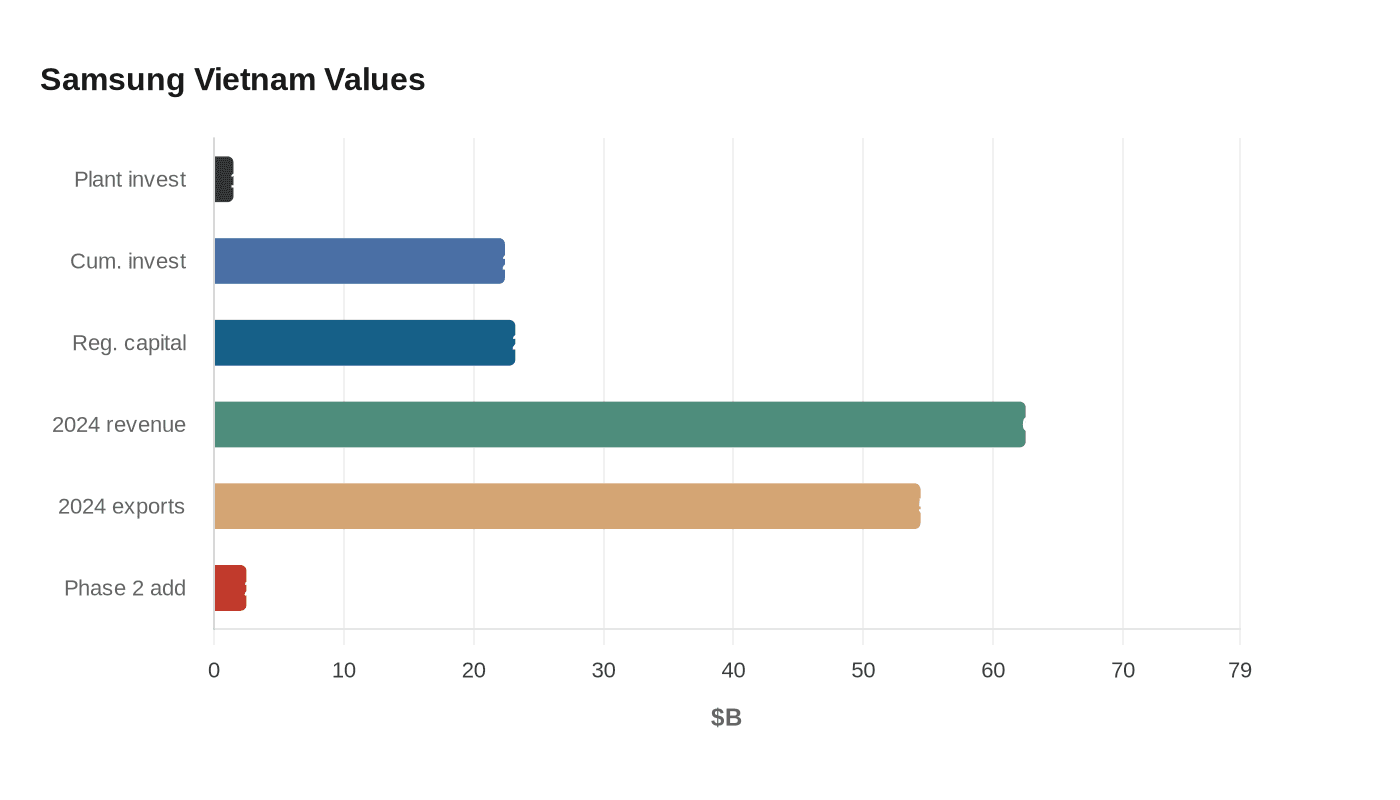
Samsung Electronics is investing 39 trillion dong, about $1.5 billion, in Vietnam to build its first chip-testing plant there, a move that puts one of the semiconductor industry’s least visible but most critical steps closer to the center of Asia’s manufacturing map.
The factory is already under construction in an industrial park about 60 kilometres north of Hanoi and is slated to begin operations in November 2027. Samsung submitted the plan to local authorities in April to secure an environmental permit, keeping the project in the approval-and-build stage even as the company pushes ahead with a bigger regional manufacturing strategy.
The investment matters because it targets testing, one of the choke points in a chip supply chain increasingly shaped by artificial intelligence. Demand from AI data-centre operators has tightened supplies of memory chips, creating pressure not just on production, but on the stages that determine whether those chips can be finished, qualified and shipped fast enough to meet demand. In that sense, the new Vietnam plant is less about headline-grabbing fabrication and more about the back end of the industry, where bottlenecks can ripple into prices for smartphones, laptops and automobiles.
It also fits a broader shift in the global semiconductor map, as manufacturers spread more of the work away from China and into countries that can offer scale, logistics and political reliability. Vietnam has already become one of Samsung’s most important bases in that reordering. Earlier reporting put Samsung’s cumulative investment in the country at about $22.4 billion, with six manufacturing plants, one research and development centre and one sales entity. Later figures described Samsung as Vietnam’s largest foreign direct investor, with registered capital of about $23.2 billion.
Samsung’s local footprint has already become a major part of Vietnam’s export economy. Its Vietnamese operations generated $62.5 billion in revenue and $54.4 billion in exports in 2024, underscoring how deeply the company is embedded in the country’s industrial base. A second phase of the chip-testing project could add as much as $2.5 billion more, which would deepen that dependence further if Samsung proceeds.
For Vietnam, the project reinforces a national strategy built on attracting higher-value technology work, not just assembly. For Samsung, it offers another way to secure supply in a market where AI has exposed how much leverage sits in the quiet, unglamorous stages of testing and finishing the chips that power the modern economy.
This article was produced by Prism’s automated news system from verified source data, official records, and press releases, then run through automated quality and moderation checks before publishing. The system is built and supervised by the people who set the standards it runs under. Read our full AI policy.
Did this article answer your question?