San Francisco's last jeepney carries Filipino American heritage forward
San Francisco’s last jeepney is both a ride and a warning: Filipino American culture survives in public only when communities fight to keep it visible.
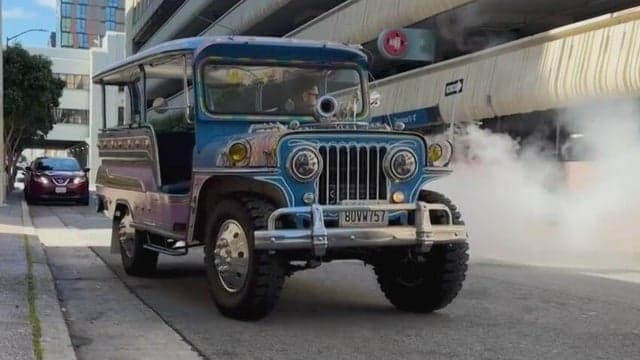
San Francisco’s last jeepney rolls through South of Market as something between a transit relic and a traveling archive. For Filipino Americans, its painted sides and open-air frame carry memory, labor, and pride, but they also raise a harder question: what happens when a living tradition can survive only as a special attraction?
A cultural symbol that still moves
The vehicle is part military jeep, part rolling art museum, and that combination is exactly why it resonates. Behind the wheel is Mario DeMira, the assistant director of SOMA Pilipinas, the organization that now stewards the jeepney as a public symbol of Filipino American identity and resilience. The jeepney has been described as one of the only places in the United States where people can still ride in a Filipino jeepney, which makes each trip feel less like a novelty and more like a rare encounter with a culture in motion.
That symbolism matters because jeepneys have always been more than buses. In the Philippines, they became a distinctly Filipino form of public transport, decorated, adapted, and claimed by the communities that used them every day. Seeing one in San Francisco turns that everyday utility into a visible reminder that immigrant culture is not only preserved in museums or formal celebrations, but also in the streets, vehicles, and routines that make a neighborhood feel like home.
Why SoMa insists on keeping it visible
SOMA Pilipinas says this year marks its 10th year as San Francisco’s Filipino Cultural Heritage District, created to preserve Filipino presence, culture, and history in South of Market while responding to ongoing neighborhood challenges. That mission gives the jeepney a local purpose larger than nostalgia. It is not simply parked as an artifact, but used as a moving expression of a district that wants Filipino life to remain visible in one of the city’s most transformed neighborhoods.
That visibility carries weight in a city where, according to U.S. Census Bureau estimates, San Francisco had 826,079 residents as of July 1, 2025, and Asians made up 35.2% of the population. In a place this diverse, cultural survival is also a civic issue. When a community of that scale preserves a public symbol like a jeepney, it is asserting that Filipino heritage belongs in the city’s everyday landscape, not just in private memory.
The jeepney tour tied to Filipino American History Month reinforces that point. A heritage month can become ceremonial if it is detached from daily life, but a ride through SoMa turns history into a street-level experience. It gives younger Filipino Americans a visible link to a transport system their families may know from stories, and it tells everyone else that cultural continuity is built through use, not just celebration.
From music video prop to community vehicle
The jeepney’s path to San Francisco says as much about adaptation as it does about preservation. Bay Area-based pop musician Toro y Moi, also known as Chaz Bear, donated the vehicle to SOMA Pilipinas after it appeared in one of his music videos for a song on his 2022 album *Mahal*. That handoff transformed a prop into a community asset, moving the jeepney out of the logic of entertainment and into the logic of heritage.
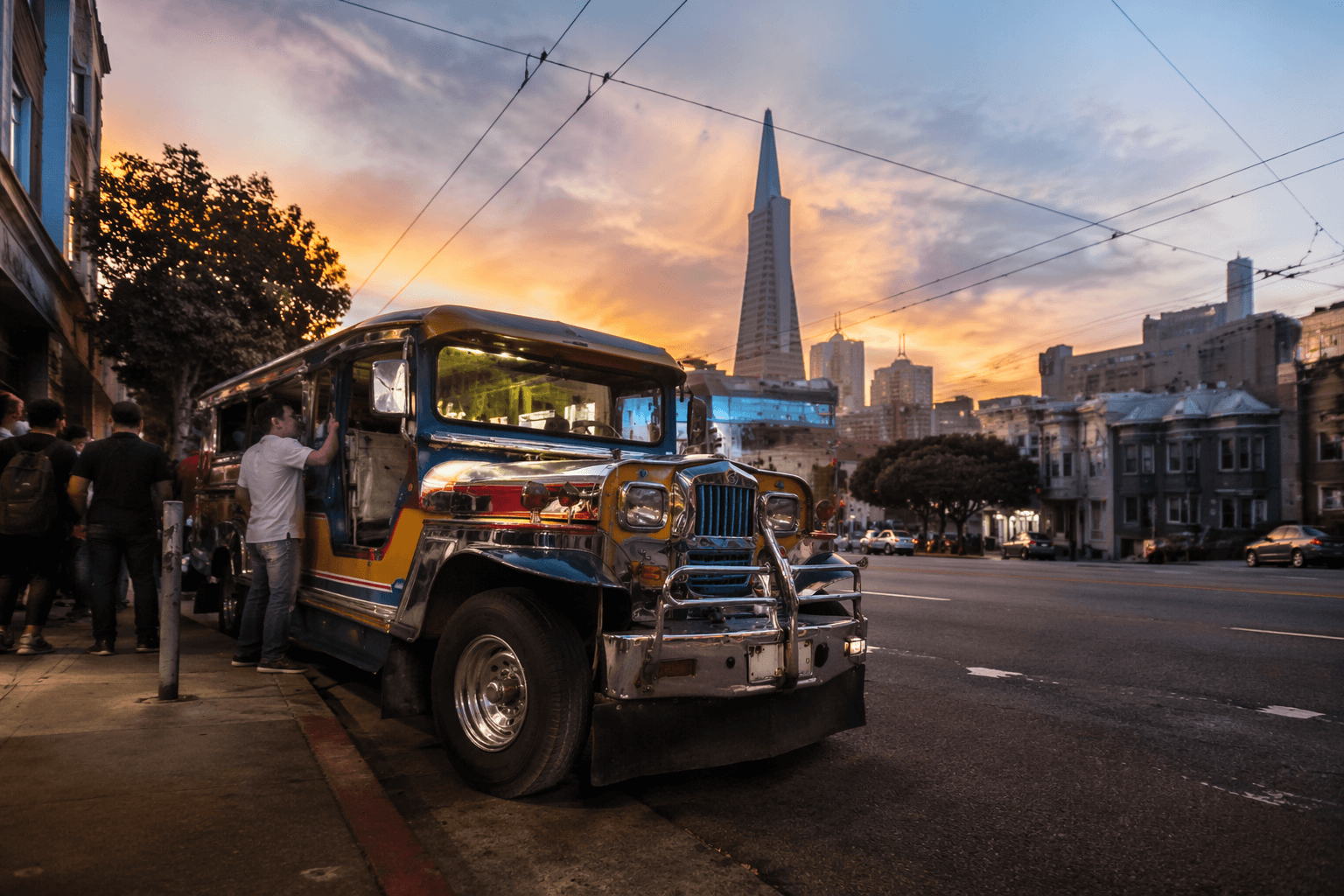
There is something fitting in that transition. Filipino American cultural survival often depends on exactly this kind of repurposing, where an object, venue, or block becomes meaningful because a community claims it and keeps using it. The jeepney’s continued presence in San Francisco is not accidental. It is the result of stewardship, institutional memory, and the willingness to treat a vehicle as a vessel for identity.
What the jeepney’s decline in the Philippines reveals
The San Francisco jeepney would not carry the same urgency if the vehicle were thriving in the Philippines without pressure. Instead, the opposite is true. The Philippine government has been pursuing a phase-out and modernization program, and that policy push has made the future of jeepneys uncertain even in the country where they were born. ABS-CBN News has reported that the modernization effort has put the iconic vehicles in doubt, while GMA News Online documented the steep decline in production at Sarao Motors, one of the best-known jeepney makers.
Those numbers tell the story starkly. Sarao Motors was reportedly producing 50 to 60 jeepneys per month in the 1970s and 1980s, about 10 per month by 2014, and then one jeepney every four to six months after the phase-out program began in 2017. That collapse is not just an industrial statistic. It reflects how regulation, cost pressures, and modernization policy can compress a living craft into near-obsolescence, leaving fewer artisans, fewer buyers, and fewer places where the vehicle remains part of ordinary life.
The effect reaches beyond manufacturing. When a public transport form is pushed toward disappearance, communities lose a shared object of daily familiarity. They also lose the social rituals attached to it, from the visual language of the vehicle itself to the intergenerational memories bound up in riding it, driving it, or making it. That is why the San Francisco jeepney feels so charged: it stands in a city that can still choose preservation while the original system is being narrowed at home.
What cultural survival looks like on a city street
The lesson of San Francisco’s last jeepney is that heritage survives when communities defend its place in public life. SOMA Pilipinas is doing that work in a district designed to preserve Filipino presence in South of Market, and the jeepney extends that mission into motion. It makes visible the fact that cultural identity is not abstract. It is carried in infrastructure, shared space, and the right to be seen.
That makes the jeepney more than a charming relic. It is a test of whether cities make room for immigrant memory as part of civic life, or whether they allow it to be squeezed into display cases and special occasions. In San Francisco, the answer still moves down the street on four wheels, carrying Filipino American heritage forward.
This article was produced by Prism’s automated news system from verified source data, official records, and press releases, then run through automated quality and moderation checks before publishing. The system is built and supervised by the people who set the standards it runs under. Read our full AI policy.
Know something we missed? Have a correction or additional information?
Submit a Tip