San Juan College OTA and dental hygiene students collaborate in patient simulations
San Juan College OTA and Dental Hygiene students ran team-based patient care simulations to strengthen clinical skills, professional confidence and teamwork, the college reported Feb 13, 2026.
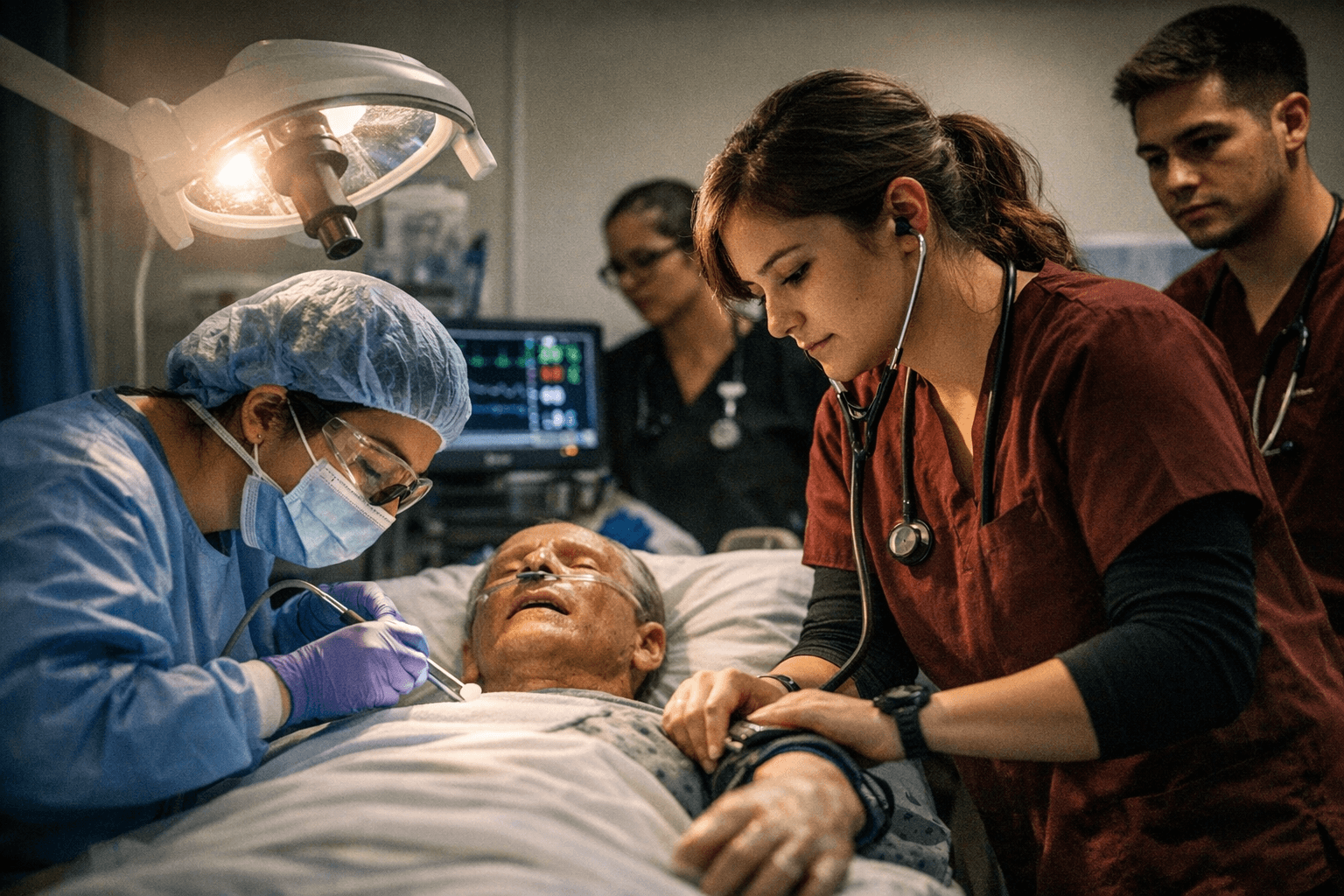
Students from San Juan College’s Occupational Therapy Assistant (OTA) and Dental Hygiene programs took part in hands-on, team-based patient care simulations aimed at improving clinical skills and teamwork, the college reported Feb 13, 2026. “Students in the Occupational Therapy Assistant (OTA) and Dental Hygiene programs recently experienced firsthand how collaboration strengthens clinical skills, professional confidence and teamwork,” the Marketing and Public Relations item stated.
The San Juan College Communicator described the activity’s explicit learning objectives as team-based patient care simulation and understanding how roles intersect in clinical settings. “Through a hands‑on learning experience, students from both programs gained a deeper understanding of how their roles intersect,” the college wrote, listing intended student outcomes of strengthened clinical skills, professional confidence, and teamwork.
College materials say the collaboration began several years ago after Dental Hygiene faculty noted some students struggling with the fine motor and physical demands of clinical practice. “This interprofessional collaboration began several years ago when Dental Hygiene faculty observed that some students struggled with the fine motor and physical demands of clinical practice,” the Communicator reported, and faculty pursued the partnership to support student success.
San Juan College’s writeup singled out specific ergonomic and functional concerns that motivated the partnership: hand strength, coordination, posture and endurance. “Recognizing the importance of hand strength, coordination, posture and endurance in dental hygiene, faculty sought solutions that would support student success,” the report states, framing the OTA–Dental Hygiene collaboration as a local model for interprofessional education (IPE).
National and peer-reviewed evidence offers context for San Juan’s approach. A systematic review summarized in the research notes found that IPE may improve knowledge, clinical skills and collaborative attitudes for dental hygiene students, and that validated instruments such as RIPLS, ICCAS, ISVS and IPEC competency assessments have detected significant improvements in interprofessional interaction. The review warned that methodological heterogeneity and limited evidence quality mean findings should be interpreted with caution and noted sample sizes in reviewed studies ranged from 12 to 334 participants. Journal of Dental Hygiene and ADHA excerpts also list common IPE methods—case studies, simulations, standardized patients and service learning—used one to four hours per week in some programs.
San Juan’s activity sits alongside larger institutional models such as BuckIPE at Ohio State, which pairs dental and dental hygiene students with disciplines including Occupational Therapy, Nursing, Pharmacy, Physical Therapy and Social Work, and UNC‑Chapel Hill’s IPEP, which organizes case-based learning, telehealth simulations and population health interventions around stages of Cooperation, Coordination and Collaboration.
A comparative example from the University of Minnesota School of Dentistry underscores the ergonomics rationale: OT student Nicole Motz said she observed more pain and injuries among dental students tied to positioning and equipment height, and Shannon Gillgian Wehr noted that “Ergonomics isn’t covered extensively in our programs, and it is not uncommon for our students to reach out to us or our faculty about experiencing pain,” making interprofessional work “a great opportunity for learning on both sides.” UMN began pursuing its OT partnership in 2020.
San Juan College’s Communicator concludes by presenting the ongoing OTA–Dental Hygiene collaboration as a local model: “The ongoing collaboration between the OTA and Dental Hygiene programs demonstrates the power of interprofessional education. By learning with and from one another, students gain practical experience that prepares them for collaborative practice in today’s healthcare environments.” The page also invites prospective students to explore the programs and appears alongside related San Juan College news items dated Feb 12–13, 2026, including Spring Convocation Recognizes Employees and Grant Partnership Expands Hands‑On Learning in STEM Fields.
Know something we missed? Have a correction or additional information?
Submit a Tip