Satellite imagery shows at least 43 U.S. support aircraft at Saudi base, analysts say
Planet imagery and analysts report a surge in aerial refuelling and AWACS at Prince Sultan Airbase, rising from 27 to 43 aircraft in four days, raising regional diplomatic stakes.
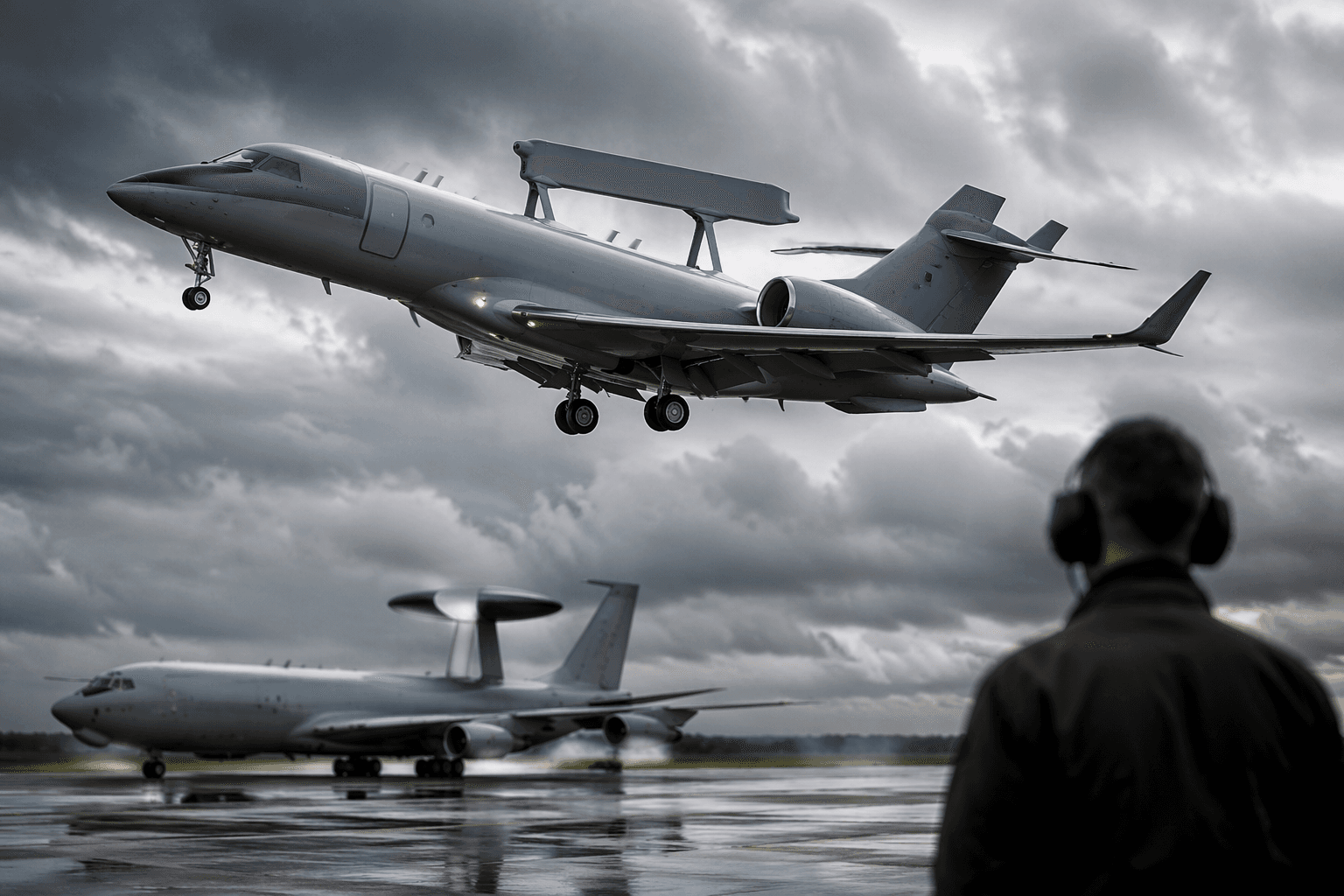
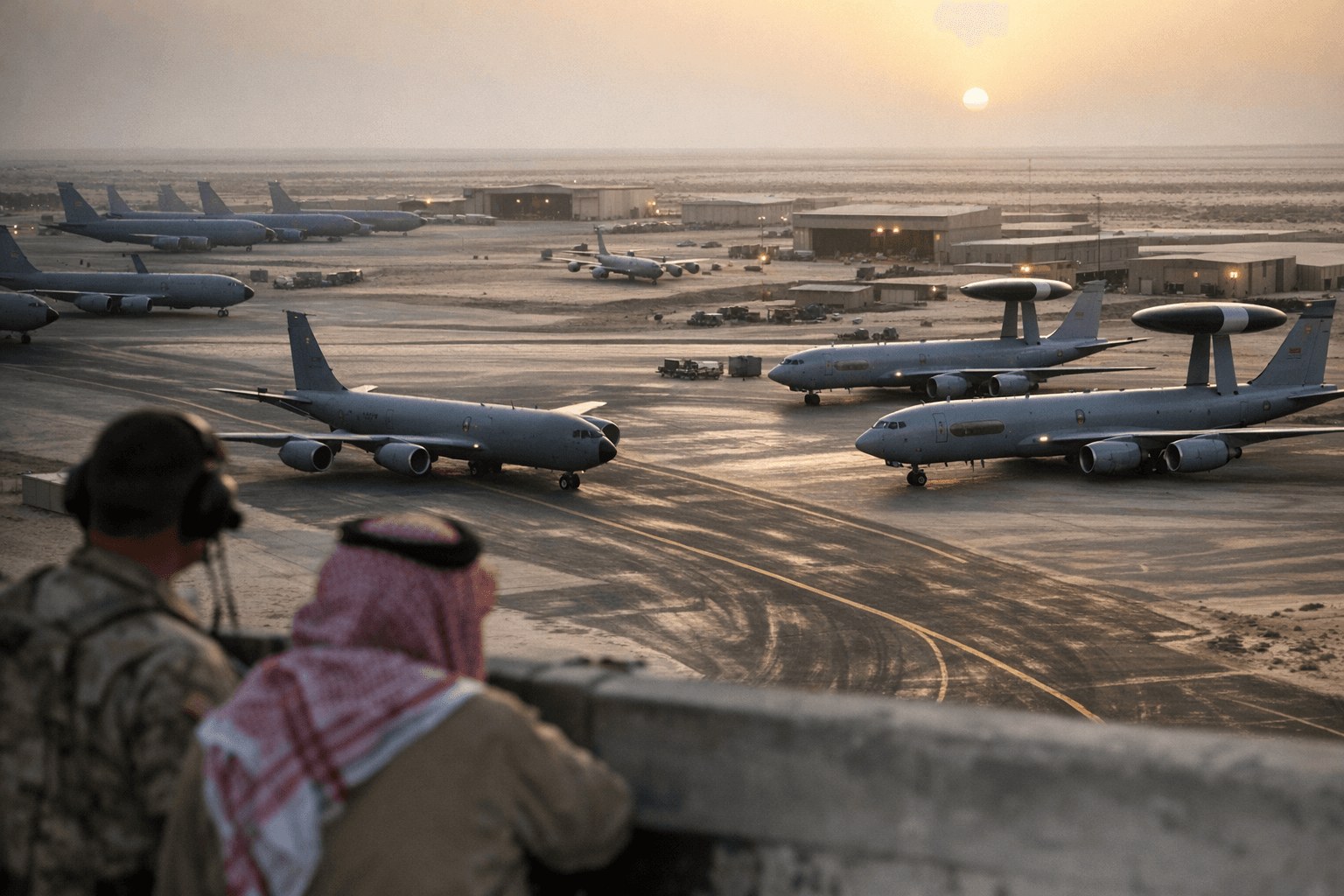
Planet Labs satellite images dated Feb. 21 show at least 43 aircraft parked at Prince Sultan Airbase in Saudi Arabia, up from 27 visible in imagery dated Feb. 17, forensic imagery analysts and open-source trackers say. The high-resolution Feb. 21 image was analyzed by William Goodhind of Contested Ground, who identified 13 Boeing KC-135 Stratotankers and six Boeing E-3 Sentry AWACS among 29 large, swept-wing aircraft on the tarmac.
Chinese commercial satellite imagery cited by Military Watch Magazine offers a different tally, reporting 16 KC-135 tankers and the same six E-3 AWACS at Prince Sultan. Military Watch wrote that "Chinese commercial satellite imagery has confirmed a large buildup of U.S. Air Force support aircraft at Prince Sultan Airbase ... including the stationing of 16 KC-135 aerial tankers and six E-3 Sentry airborne warning and control systems (AWACS) at the facility." The outlet added that deployment of "six E-3s is particularly significant due to the very limited numbers available worldwide, with just 31 being in service in the Air Force, while due to their age availability rates have been extremely" low.
Analysts note the counts vary by image resolution, analytic method and the time snapshots were taken. Imagery reviewed later in the week showed the number at Prince Sultan falling to 38 by Feb. 25, indicating a transient concentration rather than a permanent surge, according to sequential satellite snapshots.
Planet imagery released the Feb. 21 photos that also show combat aircraft at regional bases. Open-source image reviewers and trackers reported substantial concentrations at Muwaffaq Salti Air Base in Jordan. A Tel Aviv University tracker estimated at least 66 fighter jets there, and former defense officials and an air force expert who reviewed imagery identified what they assessed as 18 F-35s, 17 F-15s and eight A-10s at the Jordan base. Independent open-source analysis put the Jordan total at roughly 70 combat aircraft.
The visible mix of KC-135 tankers and E-3 AWACS matters strategically because tankers extend flight time and reach for combat aircraft and AWACS provide airborne command, control and surveillance. U.S. naval positioning in the region also appears robust; carrier groups including the USS Abraham Lincoln and USS Gerald R. Ford and their escorts are reported to be nearby with air wings and destroyer escorts equipped for ballistic missile defence.
The movements come as Washington and Tehran are engaged in indirect nuclear negotiations. Saudi officials have told Iran they will not allow their airspace or territory to be used for operations against Tehran, complicating basing options in a tense diplomatic moment. Iran has protested the buildups, with Iranian foreign ministry figure Abbas Araghchi calling the deployments "absolutely unnecessary and unhelpful" and warning that Tehran would be compelled to strike U.S. bases if attacked. U.S. special envoy Steve Witkoff has warned Iran was "probably a week away" from enriching enough uranium to build a bomb, a comment that officials say underpins the urgency of Western pressure.
When asked to comment on the imagery, the Pentagon said it had "nothing to provide," noting the U.S. military generally does not comment on force movements.
The divergent counts and the presence of multiple imagery providers underline the challenge of pinning exact force levels from snapshots. Analysts say the concentration of refuelling tankers and AWACS nonetheless signals deliberate U.S. force posture adjustments to increase reach and situational awareness in a region where diplomatic channels and military risks are tightly entangled. Planet Labs supplied the satellite imagery used in the analyses.
This article was produced by Prism’s automated news system from verified source data, official records, and press releases, then run through automated quality and moderation checks before publishing. The system is built and supervised by the people who set the standards it runs under. Read our full AI policy.
Did this article answer your question?