Saudi Arabia's Hormuz Bypass Pipeline Hits 7 Million Barrels Per Day
The pipeline built for a crisis nobody expected just hit 7 million barrels a day; Hormuz is closed, and the backup plan is now the plan.

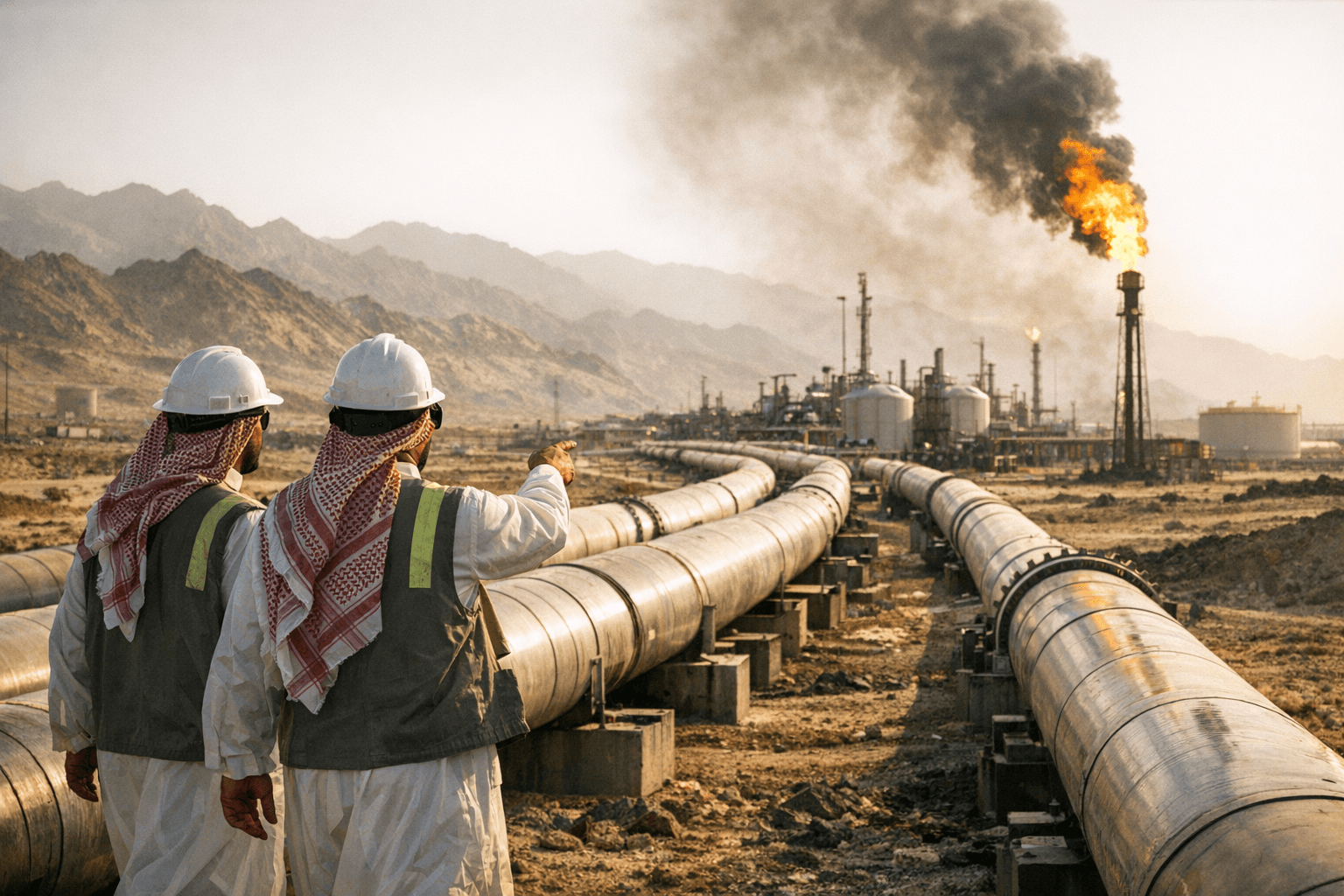
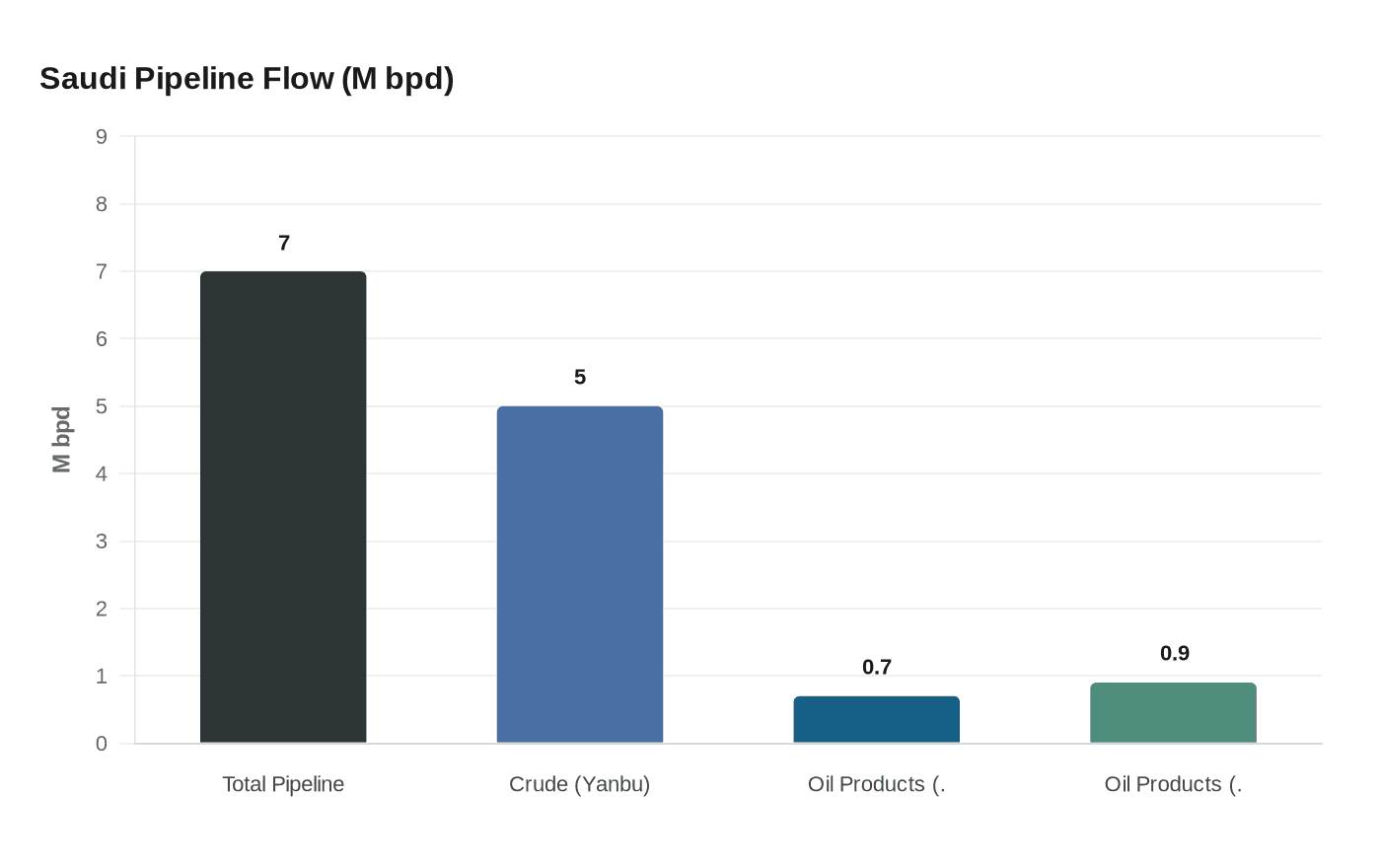
Saudi Arabia's East-West crude pipeline, designed decades ago as a contingency route for a crisis few expected to actually arrive, surged to approximately 7 million barrels per day as Iran-related conflict choked off shipping through the Strait of Hormuz, according to people familiar with the operations.
The pipeline system stretches more than 1,000 kilometres across the kingdom, running from Saudi Aramco's eastern oilfields to the Red Sea port of Yanbu. It was built precisely to serve as an insurance policy if the Gulf sea lane was ever closed. That scenario is now reality.
Crude exports from Yanbu climbed to roughly 5 million barrels per day, with an additional 700,000 to 900,000 barrels per day in oil products flowing through the rerouted system. Saudi Aramco declined to comment on the figures.
The milestone offers some relief to global energy markets that had begun pricing in prolonged Hormuz disruptions. The strait handles a significant share of the world's seaborne oil and liquefied natural gas, and its effective closure raised the prospect of sustained supply shocks across importing nations. Analysts described the pipeline achievement as a logistical and technical feat that reduced the immediate risk of supply interruptions. "It provides relief but does not eliminate the strategic vulnerabilities," one analyst said.
Those vulnerabilities are real and multiply along the rerouted path. The consolidation of Saudi export activity into Yanbu and other Red Sea terminals creates new choke-points: a successful attack on a Red Sea port or tanker lane would carry magnified consequences now that so much volume runs through fewer nodes. Houthi forces have already demonstrated their willingness to target tankers and port infrastructure across the Red Sea corridor, raising insurance costs and complicating logistics for carriers navigating the altered route.
Shippers transiting crude from Yanbu to Asian or European buyers also face meaningfully longer transit times compared to Hormuz routing, and insurance premiums on vessels operating in active conflict zones have risen sharply. Those added costs will eventually move through supply chains, even if the most severe price spikes from a full Hormuz closure are blunted by the pipeline's additional throughput.
The broader geopolitical stakes extend well beyond Saudi Arabia's own export balance. Countries that depend on Persian Gulf transit traffic now face higher costs and greater uncertainty in their energy supply planning. The concentration of Middle Eastern export activity in the Red Sea corridor places new political weight on the security commitments protecting that passage and raises questions about how quickly damaged energy infrastructure elsewhere in the region can be repaired.
The pipeline's capacity to run at 7 million barrels per day is a genuine engineering achievement, one that Aramco's planners built into the system for exactly this kind of emergency. But the architecture of the workaround introduces its own fragility. Whether the Red Sea remains navigable, and whether Yanbu can absorb sustained high-volume traffic without becoming a target itself, will determine whether the buffer holds in the weeks ahead.
This article was produced by Prism’s automated news system from verified source data, official records, and press releases, then run through automated quality and moderation checks before publishing. The system is built and supervised by the people who set the standards it runs under. Read our full AI policy.
Did this article answer your question?


