SC3DP and FEHRMANN unveil AI-driven machine-agnostic cloud LPBF parameter platform
NAMIC-funded collaboration between SC3DP and FEHRMANN MaterialsX APAC unveiled an AI-driven, machine-agnostic cloud platform to cut LPBF parameter development that can add up to 15% of production costs.
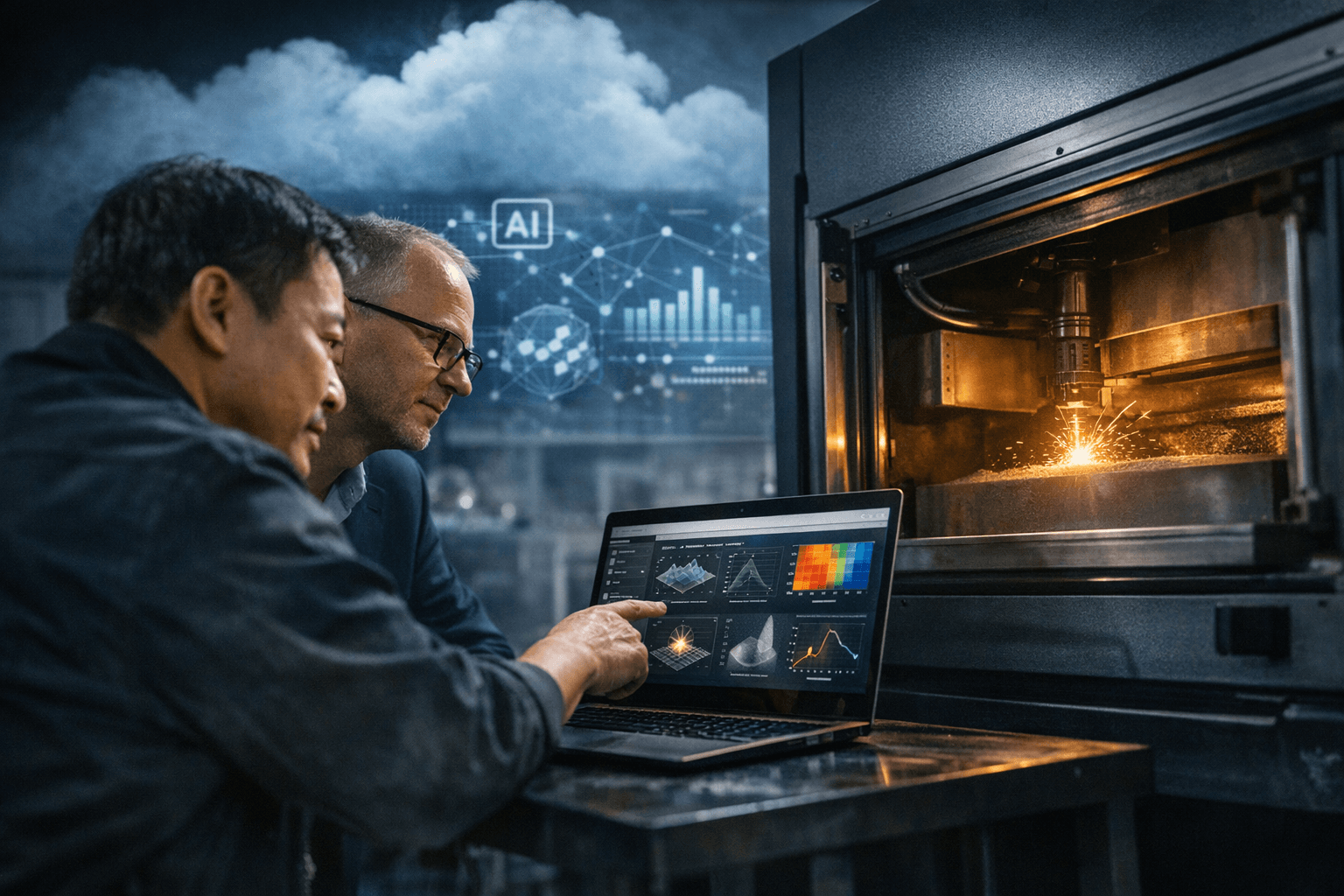
A NAMIC-funded collaboration between the Singapore Centre for 3D Printing and FEHRMANN MaterialsX APAC unveiled an AI-driven, machine-agnostic cloud platform aimed at slashing the time and expense of generating laser powder bed fusion parameter sets that can account for up to 15% of overall LPBF production costs. The project was announced as a NAMIC Singapore funded initiative targeting a cloud tool to reduce trial-and-error in metal additive manufacturing.
The partners describe the effort as a move to "build an AI-driven platform that aims to dramatically reduce the time and expense of developing process parameter sets for laser powder bed fusion (LPBF) metal additive." VoxelMatters reported the platform will be machine-agnostic, cloud-based and "capable of generating optimized parameter sets tailored to the intended end-use application of a given part," language that frames the platform as both vendor-neutral and purpose-driven.
SC3DP brings institutional heft to the collaboration. The Singapore Centre for 3D Printing commenced in December 2014 and is funded by the National Research Foundation. SC3DP is supported by Nanyang Technological University, Singapore and the Economic Development Board, and its NTU page published on 30 Oct 2025 lists more than 900 publications and facilities spanning more than 1700 square metres equipped with a range of printing technologies. SC3DP also hosts a NAMIC Hub at NTU and lists outreach, research collaborations and student engagement among its activities.
FEHRMANN MaterialsX APAC supplies the software and materials-stack narrative. The company markets a MaterialsX Enterprise Platform and tools called MatGPT and MatAIM; its materials pages state that "The MaterialsX Enterprise Platform combines expert knowledge and AI to clarify complex technical relationships, enable better decision-making, and measurably shorten development cycles." FEHRMANN materials further claim that "MatAIM accelerates material development with AI-driven simulations. Accurate property predictions in the context of specific production processes - delivered in minutes - enable better products, faster time-to-market, and lower costs," and assert that "we are pushing boundaries and reducing the development time of new alloys from years to days." FEHRMANN lists research collaborations with Fraunhofer IAPT, the Helmholtz Centre Hereon and DESY in its outreach materials.
The technical case for the platform rests on how LPBF and parameter development are currently resourced. LPBF is described as a process in which a laser selectively melts layers of metal powder to build parts, and "Parameter development—the process of identifying the optimal machine settings for a given material and part geometry—can account for up to 15% of overall LPBF production costs, representing a significant barrier to broader industrial adoption." By automating and tailoring parameter sets to end-use, the platform aims to reduce that barrier.
The announcement plugs into a growing Singapore additive manufacturing ecosystem. NAMIC is funding the initiative while the Economic Development Board supports both SC3DP and other AM projects; DNV has established a Global Additive Manufacturing Technology Centre in Singapore supported by EDB that will offer additive manufacturing certification, feasibility studies, qualification, verification and approval of design of materials, components and structures and other safety-critical components using AM, verification of additive manufacturing and fabrication processes, equipment, personnel and products.
The collaboration lays out capability claims and institutional partners, but the announcements do not specify a launch timeline, budget figure or detailed validation plan. If the platform matches its aims, it could shorten parameter cycles for LPBF machines and slot into Singapore’s NTU-backed research base and the new DNV testbed supported by EDB.
Know something we missed? Have a correction or additional information?
Submit a Tip