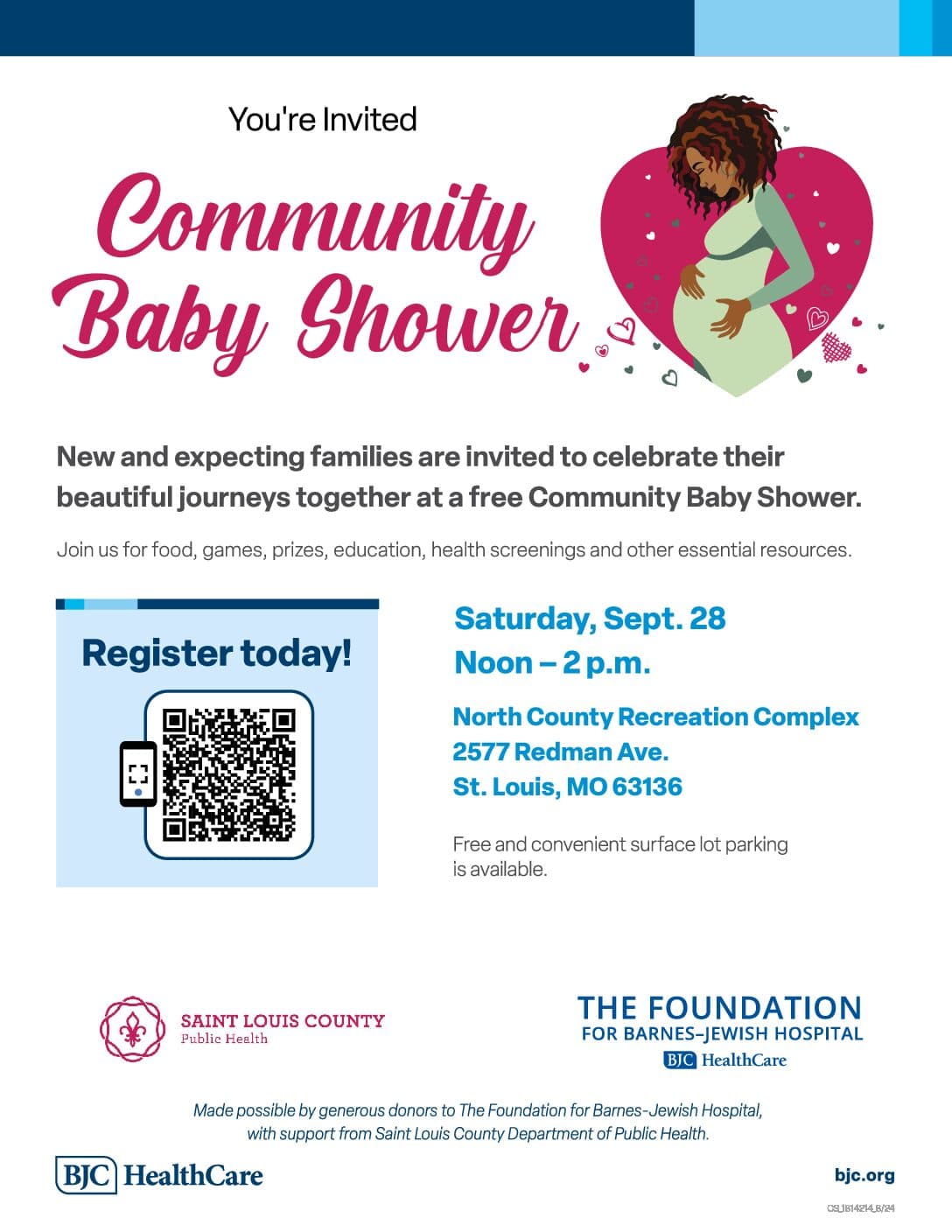
Scoping Review Maps Community Baby Showers as Infant Mortality Prevention Tools
A Johns Hopkins-led scoping review of 20 studies finds community baby showers show real promise against infant mortality, but thin long-term data means organizers are still mostly running on faith.
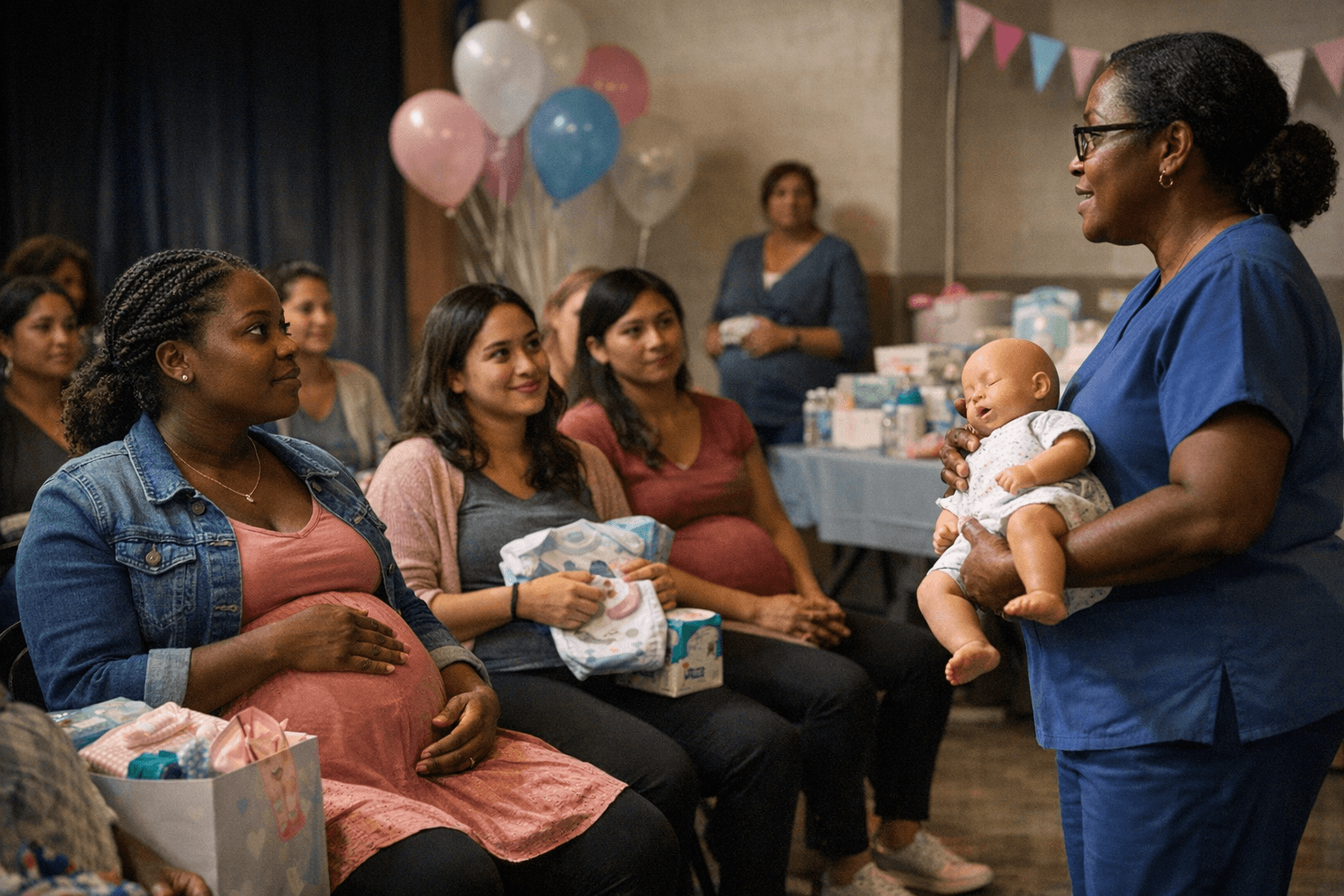
Infant mortality is not random. Sudden unexpected infant death (SUID) and sudden infant death syndrome (SIDS) collectively represent one of the leading causes of infant mortality worldwide, and researchers have spent decades mapping the terrain of preventable risk. There are a range of evidence-based modifiable risk factors for both, particularly related to the infant's sleep environment. Community baby showers, a format that blends celebration with health education and equipment distribution, have emerged as a grassroots strategy targeting those exact risk points. Now, a scoping review led by researchers at Johns Hopkins University School of Medicine and the University of Maryland School of Public Health has done something nobody had done before: systematically mapped the evidence behind these events to ask whether the enthusiasm is warranted.
The answer, based on 20 published studies and four secondary sources, is a carefully qualified yes.
The Problem Space These Events Are Designed to Address
Topics at community baby showers typically address risk-reduction strategies to prevent sleep-related infant deaths, including safe sleep position and surface, breastfeeding, and tobacco-free environments. The Johns Hopkins and University of Maryland review frames this programming as a direct response to social determinants of health that make it harder for families in high-risk communities to implement what public health experts recommend. A pack-and-play crib, a wearable sleep sack, and a 20-minute conversation with a nurse may not sound like medicine, but the literature increasingly treats them that way.
Community baby showers have provided education and free portable cribs to promote safe sleep for high-risk infants, and participants at community venues were more likely to exhibit risk factors associated with unsafe sleep than those reached through clinical settings. That detail matters for design: the people who show up to a church fellowship hall or a library meeting room are often not the same population filling prenatal clinic waiting rooms.
What the Evidence Actually Shows
The strongest signal in the literature is short-term knowledge gain. Following the showers, both groups showed improvement in knowledge and intentions regarding safe sleep. A statewide program captured this at scale: significant increases were observed in baby shower participants' (n=845) reported plans to follow the AAP Safe Sleep guidelines (all p<0.001) and likelihood to breastfeed (p<0.001). Those are real numbers from a real cohort, and they suggest the format is doing something.
The venue question has also been partially resolved. To connect with the highest-risk groups, showers held at community venues appeared to be preferable to those held at high-risk clinics. Researchers redesigning events have also experimented with using structured behavioral frameworks, evaluating whether participation in a community event developed using Health Belief Model constructs increased intention to follow the American Academy of Pediatrics safe sleep guidelines, adding theoretical scaffolding to what was previously just intuition. Tools needed to create a safe sleep environment, such as a portable crib or wearable blanket, are often provided to attendees, and the review confirms this equipment distribution component is among the most consistent features across programs.
The Four Core Components Organizers Are Using
The scoping review distills the field down to four common intervention components that appear repeatedly across the 20 studies:
- Goods distribution: Safety and essential items including portable cribs and diapers, handed directly to participants, addressing the material gap between knowing the recommendation and being able to follow it.
- Educational modules: Brief, focused sessions on safe sleep positioning, breastfeeding, and car-seat safety, delivered at the event itself.
- Agency tabling and warm handoffs: On-site presence from social service providers, home visiting programs, and community health workers, with direct referrals rather than pamphlets.
- Community-based recruitment: Reaching participants through trusted institutions including libraries, churches, and clinics, rather than relying on formal healthcare channels.
The fourth component deserves particular weight. The review finds that recruitment through trusted community partners is not just logistically convenient but strategically essential to reaching populations who are underserved by conventional prenatal systems.
Where the Evidence Gets Thin
This is where any honest assessment of community baby showers has to spend some time. The review is clear-eyed about what the literature cannot yet demonstrate. Sample sizes across studies are small. There are no randomized controlled trials. Long-term behavioral follow-up is rare. Most studies measure knowledge and stated intention immediately after the event; far fewer return weeks or months later to ask whether sleep environments actually changed, whether mothers continued breastfeeding, or whether families used the crib they went home with.
The heterogeneity problem compounds this. Programs vary so widely in format, curriculum, target population, and evaluation method that comparing them is difficult. A well-funded urban program with six educational stations and onsite case managers is categorically different from a single-session community event with a table of donated diapers, but both appear in the literature as "community baby showers." Until measurement frameworks are standardized, the field will struggle to identify which specific components drive outcomes.
The review also notes limited evidence on breastfeeding support specifically. Breastfeeding intentions did not always improve alongside safe sleep metrics, suggesting that a brief mention of breastfeeding at a multi-topic event may not be sufficient to move the needle on a behavior with its own complex barriers.
What Stronger Programs Would Look Like
The Johns Hopkins and University of Maryland review offers concrete direction. Funders and planners should treat equipment distribution not as the endpoint but as the entry point: the crib gets a family through the door, but sustained engagement is what converts presence into behavior change. The authors recommend integrating baby shower attendees into larger perinatal care pathways, specifically linking them to home visiting programs and postpartum case management. Culturally tailored curricula are flagged as an investment priority, with the review pushing back against generic content that may not land with the communities most affected by SUID and SIDS.
Implementation Checklist for Organizers
The literature's strongest recommendations, synthesized into what the evidence suggests actually matters:
1. Anchor to trusted venues. Recruit through libraries, churches, and community clinics, not just healthcare systems. The venue signals safety and relevance to high-risk populations.
2. Distribute equipment with intention. Portable cribs and wearable blankets should accompany, not substitute for, education. Goods without context produce lower behavior-change rates.
3. Build in warm handoffs. On-site agency tabling should result in actual referrals, not just brochures. Track whether participants connect with home visiting or postpartum services.
4. Use a structured educational framework. Programs that apply models like the Health Belief Model show more consistent knowledge gains than unstructured sessions.
5. Cover the full risk spectrum. Safe sleep, breastfeeding support, car-seat safety, and tobacco-free environment guidance should all be present, with depth, not just a slide and a handout.
6. Measure beyond the event. Set a 30- and 90-day follow-up protocol to capture whether behavior changed, not just whether knowledge improved that afternoon.
7. Standardize your metrics. Use consistent pre/post instruments so your data can contribute to the broader evidence base. Programs running in isolation produce findings that cannot be aggregated or compared.
8. Plan for longitudinal tracking. The field's biggest gap is durable outcome data. Tracking infant mortality rates and health-service utilization at the community level, over time, is the work that will move community baby showers from promising programs to evidence-based policy.
The Johns Hopkins and University of Maryland scoping review positions these events as scalable and acceptable to the communities they serve. The ceiling on their impact is not enthusiasm; it is infrastructure. Programs that invest in rigorous evaluation, culturally grounded education, and pathway integration are the ones that will produce the evidence the field urgently needs.
Sources:
Know something we missed? Have a correction or additional information?
Submit a Tip