Search Underway for Missing F-15E Crew Member After Iranian Shootdown
An Iranian governor offered $60,000 for the captured F-15E crew member as U.S. rescue helicopters flew deep into contested Iranian airspace for a second day.

A frantic search for the missing weapons systems officer of a downed F-15E Strike Eagle entered its second day Saturday as U.S. rescue teams flew deep into contested Iranian airspace, while a regional Iranian governor publicly offered $60,000 for the crew's capture.
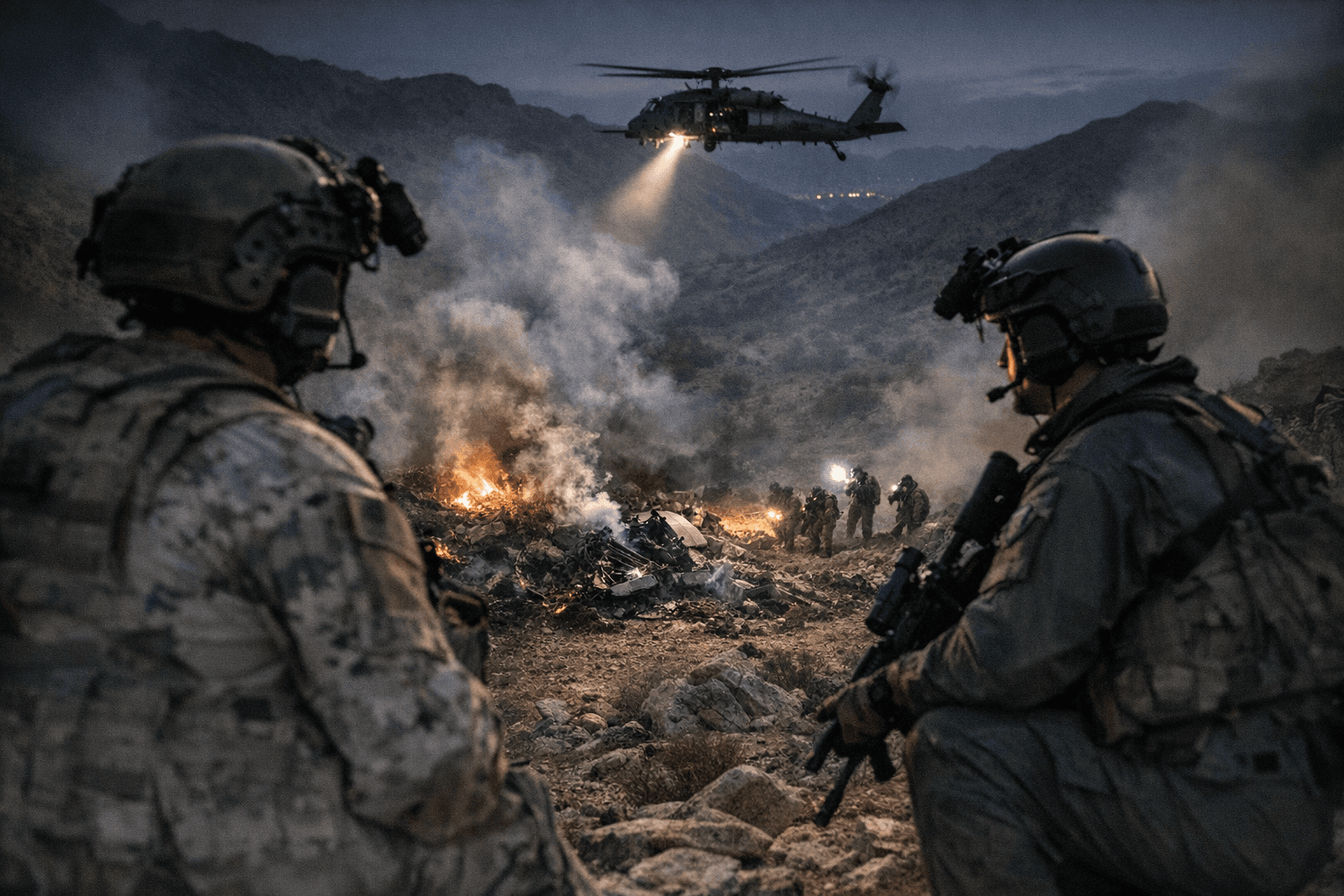
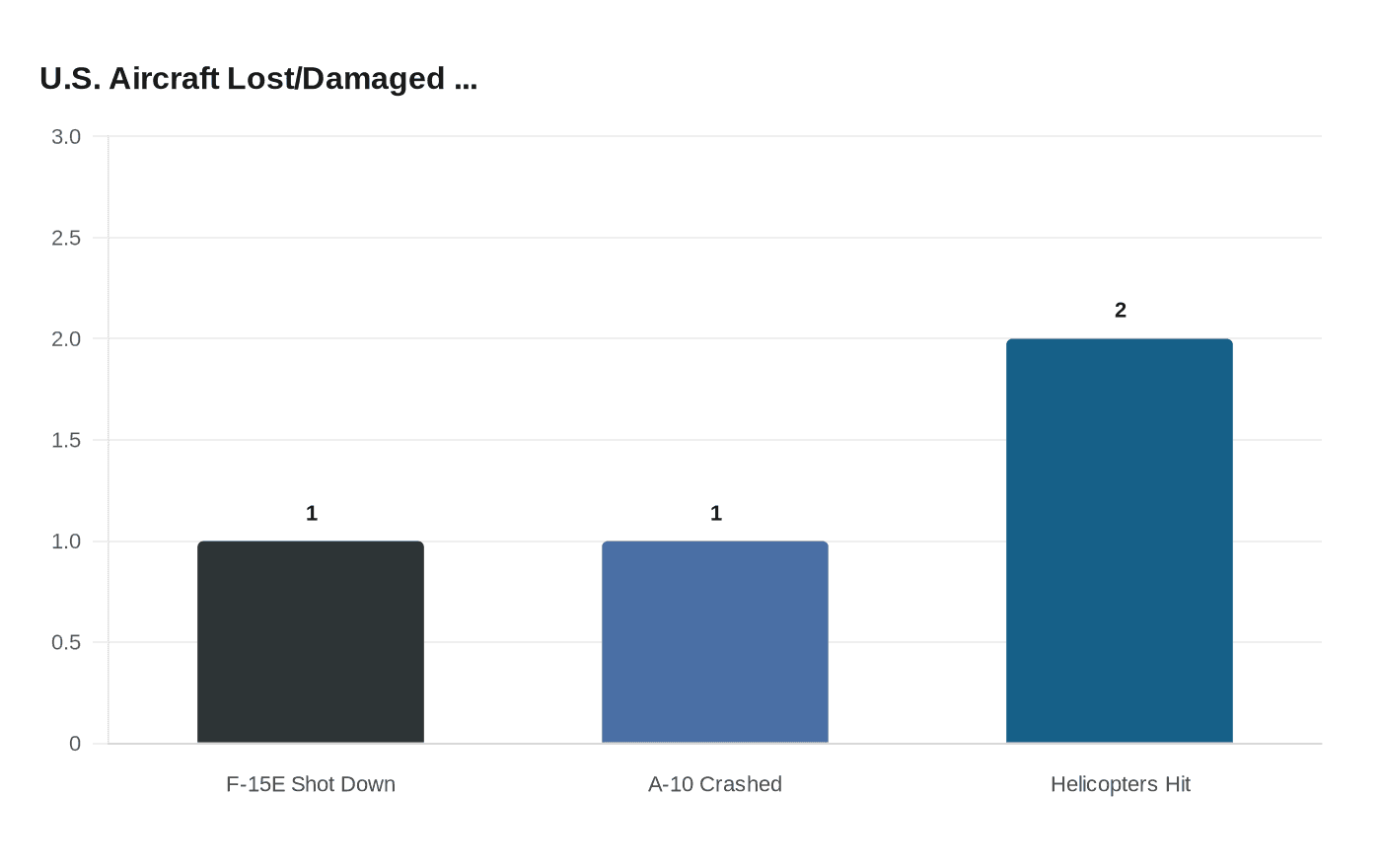
Videos verified by multiple outlets showed a U.S. Air Force HC-130 tanker refueling HH-60G Pave Hawk helicopters over Khuzestan Province, the clearest visual confirmation that American forces were sustaining an active rescue operation inside Iranian territory. The coordination required to maintain that mission proved costly: an A-10 Thunderbolt II dispatched to support the effort was hit by Iranian fire, forcing its pilot to fly the damaged aircraft to Kuwaiti airspace before ejecting safely; the Warthog crashed in Kuwait. Two search-and-rescue helicopters were also struck, injuring their crews, before returning to base.
The F-15E, a two-seat, twin-engine multirole fighter, was shot down Friday over southern Tehran Province during Operation Epic Fury — the first time in the nearly six-week campaign that a manned U.S. aircraft was destroyed by Iranian fire. The pilot was recovered and is in U.S. custody. The weapons systems officer has not been found.
Peter Layton, a former Australian air force officer and visiting fellow at the Griffith Asia Institute, identified the downed jet from "the tail flash stripe markings from the 48th Fighter Wing," based at RAF Lakenheath in Suffolk, England. The base hosts approximately 7,000 active-duty personnel and four squadrons of F-15 Strike Eagles and F-35A Lightning IIs, making it the largest U.S. fighter operation in Europe.
How the aircraft was brought down remains under investigation, but the tactical conditions preceding the shootdown drew immediate scrutiny. Jeffrey Fischer, a former U.S. Air Force colonel, told Military.com: "I don't know how the aircraft went down, but I will say this: After watching the F-15E try to engage the Shahed the other day, I was concerned. That was some pretty low and pretty slow flying, which reduces any kind of reactive or defensive maneuvers in the event an aircraft is engaged by air defense."
The April 3 losses brought total U.S. service member deaths in Operation Epic Fury to 13. The campaign began February 28 with coordinated U.S.-Israeli strikes that killed Supreme Leader Ali Khamenei and targeted nuclear infrastructure at Fordow, Natanz, and Isfahan. Iran responded by closing the Strait of Hormuz and launching sustained missile and drone strikes across the region; attacks Friday wounded at least 12 people in the UAE.
Iranian and U.S. forces now openly contest the same airspace with no ceasefire or functioning diplomatic channel in place. Trump's stated conditions for ending the war center on Iran reopening the Strait of Hormuz; after recent strikes on Iranian infrastructure, he warned there was "much more to follow." Omani-mediated nuclear negotiations collapsed in February before the war began, and no replacement diplomatic track has emerged.
White House Press Secretary Karoline Leavitt confirmed Trump had been briefed on the incident. Congress has not formally authorized the use of military force, and Democrats have repeatedly forced procedural votes on that legal gap, one that grows harder to ignore with each new escalation.
This article was produced by Prism’s automated news system from verified source data, official records, and press releases, then run through automated quality and moderation checks before publishing. The system is built and supervised by the people who set the standards it runs under. Read our full AI policy.
Did this article answer your question?


