How Trump Turned Deportations Into a Major Foreign Policy Tool
The Trump administration has quietly transformed mass deportation into a geopolitical bargaining chip, paying autocratic governments millions and deploying diplomatic pressure to send migrants to countries they've never lived in.

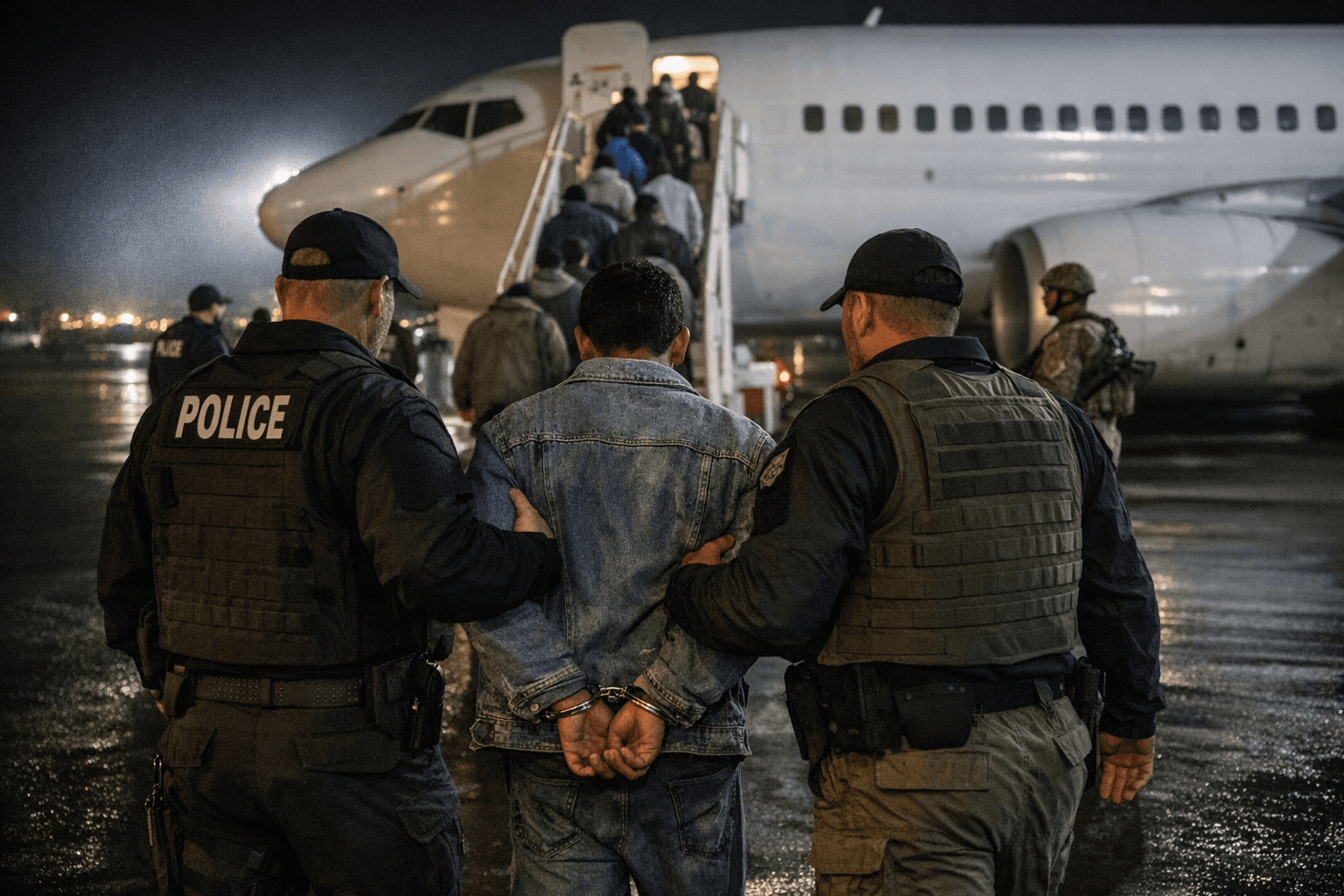
When the Trump administration wired $6 million to El Salvador's government in March 2025 to lock up 238 Venezuelan men in the notorious Terrorism Confinement Center, known as CECOT, it wasn't just an immigration enforcement action. It was a preview of a sweeping new doctrine: deportation as foreign policy. Since taking office, President Donald Trump has significantly escalated the use of third-country deportations in an unprecedented expansion of a rarely used provision in U.S. immigration law. What began as a domestic crackdown has evolved into a global web of deals that raises urgent questions about human rights, due process, and which governments Washington is now willing to empower.
The Legal Architecture Behind the Deals
Third-country deportation refers to a section of the Immigration and Nationality Act that allows the Department of Homeland Security to deport migrants to countries other than their country of origin. During immigration proceedings, judges designate a country where the migrant is supposed to be deported, usually their country of origin. If removal to the designated country is "impracticable, inadvisable, or impossible," the INA authorizes DHS to remove a noncitizen to a third country.
The Trump administration has signed deportation agreements with 27 countries, with outreach planned to dozens of others, to help facilitate its mass deportations agenda. By late June 2025, it had made deals or begun the negotiating process with 58 countries, who are incentivized to participate. The administration also reached for older statutory tools: invoking the seldom-used 1798 Alien Enemies Act, which critics say eroded migrants' due process protections.
The El Salvador Blueprint
The CECOT deal became the defining early example of how the administration operates. In March 2025, the United States deported 238 Venezuelans to El Salvador, to be immediately and indefinitely imprisoned without trial and without prison sentences nor release dates. Of these, 137 were deported under the Alien Enemies Act and 101 under regular immigration law. The administration claimed the men were members of the Venezuelan gang Tren de Aragua. Lawyers have since cast doubt on Trump's allegations, arguing that many of their clients were deemed to be gang members based on little more than their tattoos and fashion choices. An April CBS News investigation found that 75% of the migrants sent to CECOT had no criminal record.
El Salvador reportedly received $6 million as part of a deal to hold the men in a maximum security prison, CECOT, where human rights abuses have been documented. A federal judge later ruled that the administration had violated due process, and the men were ultimately released as part of a prisoner exchange with Venezuela. Litigation over whether the administration defied a court order by allowing the deportation flights to leave in the first place continues.
Paying Autocrats: The Price of Deals
While some agreements include U.S. funding to pay for deportees to be incarcerated or subsequently deported, for instance, the Trump administration committed to pay Rwanda $7.5 million and Eswatini $5.1 million, most do not provide receiving countries with financial compensation. Equatorial Guinea received $7.5 million. A Senate Foreign Relations Committee report commissioned by Ranking Member Jeanne Shaheen found the administration had spent more than $40 million in deals that were negotiated secretly, with some individual deportations costing taxpayers roughly $1 million per person.
The choice of partners drew immediate scrutiny. The letter noted Equatorial Guinea's record of corruption and human rights violations, including several documented in State Department human rights and human trafficking reports. Teodoro Nguema Obiang, the country's first vice president and presumed successor to his father, had faced a corruption conviction in France and international sanctions yet reportedly received benefits from the U.S. as part of the arrangement.
The U.S. Department of State considers South Sudan too dangerous for almost all Americans; it warns travelers to plan for hostage situations and has evacuated all non-essential diplomats. Yet, the Trump administration has waged a massive legal effort to treat South Sudan and other conflict-ridden countries as "safe third countries" to receive people deported from the United States.
A Global Network Takes Shape
The country list has expanded far beyond Central America and Africa. Countries that have announced they will receive deportees from the U.S. who come from other nations include Guatemala, Kosovo, and Rwanda. Costa Rica announced it will accept 25 migrants deported from the United States per week as part of an agreement. The United States and Belize signed a "safe third country" immigration agreement allowing the administration to transfer asylum seekers there. In April 2026, a flight carrying 12 U.S. deportees arrived in Uganda.
Five migrants from Cuba, Jamaica, Laos, Vietnam and Yemen were deported to Eswatini in a single flight, illustrating how the geographic logic of deportation has been severed from any connection to a person's homeland. The Migration Policy Institute estimates about 15,000 third-country deportations occurred between January 20, 2025, and December 31, 2025, roughly 13,000 of them to Mexico, suggesting this policy is more about creating a climate of fear than facilitating large numbers of removals.
Legal Challenges and the Courts
The administration's deals have faced sustained legal resistance at every level. Ongoing U.S. litigation is likely to ultimately determine the legality of the Trump administration's third-country deportation agreements, even as legal challenges unfold in some of the partner countries as well. In June 2025, the Supreme Court temporarily allowed the administration to expedite third-country deportations while the merits of the case were being litigated in lower court. The federal judge in that case, in Boston, ruled in February 2026 that immigrants must be given meaningful notice and time to raise country-specific objections, and he criticized safety assurances provided by the government.
In Eswatini, a coalition of legal and human rights groups challenged the deportation agreement in the country's High Court, though the case was dismissed on standing grounds in February 2026. Advocates in Uganda, meanwhile, pledged to file challenges in national and regional courts after April 2026's deportation flight landed there.
Reshaping U.S. Alliances and Moral Authority
The broader effect of this strategy on U.S. foreign policy is difficult to overstate. Critics warn that such deportations violate international human rights standards and place vulnerable migrants at risk. Doris Meissner, who oversaw the now-defunct Immigration and Naturalization Service under the Clinton administration, noted that efforts to deport migrants to third countries were generally undertaken in "exceptional" cases only, suggesting the Trump administration may be employing different sources of leverage, like threats of visa sanctions and funding commitments, to secure deals.
The financial backbone for this machinery received a major boost when Congress passed the "One Big Beautiful Bill Act," signed into law on July 4, 2025, which allocated $170.1 billion in new immigration enforcement spending. With that war chest in hand, the administration's capacity to recruit new partner countries has only grown. Every government that accepts a deportation flight gains something, whether money, diplomatic standing, or relief from other American pressure. And every agreement normalizes the idea that a person's fate can be determined not by where they're from or what they've done, but by which government happened to say yes.
This article was produced by Prism’s automated news system from verified source data, official records, and press releases, then run through automated quality and moderation checks before publishing. The system is built and supervised by the people who set the standards it runs under. Read our full AI policy.
Did this article answer your question?